The Air-Cooled Walkaround: A First-Time Buyer's Pre-Purchase Checklist
📌 Key Takeaways
A driveway walkaround helps you spot obvious problems before spending money on a professional inspection.
- Cold Start Reveals Hidden Problems: Sellers who "warm up" engines may be hiding hard-start issues, smoke, or rough running that disappear once hot.
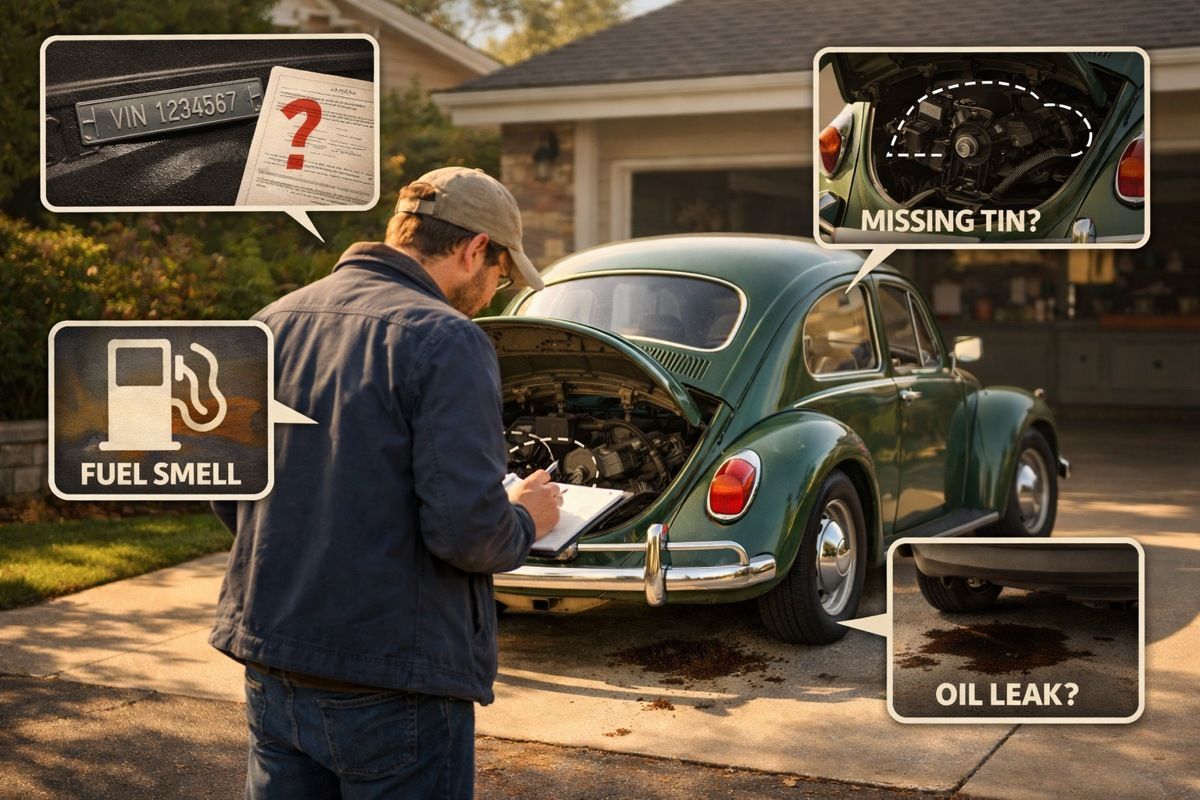
- Smell Fuel, Stop Immediately: Raw gasoline odor near air-cooled engines is a fire hazard—don't test drive until it's fixed or walk away.
- Check the Story Against the Evidence: Worn pedals and seats on a "low-mileage" car, scrubbed engine bays on dusty cars, and vague answers all signal trouble.
- Missing Engine Tin Kills Engines: Those sheet metal pieces around the engine aren't decoration—they direct cooling air, and gaps cause overheating damage over time.
- Your Instincts Count as Data: If something feels wrong during the drive—sketchy steering, unexplained shaking, loss of confidence—trust that feeling.
Know when to walk, negotiate, or hire an expert before you sign anything.
First-time classic VW or Porsche buyers will gain a clear framework for separating good deals from money pits, preparing them for the detailed inspection guidance that follows.
~ ~ ~ ~ ~ ~ ~ ~ ~ ~ ~ ~ ~ ~ ~ ~ ~ ~
The seller is talking. The paint gleams. The engine is already warm—conveniently. And somewhere in the back of your mind, a voice whispers: Do I actually know what I'm looking at?
That voice is right to ask. The dream is getting louder than the facts. Classic VW and Porsche vehicles speak an analog language that modern car experience doesn't translate. There are no warning lights to tell you the cooling system is compromised. No codes to flag the previous owner's shortcuts in the engine bay. Just metal, oil, heat, and the clues they leave behind.
This checklist exists to slow that moment down. Think of it like checking the foundation of a house before you buy it—and running a background check on the seller's story. You're not expected to be a structural engineer. But you can learn to spot the cracks that mean "get an inspector" versus the ones that mean "run."
A rushed driveway visit creates two kinds of pressure. The first is obvious: the seller wants momentum. The second is quieter: a partner, spouse, or family member may already be wondering whether this car could become a money pit. This checklist needs to calm both voices.
What to Bring to the Walkaround
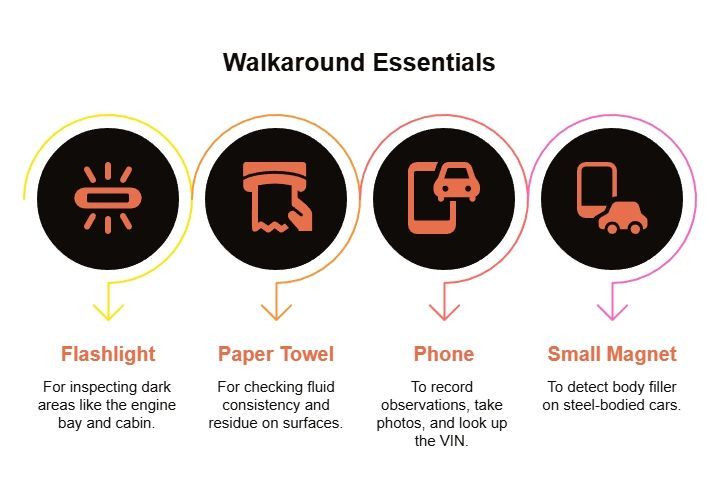
Keep it simple. This is an observation session, not a repair appointment.
- Flashlight – for peering into the engine bay, under the car, and into dark cabin corners
- Paper towel or rag – for checking fluid consistency and residue
- Phone with notes app – to record observations, take photos, and look up the VIN later
- Small magnet (optional) – can help detect body filler on steel-bodied cars, though use it gently and only where appropriate
The most important thing you bring is permission to pause. When the seller starts rushing, you have every right to say: "Give me a few minutes to look this over." If that request makes them uncomfortable, that tells you something too. A classic car should survive a careful minute of silence. If it cannot, that is already a clue.
Exterior Walkaround: What You Can Learn Before the Engine Ever Starts
Before anything moves or makes noise, the car is already communicating. Your job is to listen with your eyes.
Stance, Tires, and What the Ground Is Telling You
Stand back and look at the car from each corner. Does it sit level, or does one side droop? Uneven stance can indicate worn suspension, broken torsion bars, or frame issues that cost real money to address.
Check the tires. Uneven wear patterns—especially on the inner or outer edges—can signal alignment problems, worn steering components, or suspension neglect. Old, cracked sidewalls suggest the car has been sitting, which brings its own set of concerns for seals, fuel systems, and brake components.
Look at the ground beneath the car. Fresh oil spots from the engine or transaxle, or fuel stains near the tank, are worth noting. A single small drip might be nothing on a fifty-year-old machine. A spreading puddle is a different conversation. For a deeper look at that distinction, Oil Spots Under Your Classic VW: What's Normal vs. a Real Risk is a helpful follow-on.
Look for "Too Clean" Areas
A meticulously detailed engine bay on an otherwise dusty car deserves skepticism. Fresh degreaser and steam cleaning can hide active leaks. Look for inconsistencies: one area scrubbed spotless while adjacent areas show normal grime accumulation.
The same applies to undercoating. A thick, fresh coat of rubberized undercoating on the floors or wheel wells might be protecting good metal—or hiding rust repairs you'd want to know about.
Rust Clues and Body-Story Inconsistencies
On classic VW and Porsche vehicles, rust has favorite hiding spots. Check around the base of the windshield, the lower edges of doors, the battery area, and any seams where panels meet. Bubbling paint, soft spots, or visible rust-through are obvious. But also look for rippled panels or slightly mismatched paint texture, which can indicate past bodywork.
Walk around the car and sight down each side panel. Waves, dents, or inconsistent gaps between body panels suggest collision history or poor-quality repairs. None of these are automatic deal-breakers, but they should factor into your price negotiation—and your decision about whether to proceed. For a deeper dive into where classic VWs hide their rust, Hidden Rust Zones on Beetles, Buses, and Ghias covers the specific areas that can cost thousands if missed.
Interior and Paper Trail: Small Clues That Change Big Decisions
Does the Paperwork Support the Story?
Ask to see the title. Confirm the VIN on the title matches the VIN on the car—typically found on the door jamb or dashboard. Mismatched VINs are a serious red flag that can indicate a salvage rebuild, stolen vehicle, or parts-car combination. You can decode vehicle information and verify production years using model-specific chassis number registries. Since modern 17-digit VIN decoders do not work on pre-1981 vehicles, rely on official Porsche Certificates of Authenticity or vintage Volkswagen 'birth certificates' from the Stiftung Auto Museum Volkswagen to authenticate the chassis and engine numbers.
If the seller claims low mileage, ask for maintenance records, registration history, or anything that supports the odometer reading. A car showing 60,000 miles with no service history and a worn-out interior tells a different story than the odometer suggests. If you end up buying from a private party in California, the California DMV's private-party transfer guidance explains the registration process.
What the Cabin Smell and Wear Patterns May Be Telling You
Open the door and pause before you get in. What do you smell? Musty odors suggest water leaks or long-term storage in damp conditions. A strong fuel smell inside the cabin is a safety concern on any car, but especially on air-cooled vehicles where fuel system components are located near the engine bay. Mildew or mold smell often indicates carpet or padding that's been wet—and stayed wet.
Look at the wear patterns on the seats, pedals, and steering wheel. Heavy wear on driver's controls combined with a claimed low-mileage car is a mismatch worth questioning. Pedal rubbers worn smooth, a shiny steering wheel rim, and a sagging driver's seat bolster all suggest more use than a low odometer reading would indicate. For a deeper sensory guide, Is That Smell Normal? A Guide to Fuel and Oil Odors in Classics breaks down what's routine versus what demands immediate attention.
Questions to Ask Before the Seller Controls the Conversation Again
- How long have you owned the car?
- Why are you selling it?
- What work has been done recently, and who did it?
- Has the car been in any accidents or had major bodywork?
- Are there any known issues you're working around?
The answers matter less than how they're delivered. Hesitation, vagueness, or defensive responses are data points. So is a seller who answers openly and volunteers documentation.
Engine Bay: The Air-Cooled Checks That Matter Most
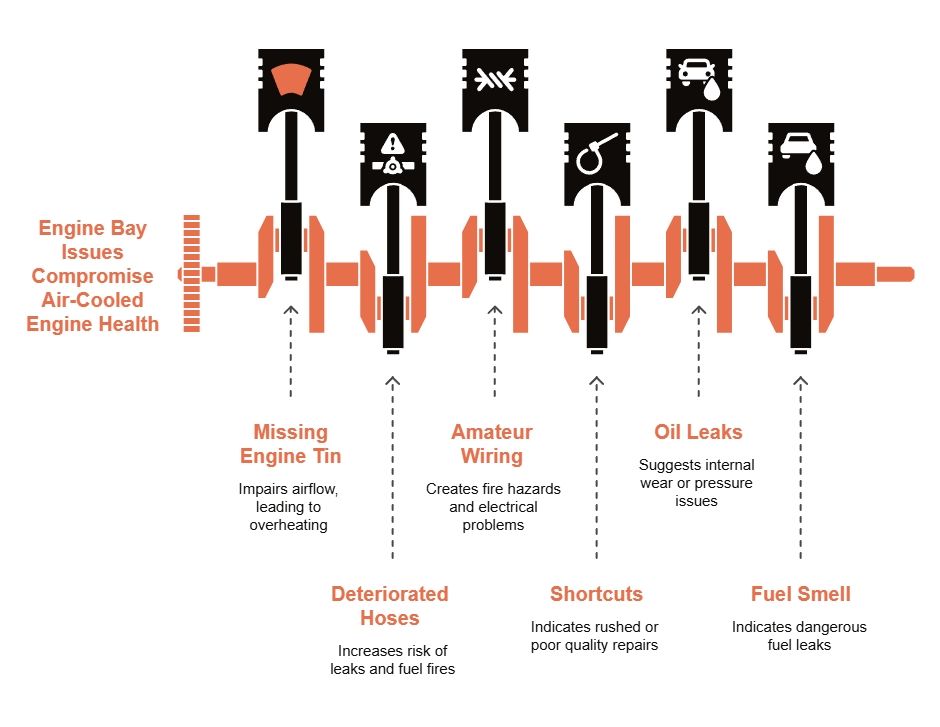
This is where the analog inspection becomes most critical. Modern cars have computers that monitor engine health. Classic air-cooled engines have heat, oil, and metal—and the evidence they leave behind.
Why Engine Tin Matters More Than a First-Time Buyer Expects
Air-cooled engines depend entirely on airflow for cooling. The sheet metal "tin" pieces that surround the engine aren't decorative—they're the ducting that directs cooling air across the cylinders and heads. Missing tin, damaged tin, or improperly installed tin means the engine can't cool itself properly.
Run your hand near (not on) the engine after it's been running. Feel for unusual hot spots or areas where heat seems to radiate intensely. The intense heat coming off a poorly cooled engine tin is something you can sense even before you understand why it matters. That heat kills engines over time.
Cooling Hardware, Hose Condition, Wiring, and Visible Shortcuts
Check the rubber hoses for cracks, brittleness, or soft spots. Fuel lines that are original from the 1970s are overdue for replacement. Oil cooler hoses, heater hoses, and any rubber components in the engine bay should be pliable, not hard or cracked.
Look at the wiring. Are there splices wrapped in electrical tape? Wires dangling loose or routed in ways that seem improvised? Previous owner electrical work is one of the most common sources of problems—and fire risk—in vintage vehicles. If you see evidence of amateur wiring, that's a topic for the Hidden Hazards: Why We Audit Previous Owner Wiring discussion.
Look for shortcuts: zip ties holding things that should be bolted, missing hardware, or components that look newer than everything around them without explanation. Someone may have done good work. Or they may have done fast work. The evidence usually tells you which.
Oil, Fuel, Heat, and What "Normal Old Car Smell" Is Not
A vintage engine bay will have some oil residue. That's expected. But look at the pattern. Fresh, wet oil around the pushrod tubes, valve covers, or crankcase suggests active leaks. Oil that's sprayed in a pattern suggests a leak under pressure. A fine mist of oil everywhere suggests the engine may be breathing hard—potentially a sign of internal wear or crankcase pressure issues.
Smell the engine bay. A faint oil smell is normal. A strong, raw fuel smell is not. Fuel leaks are fire hazards and should be addressed before the car is driven. If you smell fuel, look for wet spots around the carburetor, fuel pump, fuel lines, and tank connections.
Start-Up and Idle: Listen, Smell, and Watch Before You Drive
Ask to be present for a cold start if possible. A warm engine hides sins. Sellers who "warm it up for you" before you arrive may be doing you a favor—or they may be masking a hard-start condition, excessive smoke, or rough running that clears once the engine is at temperature.
What to Notice in the First Seconds
When the engine fires, watch the exhaust. A puff of smoke on startup can be normal, especially on a car that's been sitting. Continuous smoke is different. Blue smoke suggests oil burning. Black smoke indicates a rich fuel mixture. White smoke that persists is typically severe condensation burning off, or in rare cases, unburned fuel atomization. Keep in mind that unlike modern vehicles, the vast majority of classic air-cooled Volkswagens rely on manual brake master cylinders rather than vacuum brake boosters, so white smoke from a brake fluid vacuum leak is generally not a factor to worry about here.
Listen to the engine. Air-cooled engines have a distinctive sound: mechanical, rhythmic, a bit clattery compared to modern cars. That's normal. What you're listening for are sounds that stand out from the baseline: a heavy knock, a persistent rattle, or a rhythmic tick that seems louder or more urgent than the general mechanical noise.
When a Tick Is Worth Respecting
Light valve train noise is common and often adjustable. A deep knock from the bottom end of the engine is expensive. If you hear something that concerns you, ask the seller about it. Watch their reaction. "Oh, it's always done that" is different from "That's new—I don't know what that is." For guidance on sorting normal air-cooled sounds from concerning ones, The Analog Diagnostic Guide: Listening to Your Air-Cooled Engine and Rough Idle on an Air-Cooled Volkswagen: What Your Senses Can Tell a Specialist offer useful frameworks.
Why Raw Fuel Smell Changes the Decision Immediately
If you smell raw, unburned fuel during startup or idle, stop. This isn't a "monitor it" situation. Fuel leaks on air-cooled engines can result in fire. The engine sits near the fuel system components, and there's plenty of heat to ignite spilled fuel.
Do not proceed with a test drive if there's an active fuel smell. Either have it addressed before driving, or walk away.
Test Drive: What the Car Should Feel Like Through the Wheel, Seat, and Floorboards
A test drive isn't a victory lap—it's data collection. A classic doesn't need to feel modern. It does need to feel coherent. Pay attention to what the car is telling you through every point of contact.
Brakes, Steering, and Straight-Line Confidence
Classic brakes don't feel like modern brakes. They require more pedal pressure and more stopping distance. That's expected. What you're checking for is whether the car stops straight, without pulling to one side. A car that dives left or right under braking may have a stuck caliper, uneven pad wear, or a failing wheel cylinder.
Check the steering. At low speeds, does the wheel feel connected to the road? Excessive play—the wheel turning without the car responding—indicates worn steering components. At highway speeds, does the car track straight, or does it wander and require constant correction? For a detailed look at what to expect from vintage VW braking and steering systems, Brakes, Steering, and Tires on a Classic Volkswagen: Safety Priorities in a Pre-Purchase Inspection covers the critical checkpoints.
Vibration vs. Normal Air-Cooled Character
Some vibration is inherent to vintage, air-cooled vehicles. Flat-four engines aren't as smooth as inline sixes. Older suspension and steering don't isolate road feel the way modern cars do.
What you're feeling for is vibration that seems wrong: a shake through the steering wheel at certain speeds (often indicating tire balance or suspension issues), a shudder under acceleration (possibly drivetrain or engine mount related), or a vibration that comes and goes unpredictably.
Feel the car through the seat and floorboards. Heat coming through the floor is normal on rear-engine cars. Excessive heat—enough to be uncomfortable—may indicate exhaust leaks or missing heat shielding.
Hesitation, Heat, and Anything That Makes You Stop Trusting the Car
Does the engine hesitate under acceleration? Does it stumble when you press the throttle from a stop? These can be tuning issues, but they can also indicate fuel delivery problems, ignition timing issues, or deeper mechanical concerns. If the checklist escalates into deeper mechanical questions, Engine Health on a Vintage VW: What Compression and Leakdown Numbers Mean for Buyers is the right technical next step.
If anything during the test drive makes you feel unsafe—or makes you lose confidence in the car—trust that instinct. A classic car should feel sorted, even if it feels old. "Sketchy" is not a characteristic of age; it's a characteristic of deferred maintenance or hidden problems.
Your Decision Framework: Walk Away, Keep Talking, or Book a Professional Inspection
After the walkaround and test drive, you're in one of three positions.
Walk Away if you found:
- Active fuel leaks or strong fuel smell
- Evidence of major rust in structural areas
- Seller evasiveness about history or known problems
- Mechanical sounds that suggest serious internal engine damage
- A mismatch between the story and the evidence that can't be explained
- Any issue that makes the car feel unsafe to drive
Proceed With Caution and Negotiate if you found:
- Minor issues that are consistent with age and don't affect safety
- Cosmetic concerns that factor into price but not function
- Maintenance items that need attention but aren't urgent
- A generally positive impression with a few items to discuss
Escalate to Professional Inspection if:
- The car passed your walkaround with no obvious deal-breakers
- You're seriously considering purchase but want expert confirmation
- There are questions you can't answer yourself about compression, leakdown, hidden rust, or mechanical condition
- The investment justifies the cost of a thorough evaluation
The walkaround isn't meant to replace professional evaluation. It's meant to help you decide whether professional evaluation is warranted—or whether you should save your money and walk away now.
If the Car Still Interests You, Here's the Smart Next Step
A driveway walkaround can reveal the obvious problems. What it can't do is measure compression, perform a leakdown test, put the car on a lift for a full underside inspection, or assess components that require experience and specialized knowledge to evaluate.
If the car passes your initial assessment and you're genuinely interested, the smart move is a professional pre-purchase inspection by someone who specializes in classic VW and Porsche vehicles. Not a general mechanic. Not a dealership with modern diagnostic equipment. A shop that understands the analog language these cars speak. Orange Independent Auto Repair has been family-owned and operated since 1971, serving Orange, CA and surrounding areas including Tustin, Anaheim, Yorba Linda, and Villa Park. The shop specializes in classic car maintenance for vintage VWs and classic Porsches, including pre-purchase inspections.
As one Orange-area customer put it after bringing in a prospective purchase: "I went here yesterday for a pre purchase inspection and they did an amazing job."
The goal of that inspection isn't to sell you on a car—it's to give you the information you need to make a confident decision. Sometimes that means confirming the car is solid. Sometimes it means finding the problems that would have cost you later. Either way, you end up knowing what you're buying. If you're considering a classic and want professional eyes on it before money changes hands, contact the team at (714) 633-7161. The shop is located at 187 S Main St, Orange, CA 92868, open Monday through Friday 7:00 AM to 6:00 PM, with Saturday appointments available.
If the purchase moves forward, The First 30 Days: How to 'Reset' Your New Classic Car, Fluids, Filters, and Fire Extinguishers: The Day 1 Safety Checklist, and The Preservation Schedule: A Maintenance Plan for Classic VWs and Porsches are strong next reads.
A beautiful classic can still be the wrong classic. The job of this walkaround is to make sure the facts speak before the dream does.
Request Your Free Estimate Today.
Frequently Asked Questions
What should I check first on an air-cooled classic before a test drive?
Start with a visual walkaround while the car is cold and stationary. Look at the stance, check for leaks under the car, examine the engine bay for missing tin or obvious fluid residue, and smell for fuel odors. These checks take five minutes and can reveal deal-breakers before you ever turn the key.
What are the biggest red flags on a classic VW or Porsche in a seller's driveway?
Active fuel smell or leaks, structural rust, VIN mismatches, heavy bottom-end engine knock, and a seller who won't let you inspect the car cold or rushes you through the process. Any of these should make you seriously consider walking away.
Can a driveway walkaround replace a professional pre-purchase inspection?
No. A walkaround helps you decide whether the car is worth inspecting professionally. It can catch obvious problems and save you time on cars that aren't worth pursuing. But it can't measure compression, assess internal engine condition, or evaluate components that require a lift and specialized experience to inspect properly.
Why do engine tin and cooling parts matter so much on an air-cooled car?
Air-cooled engines have no radiator or water jacket. Cooling depends entirely on airflow directed across the cylinders and heads by the sheet metal ducting—the "tin." Missing, damaged, or improperly installed tin causes localized overheating that leads to premature engine wear and eventual failure. It's one of the most overlooked and most important systems on these vehicles.
Disclaimer
This checklist is designed to help you slow down, observe, and ask better questions before buying a classic vehicle. It is not a substitute for a full professional pre-purchase inspection, and conditions can vary significantly from one vintage car to another.
Our Editorial Process
Our expert team uses AI tools to help organize and structure our initial drafts. Every piece is then extensively rewritten, fact-checked, and enriched with first-hand insights and experiences by expert humans on our Insights Team to ensure accuracy and clarity.
About the Orange Independent Auto Repair Insights Team
The Orange Independent Auto Repair Insights Team is our dedicated engine for synthesizing complex topics into clear, helpful guides. While our content is thoroughly reviewed for clarity and accuracy, it is for informational purposes and should not replace professional advice.