
Blog
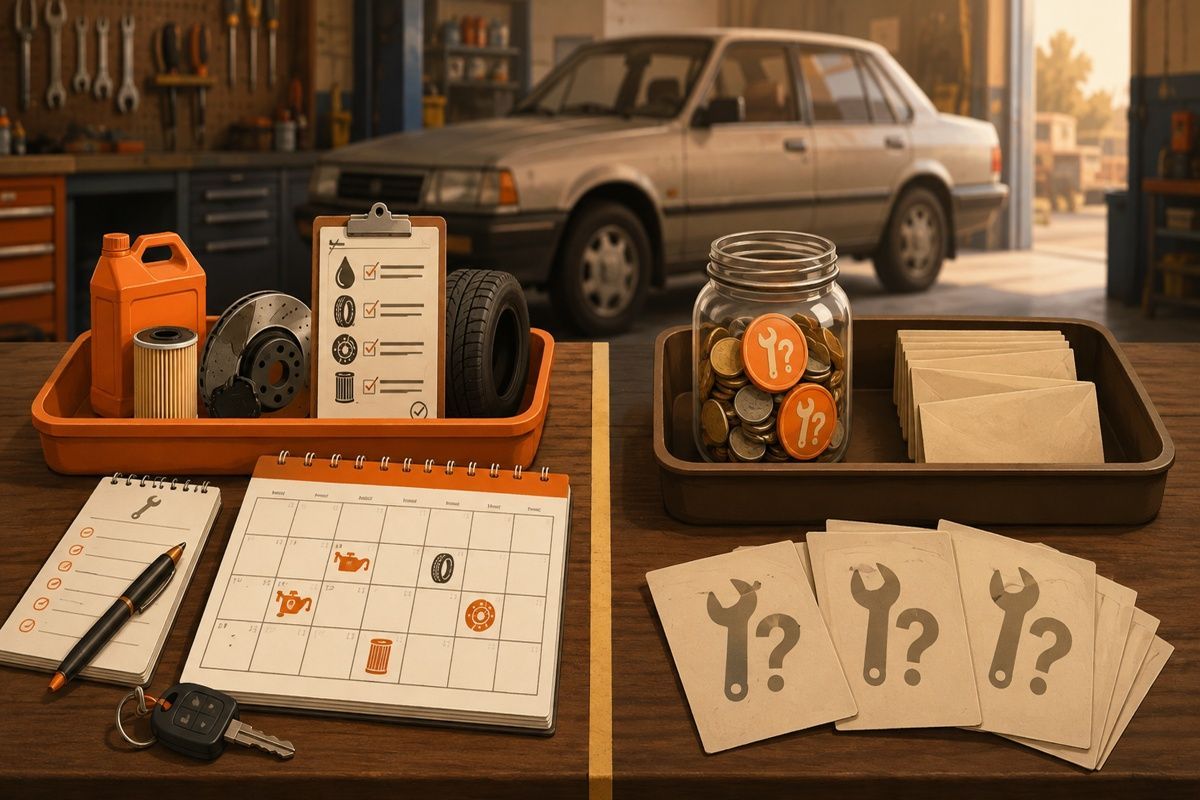
An older car maintenance budget works better when scheduled service and uncertain repairs use separate buckets. Set aside $50 to $100 per month for repairs.

A three-visit service plan starts with the shop assigning technical timing to every maintenance item. Use each visit for the work assigned to that window.
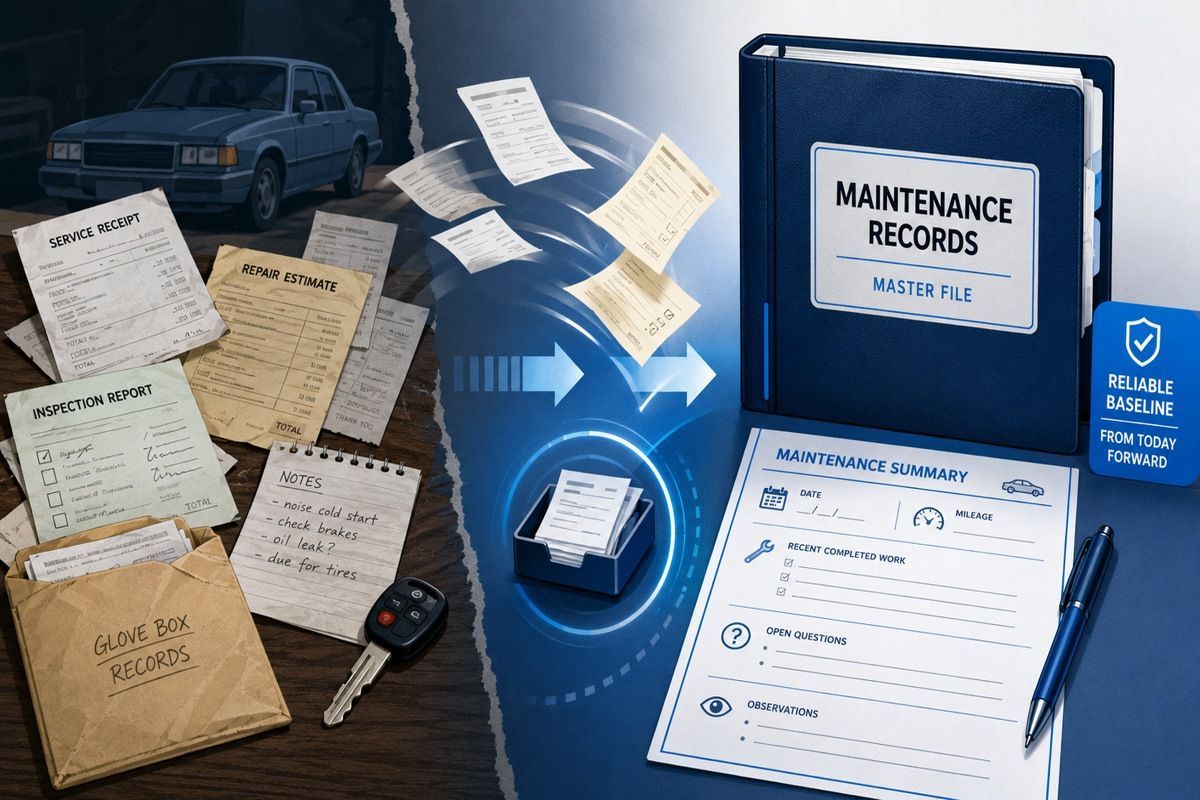
An annual maintenance file for an older daily driver keeps service history clear. Use four status labels to separate facts from uncertainty.
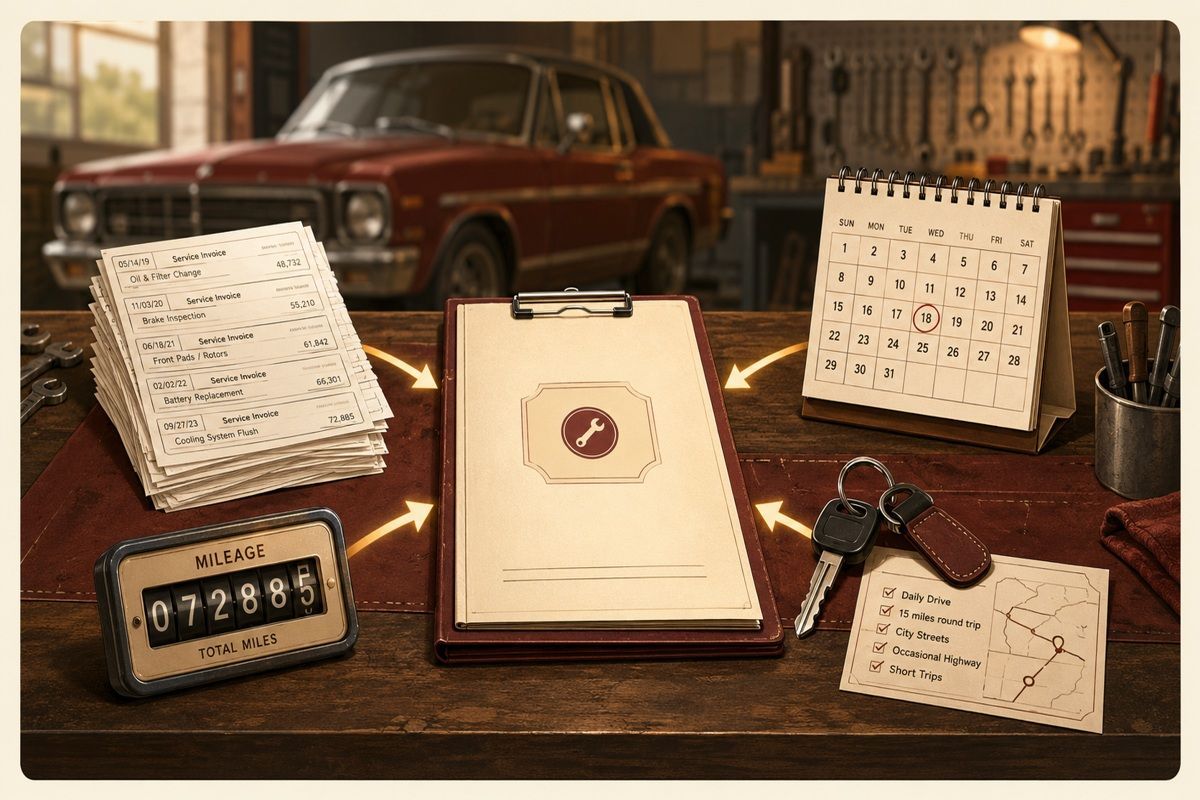
Car maintenance by mileage and time varies by item. Oil is due at 5,000 miles or 12 months, whichever comes first; use your vehicle’s official schedule.
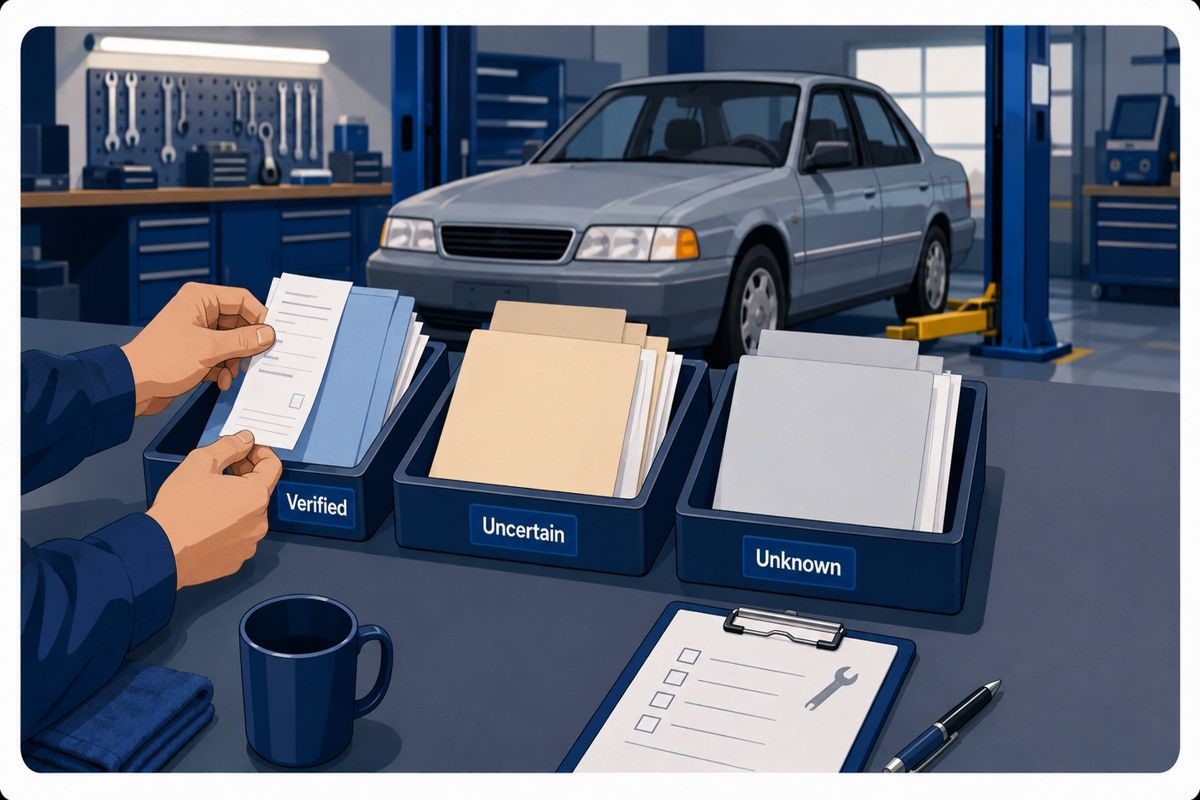
Service History Gaps in an Older Family Car: How Orange-Area Owners Can Build a Maintenance Baseline
Older car maintenance history gaps should be sorted by confidence before a shop reviews them. Use three labels: verified, uncertain, and unknown.

Vehicle inspection should come before repair approval when the cause is unclear. Ask what the inspection confirmed before authorizing specific work.

Classic VW inspection questions separate confirmed findings from unknowns before you buy. Use four questions to decide whether the project fits your budget.

Classic VW inspection findings should change your offer when they expand project scope or uncertainty. Use four questions to separate facts from unknowns.

Before Approving Repairs: Questions Orange-Area Drivers Can Ask About Safety, Timing, and Monitoring
Questions to ask before approving car repairs clarify safety, evidence, timing, and uncertainty. Use a 5-part monitoring plan for lower priorities.

A vehicle recheck should track warning signs that change before your next trip. Record six points, including drivability, conditions, and planned use.