
Oil Spots Under Your Classic VW: What’s Normal vs. a Real Risk (and When to Call the Shop)
📌 Key Takeaways
A small, steady oil spot under your classic VW can be normal—sudden changes in size, location, or pattern demand immediate attention.
- Pattern Reveals Urgency: Active dripping, fresh wetness, or mist patterns signal higher risk than a single consistent spot.
- Growth Matters Most: A coin-sized mark that becomes plate-sized over days indicates accelerating leakage requiring professional inspection.
- Location Guides Diagnosis: Rear-center spots point to engine seepage; forward or front spots suggest unusual fluid movement worth checking sooner.
- Document Before Calling: Consistent photos with scale references and timing notes help specialists diagnose faster and avoid unnecessary parts replacement.
- Know Your Thresholds: Stop driving for rapid puddles with smoke; book soon for new repeating spots; monitor stable, unchanged seepage.
Change, not presence, determines action.
Classic VW owners in Orange County will gain clear decision frameworks here, preparing them for the diagnostic-first approach detailed below.
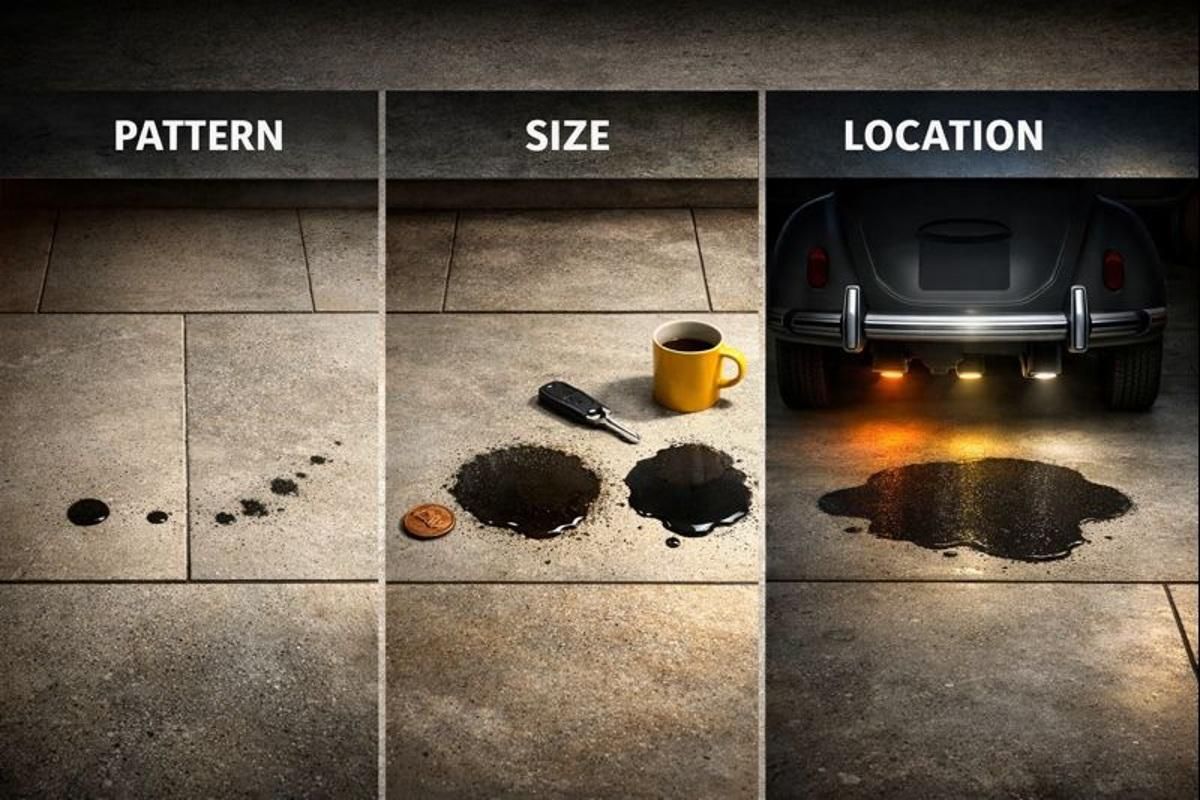
Sunday morning. Coffee in hand. Then you see it—a fresh oil stain where your Beetle was parked.
An oil spot is evidence of a seep or leak, and the rate of change matters as much as the spot itself. Like a small drip under a kitchen sink, a steady "same spot" situation is different from a sudden puddle. Use this 3-step triage to decide whether to monitor, book an inspection, or stop driving.
Quick Answer: A Small, Steady Seep Can Be Normal—Sudden Change Is Not
Many classic air-cooled Volkswagens weren't designed with the same sealed-system precision as modern cars. A tiny, consistent spot that appears in the same location week after week often reflects normal seepage from gaskets and seals that have aged over decades. What matters more is whether the pattern changes.
"A sudden change matters more than a tiny, steady spot."
If you notice the spot growing larger, appearing in a different location, or accompanied by smoke or a burning smell, those are signals that warrant professional attention. The key is establishing a baseline—what's normal for your car—so you can recognize when something shifts.
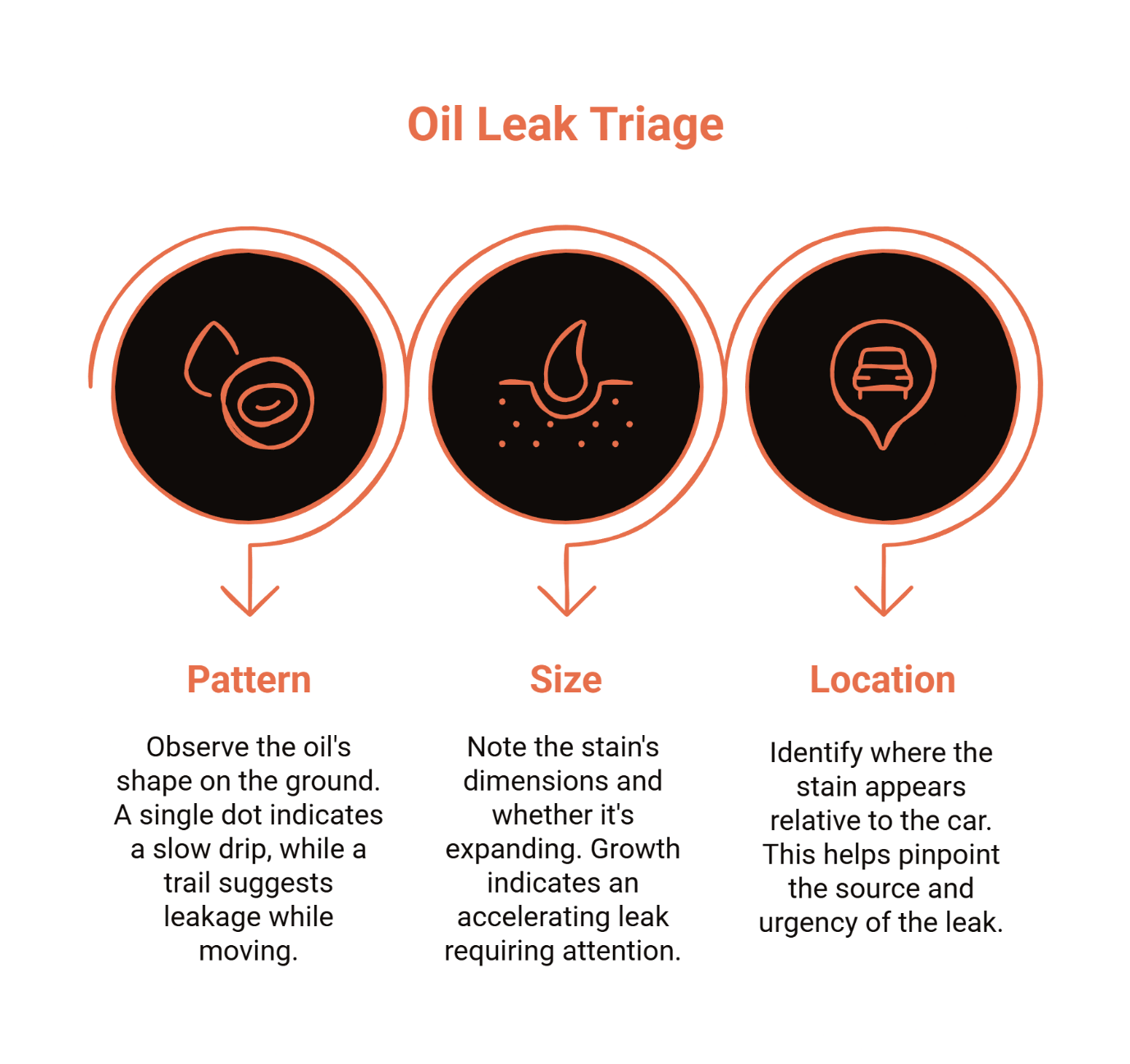
The 3-Step Triage (No Tools): Pattern, Size, Location
You don't need a lift or diagnostic equipment to gather useful information. Three simple observations can help you and a specialist prioritize what happens next.
1) Pattern: What the Shape Tells You
Look at how the oil appears on the pavement. A single dot suggests a slow drip that falls straight down when the car is parked. A drip trail—small dots in a line—indicates the car was moving when oil escaped, which can point to a seal that leaks under motion or heat.
A fresh wet streak or spray pattern is less common and usually means higher pressure or a rotating component is involved. Fine speckling can suggest fluid is being thrown by movement—fan airflow, rotation, or drivetrain components—which can escalate quickly. If you see new drips forming while the engine idles, that's an active leak happening in real time. Each of these patterns helps narrow down whether the issue is a slow seep or something more urgent.
Pragmatic rule: Active-now patterns like fresh wetness, drips forming while idling, or mist move you closer to "book soon" or "stop driving."
2) Size: Growth Is the Story
Size alone doesn't tell the whole story, but it provides context. A coin-sized spot might be a few drops. A palm-sized stain suggests a quarter cup or more. If the spot reaches plate-sized proportions, you're looking at a significant volume.
More important than the absolute size is whether it's growing. Check the same parking spot over several days. If Monday's quarter-sized spot becomes a dinner-plate puddle by Wednesday, the leak rate is accelerating. That's the kind of change that needs attention.
Pragmatic rule: A steady small spot can be monitored; a spot that grows over a few parking sessions usually deserves an inspection.
3) Location: Where It Lands on the Driveway
Classic VWs have rear-mounted, air-cooled engines, so most oil-related spots appear toward the back of the car. Understanding where the stain appears helps narrow the source category and urgency.
Mini "where it lands" map (standing behind the car):
- Rear center: Often points to engine-area seep or leak categories—valve covers, pushrod tubes, or main crankcase seals
- Rear left/right: Often points to engine-side seep categories, or fluid tracking along a surface before it drops
- Forward of the rear wheels: Often points to fluid moving with airflow or drivetrain surfaces; worth checking sooner
- Front/middle of the car: Less common for engine oil on an air-cooled VW; book soon to confirm what fluid it is
Pragmatic rule: If the spot shows up in a new location compared to last week, treat that as a "change," even if the spot is small.
This simple "map" of where the fluid lands helps a technician start the diagnostic process more efficiently. You don't need to know what a pushrod tube is—you just need to note where the car was parked and where the spot appeared underneath it.
What Tends to Be Normal on Many Classic VWs
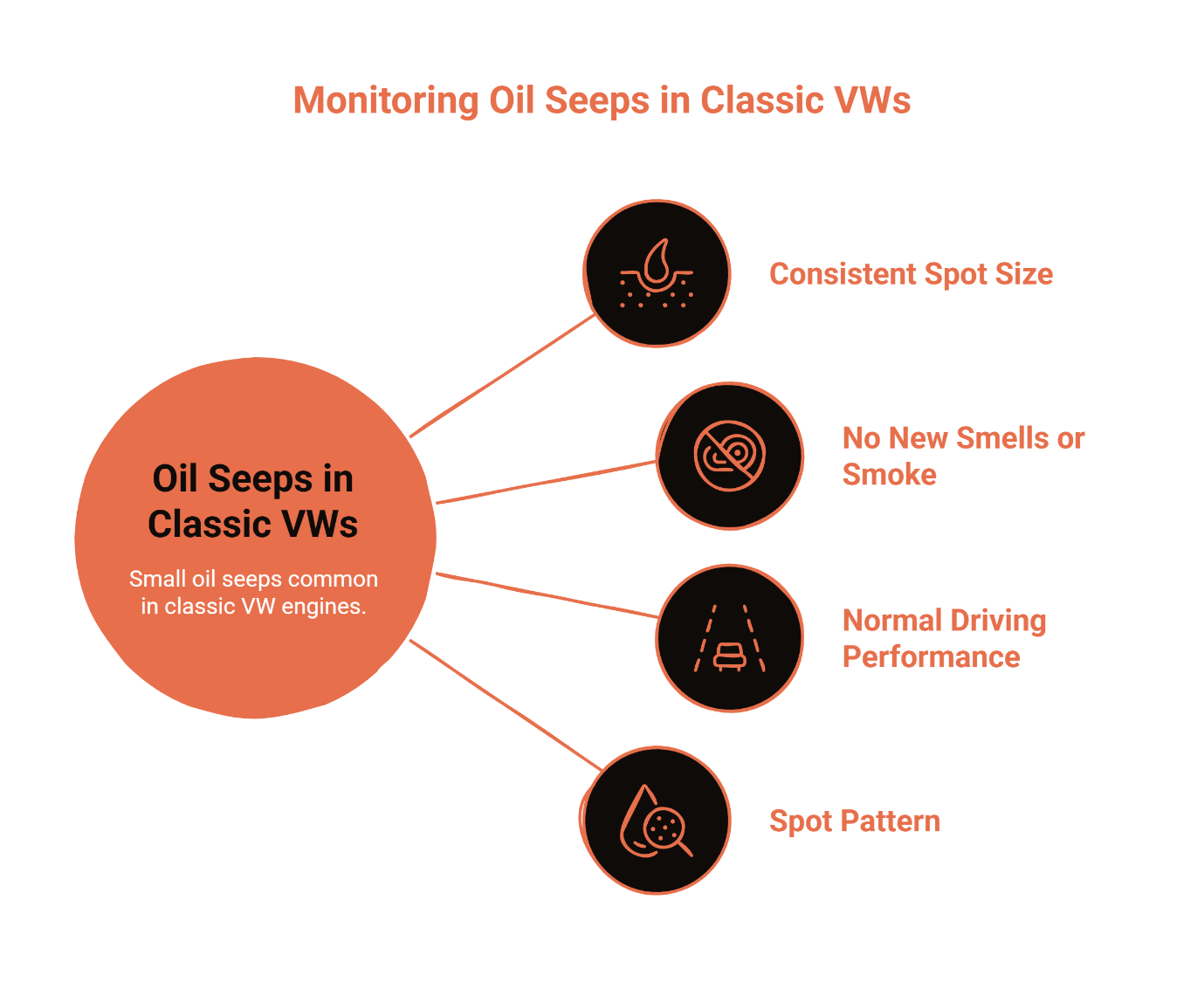
This section is about monitoring, not dismissing. Air-cooled engines from the 1960s and 1970s relied on multiple gaskets, seals, and adjustable components. Over time, these parts age, harden, and sometimes allow small amounts of oil to weep through. A consistent, small seep from valve covers or pushrod tube seals is common and often considered acceptable if it's not progressing.
Examples that often fall into the "monitor" category (assuming they're steady and not changing):
- The spot appears in the same place, roughly the same size, and does not accelerate
- You don't notice new smells, smoke, or any warning light behavior
- The car drives normally, and the spot pattern stays "spot," not "trail" or "mist"
That doesn't mean you ignore it. It means you monitor it. Periodic checkups as part of routine classic car maintenance help catch small issues before they become larger ones. Documenting what's normal for your car—through photos and notes—creates a reference point. When something changes, you'll know.
What's a Real Risk: Clear Stop-Driving, Tow, or Call Thresholds
Certain signs move a situation from "monitor" to "act now." These thresholds don't require mechanical knowledge—just careful observation.
Stop driving and arrange for towing if you see:
- A rapidly growing puddle that spreads noticeably in minutes, not days
- Drips actively forming while the engine idles, combined with smoke or a burning smell
- A warning light that comes on and stays on after you've started the car
- A sudden, dramatic increase in leak rate compared to the previous week (for example, going from a coin-sized spot to a dinner-plate puddle overnight)
Book an inspection soon if you notice:
- A new spot that repeats in the same location each day but wasn't there before
- A spot that's growing steadily over the course of several parking sessions
- Fresh wetness underneath after driving, but no smoke and no warning light behavior
Monitor with documentation if you observe:
- The same small spot appearing in the same place with no change in size or frequency over weeks
Safety note: If you're ever unsure, treat uncertainty as its own threshold—it's reasonable to book an inspection for clarity.
The U.S. Environmental Protection Agency provides guidance on safely handling used motor oil, which becomes relevant if you're wiping up spots or planning maintenance. California residents can find additional resources through CalRecycle's used oil recycling program. While a small seep doesn't necessarily mean you're losing dangerous amounts of oil, it's worth understanding proper disposal if you're managing fluids during routine checks.
How to Document the Spot So a Specialist Can Move Faster
Clear documentation helps a diagnostic-first shop confirm what you're seeing and track changes over time. You don't need special equipment—just your phone camera and consistent observation.
Take photos from the same angle each time, ideally from directly above the spot. Include a common reference object like a coin or your shoe to provide scale. Note whether the photo was taken after a cold start, after a drive, or the next morning when the car has been parked overnight. Each of these conditions can reveal different patterns.
If you detect any smell—burnt oil, raw fuel, or something else unusual—make a note. If you see smoke coming from under the car, document where it's appearing. These details, combined with photos, give a technician a head start. When records are clear and complete, it reduces guesswork and helps avoid unnecessary parts replacement. This approach aligns with the principle of invoice transparency—you want to understand exactly what was found and why specific repairs were recommended.
What a Diagnostic-First Shop Does Next (and Why It Prevents Wasted Parts)
A methodical inspection starts with confirming what type of fluid is leaking and how fast it's escaping. Oil, transmission fluid, and fuel each have distinct colors and textures. Once the fluid type is confirmed, the next step is tracing the source. This often involves cleaning the area around suspected leak points and running the engine to see where fresh fluid appears.
Common inspection areas for air-cooled VWs include valve cover gaskets, pushrod tube seals, crankcase breather systems, and main crankshaft seals. Each of these has a typical failure pattern. A factory-correct diagnostic process respects the original engineering while accounting for decades of wear.
After identifying the source, a transparent shop will prioritize repairs based on urgency: Must-Do items that affect safety or drivability, Soon items that prevent further damage if addressed within a reasonable timeframe, and Monitor items that are stable but worth watching. This tiered approach prevents the "fix everything at once" scenario that can overwhelm both schedule and budget.
You can learn more about how we work and the range of our services for classic and European vehicles. The goal is always proof over promises—showing you what was found, explaining why it matters, and documenting the work with photos and detailed records.
When You're Ready: Low-Pressure Next Step
If you've documented a changing pattern or you're simply looking for clarity, the next step is straightforward. You can contact us to discuss what you're observing, or subscribe to our car care tips for ongoing guidance on maintaining classic vehicles.
A proper diagnostic creates a roadmap. It separates the urgent from the routine and protects both the originality of your car and your peace of mind. Whether you're planning a Sunday cruise to the Orange Plaza or just keeping a cherished Beetle road-ready in Orange, Anaheim, Villa Park, Tustin, or Yorba Linda, knowing what's normal versus what's a real risk makes all the difference.
Call (714) 633-7161 for expert automotive care, or reach out through our contact page for a free estimate.
- new spot that repeats or grows over several parks
- Stop driving: rapid growth, active dripping + smoke/burning smell, warning light behavior
Disclaimer: This article is for general informational purposes only and is not a substitute for an in-person inspection. If you see rapid leaking, smoke/burning smell, or a warning light, stop driving and arrange a professional inspection.
Our Editorial Process: At Orange Independent Auto Repair, our expert team uses AI tools to help craft our content. Every article is manually reviewed for technical accuracy, relevance to Orange County driving conditions, and alignment with our diagnostic-first service standards. This ensures our readers receive reliable, practical guidance—never generic advice.
About the Orange Independent Auto Repair Insights Team
The Orange Independent Auto Repair Insights Team is made up of service advisors and technicians dedicated to helping Orange County drivers make confident decisions. We specialize in European and classic car repair and use a diagnostic-first approach backed by decades of hands-on experience.