
The Preservation Schedule: A Maintenance Plan for Classic VWs and Porsches
📌 Key Takeaways
Classic VWs and Porsches need maintenance based on time, not just miles—cars that sit still age faster than you'd expect.
- Sitting Damages Cars Too: Fuel turns to varnish, seals dry out, and rubber cracks even when your classic never leaves the garage.
- Your Senses Are Your Dashboard: Before every drive, check for fuel smells, fresh drips, new sounds, and changes in how the brakes and steering feel.
- Calendar Trumps Odometer: Oil changes happen every 12 months or 5,000 miles—whichever comes first—because time degrades fluids even without driving.
- Unknown History Needs a Baseline: New owners should get a full inspection within the first month to turn guesswork into a prioritized repair plan.
- Driving Is Actually Maintenance: Regular drives that reach full operating temperature keep seals lubricated and prevent storage-related problems.
A calm, repeatable schedule protects your investment better than reacting to breakdowns.
Classic VW and Porsche owners who want to preserve their vehicles will find a practical garage-ready system here, preparing them for the detailed maintenance checklists that follow.
~ ~ ~ ~ ~ ~ ~ ~ ~ ~ ~ ~ ~ ~ ~ ~ ~ ~ ~ ~ ~ ~ ~ ~ ~ ~ ~ ~ ~ ~ ~ ~ ~ ~ ~ ~ ~ ~ ~ ~ ~ ~ ~ ~ ~ ~ ~ ~ ~ ~ ~ ~
The garage door rolls up. There it sits—your 1967 Beetle, your father's old Bus, or that early 911 you finally brought home. Pride and anxiety arrive together.
What did the last owner miss? What's quietly failing while it sits?
You're not just an owner now. You're a steward. And classic Volkswagens and Porsches don't follow the rules of modern cars.
A Classic Car Maintenance Plan is a structured, mileage-and-time-based schedule tailored to older vehicles, designed to prevent breakdowns and preserve value. Unlike modern cars that rely on computer diagnostics and long service intervals, classic cars demand proactive inspections and more frequent fluid, fuel, brake, and ignition system checks due to aging parts, storage conditions, and mechanical wear patterns.
This guide gives you a calm, repeatable routine—a preservation schedule you can hang in your garage and follow with confidence. No panic. No guesswork. Just a clear plan that protects your investment and keeps you safe on the road.
Why a Preservation Schedule Beats a Modern Maintenance Menu
Here's the myth most new classic owners believe: low miles means low maintenance.
The reality is different. Sitting creates its own wear pattern. Seals dry out without oil circulating past them. Fuel turns varnish-thick in carburetors and lines. Rubber hoses crack from the inside. Corrosion creeps into brake cylinders. Tires develop flat spots.
A modern car with 3,000 miles driven in three years might need nothing beyond an oil change. A classic VW or Porsche with 3,000 miles driven in three years might need fuel system attention, fresh fluids throughout, and a careful inspection of every rubber component under the hood.
The preservation schedule you'll build here accounts for both miles and time. If you're a weekend driver who adds 2,000 miles a year, the calendar still moves—and so does the aging process inside your car. This isn't meant to create worry. It's meant to give you a predictable rhythm that catches small issues before they become expensive surprises.
Quick-Start: The 10-Minute Pre-Drive Check (Your Analog Dashboard)
Classic cars don't have the warning light arrays that modern vehicles rely on. Your senses are your diagnostic tools. Before you turn the key, a short sensory check can catch problems while they're still small.
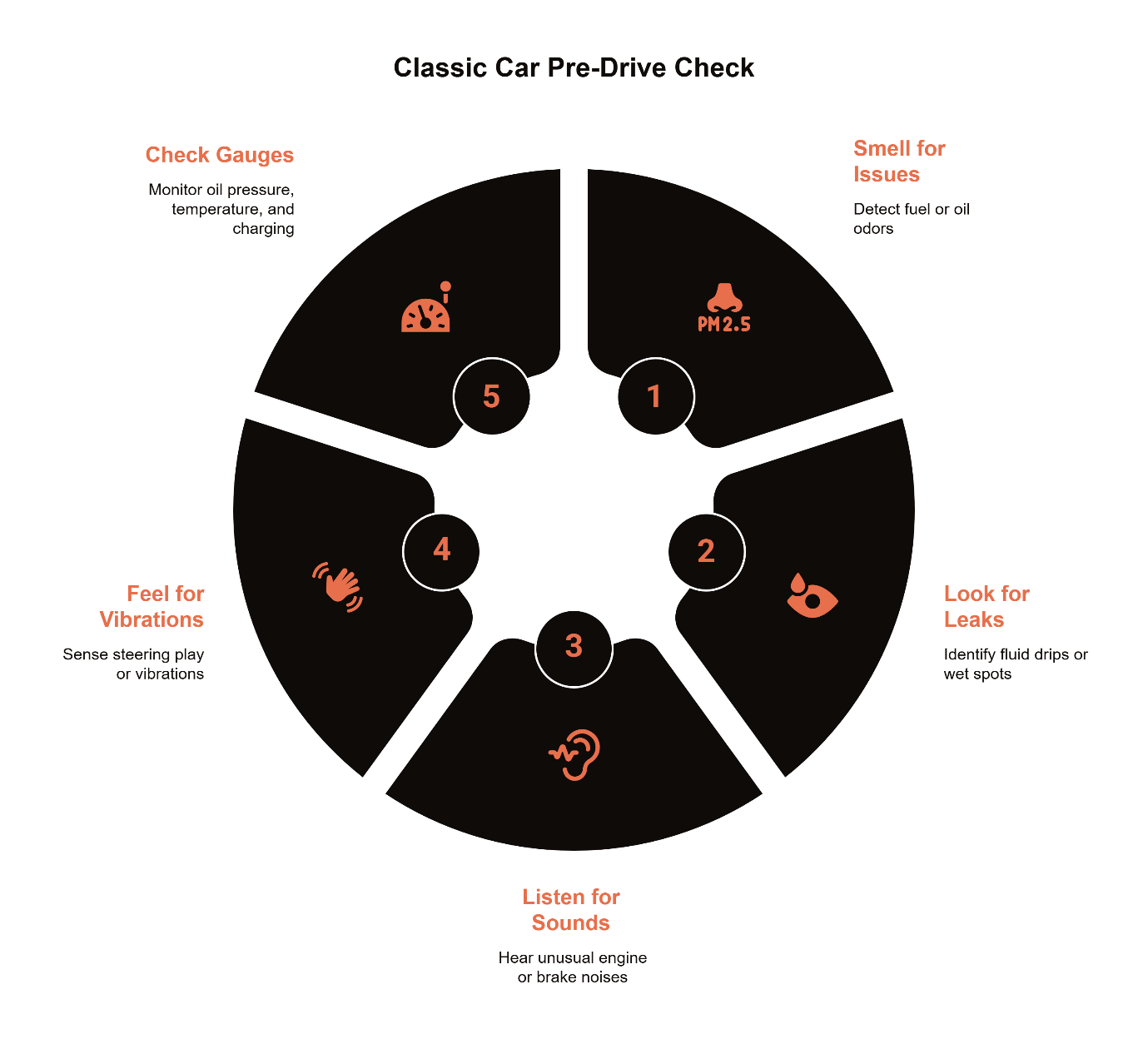
Smell
- Raw fuel odor near the engine or inside the cabin = stop and inspect fuel lines and connections
- Burning oil smell = check for leaks dripping onto hot exhaust components
- Strong exhaust smell inside the car = possible exhaust leak; do not drive until inspected
Look
- Fresh drips or wet spots under the engine bay or transmission
- Wetness around fuel hose junctions and carburetor fittings
- Cracked, glazed, or fraying belts
- Fluid levels (oil, brake fluid, coolant if water-cooled)
Listen
- New squeals, ticks, or knocks you haven't heard before
- Changes in sound when the engine warms up versus cold start
- Grinding or scraping when braking
Feel
- Brake pedal firmness—spongy or sinking pedal means stop and check
- Steering play or wandering
- New vibrations through the wheel or seat
Gauges (Where Equipped)
Many classics have oil pressure gauges, oil temperature gauges, or ammeters rather than warning lights. These analog instruments tell you what's happening inside the engine in real time.
- Oil pressure trend at idle and at speed
- Temperature behavior (air-cooled: note changes in traffic; water-cooled: watch the gauge)
- Charging system behavior (ammeter or voltmeter reading)
This takes ten minutes. Make it a habit, and you'll catch problems while they're still small.
The Preservation Schedule for Classic VWs and Porsches
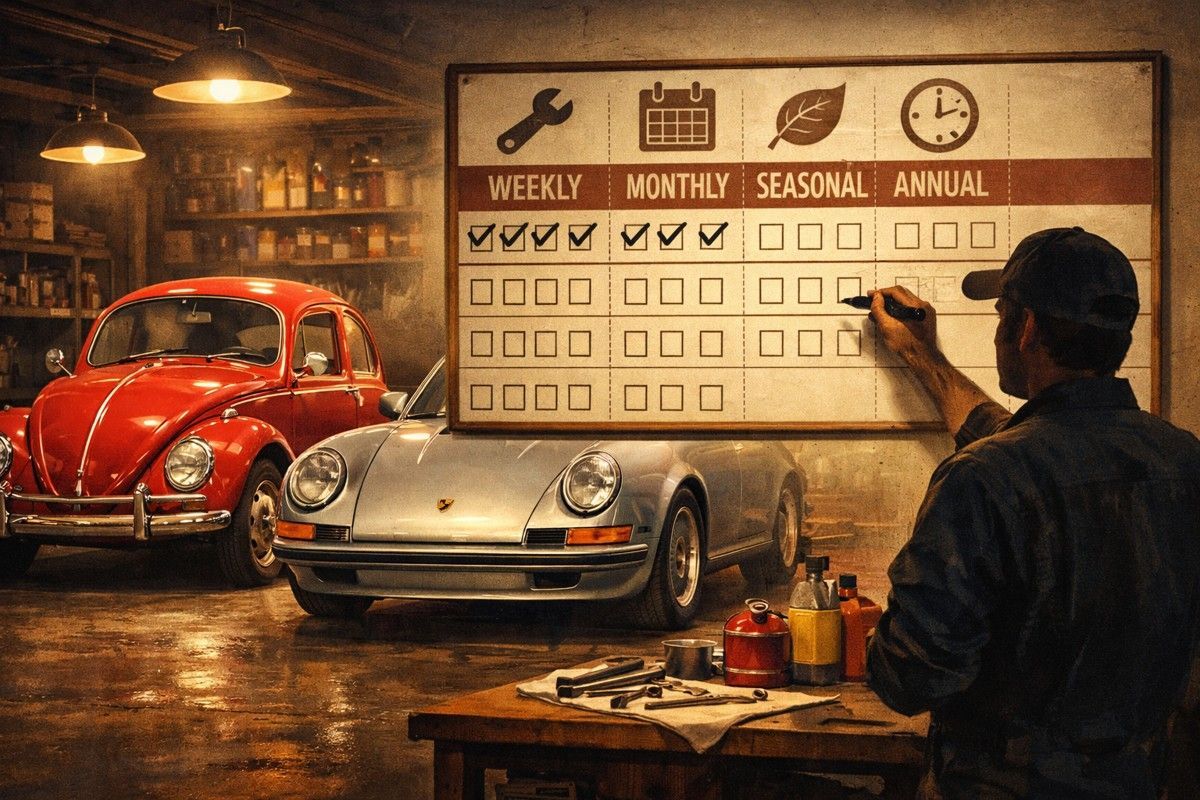
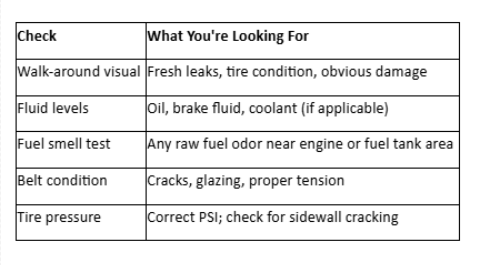
Here's your calendar-based maintenance rhythm. Print this, hang it in the garage, and check off as you go.
Every Drive or Weekly (Whichever Comes First)
Monthly
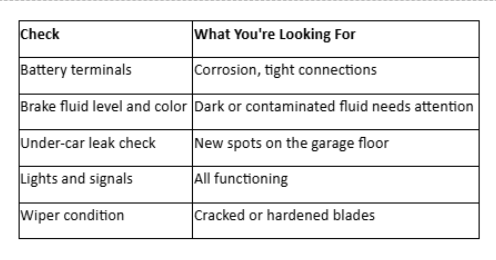
Seasonal (Every 3–4 Months)
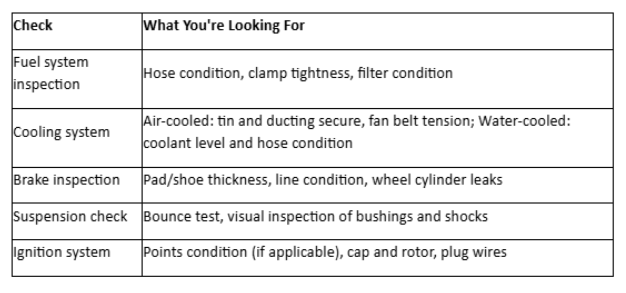
Annual
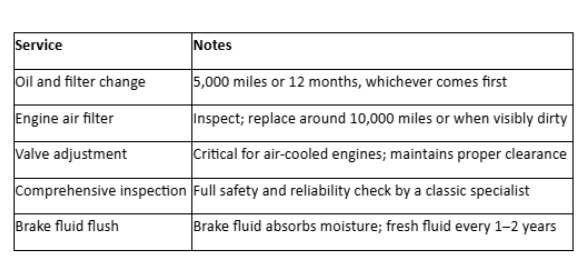
The Weekend Car Rule: If you're not adding miles, the calendar still moves. A car that sits eleven months and drives one still needs annual service—possibly more attention to fuel system and seals than a regularly driven example. If the car sits three or more weeks between drives, shift your focus to time-based checks rather than mileage.
First 30 Days as a New Owner
If you've just acquired a classic VW or Porsche with unknown history, these checks establish your baseline:
- [ ] Full visual inspection: leaks, wiring condition, hose condition
- [ ] Oil change with appropriate formulation for your engine
- [ ] Brake inspection: pads, shoes, lines, wheel cylinders, master cylinder
- [ ] Fuel system check: lines, filter, tank condition, carburetor function
- [ ] Ignition system inspection: points, timing, cap, rotor, wires
- [ ] Cooling system review: tin/ducting (air-cooled) or hoses/coolant (water-cooled)
- [ ] Battery load test
- [ ] Test drive with attention to sounds, smells, and handling
- [ ] Document findings and create a prioritized action list
System-by-System: What to Inspect and Why It Matters
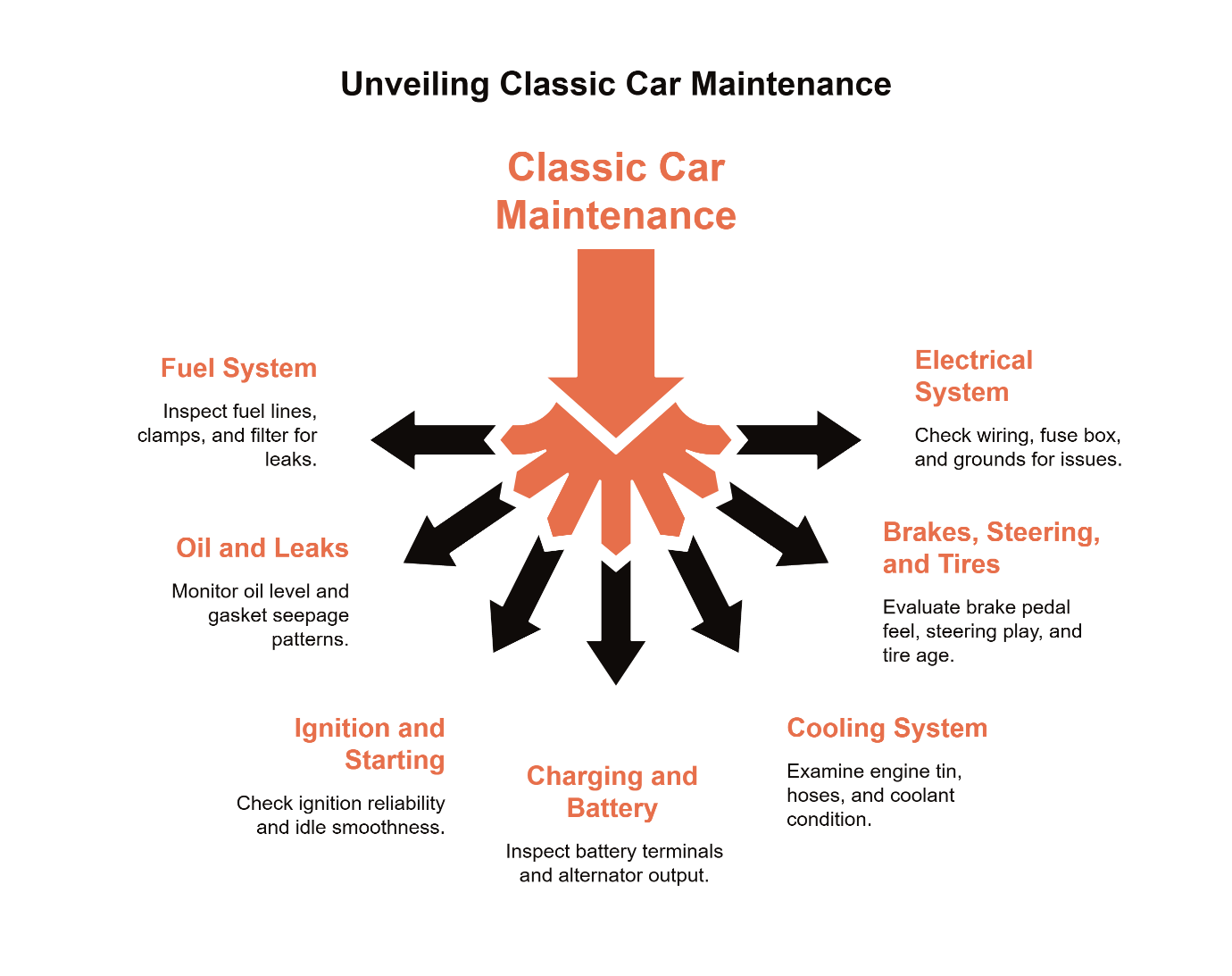
Fuel System
What to check: Rubber fuel lines, hose clamps, carburetor fittings, fuel filter, tank condition
What you might notice:
- Gasoline vapors pooling in the engine bay or cabin
- Wet spots at hose connections
- Hard, cracked, or swollen rubber lines
What it suggests: Fuel system components degrade even when the car sits—sometimes faster. Rubber hardens, clamps loosen, and old fuel leaves varnish deposits. Fuel quality can also degrade over time; storage and ethanol blends can complicate compatibility and moisture behavior in fuel-handling systems.
Decision rule: Any persistent fuel odor or visible wetness near fuel connections warrants immediate inspection. Cracked lines or seeping connections are a fire hazard. Do not drive further until inspected.
Oil and Leaks
What to check: Oil level, oil condition, gasket seepage patterns
What you might notice:
- Oil spots under the car that weren't there before
- Oil level dropping between checks
- Wet areas around valve covers, oil cooler, or crankcase
What it suggests: Some seepage is common in older engines with cork or rope seals. The question is whether it's stable baseline seepage or a new, worsening leak.
Decision rule: Track the pattern. A thin film that's been there for years is different from fresh drips appearing suddenly. Sudden changes mean schedule an inspection. If burning oil smell accompanies a leak, identify the source promptly.
Ignition and Starting
What to check: Starting reliability, idle smoothness, points (if applicable), distributor cap and rotor, plug wires
What you might notice:
- Hard starting when cold or hot
- Rough or uneven idle
- Misfires under load
What it suggests: Ignition components wear and corrode. Points pit. Distributor caps crack. Plug wires develop internal breaks.
Decision rule: If starting becomes unreliable or the engine runs rough, have the ignition system inspected. These are straightforward checks for a classic specialist.
Charging and Battery
What to check: Battery terminals, alternator or generator output, belt condition
What you might notice:
- Slow cranking
- Dim lights at idle
- Battery not holding charge
What it suggests: Batteries fail, especially when cars sit. Charging systems in classics work hard. Loose belts reduce output.
Decision rule: Clean terminals, check belt tension, and have the battery load-tested if it's more than three years old. Charging issues need diagnosis before you're stranded.
Cooling System
For air-cooled engines: Check engine tin (the sheet metal that directs airflow), thermostat flaps, fan belt tension, and oil cooler condition.
For water-cooled classics: Check coolant level and condition, radiator hoses, heater hoses, and water pump weep hole.
What you might notice:
- Air-cooled: higher than normal oil temperature, engine running hot in traffic
- Water-cooled: coolant loss, sweet smell, wet spots under radiator area
What it suggests: Overheating kills engines. Air-cooled cars depend entirely on proper airflow—missing or damaged tin disrupts cooling. Water-cooled cars need intact hoses and clean coolant.
Decision rule: Any overheating episode needs investigation before driving again. Don't ignore rising temperatures or coolant loss.
Brakes, Steering, and Tires
What to check: Pedal feel, stopping distance, steering play, tire condition and age
What you might notice:
Spongy or sinking brake pedal
Pulling to one side when braking
Increased steering effort or wandering
Cracks in tire sidewalls, even with good tread
What it suggests: Brake systems use rubber seals and hoses that deteriorate with age. Steering components wear. Tires age out before they wear out—rubber degrades from UV and ozone exposure regardless of miles driven.
Decision rule: Brakes and steering are safety-critical. Any change in feel or performance means stop driving and inspect. Tires older than six to seven years should be replaced even if tread looks fine.
Electrical System
What to check: Wiring condition, fuse box, grounds, any previous owner modifications
What you might notice:
- Intermittent electrical issues
- Burning smell from wiring
- Melted insulation or exposed wires
- Amateur splices or non-original wiring
What it suggests: Previous owners sometimes add accessories, alarms, or stereos with questionable wiring. Old insulation becomes brittle. Poor grounds cause problems throughout the system.
Decision rule: An electrical wiring audit should be part of any first-year baseline inspection. Wiring fires are preventable but serious. Vehicle fire prevention commonly emphasizes regular service and attention to potential sources of heat or fuel vapor.
Driving Is Maintenance
Here's a truth that surprises some new classic owners: regular driving is part of preservation.
When you drive, oil circulates and coats internal surfaces. Seals stay lubricated. Fuel moves through the system before it can turn stale. Brakes get exercised. Batteries stay charged.
A "healthy drive cycle" means reaching operating temperature—not just idling in the driveway for ten minutes. The engine needs to warm up fully, which means actually driving.
Southern California realities: Orange County's heat and stop-and-go traffic can stress air-cooled engines. Watch your temperature gauge or oil temperature behavior in slow traffic. Give the engine airflow. If you're sitting in gridlock and things are getting hot, pull over and let it cool rather than pushing through.
Aim for at least one drive per month that reaches full operating temperature and lasts 20–30 minutes. Your classic will thank you with fewer sitting-related problems.
For more on keeping your classic healthy before a weekend outing, see Before a Sunday Cruise from Orange Plaza: The Reliability Check We Perform on Classic VWs.
Storage and Low-Mileage Adjustments
If your classic sits more than it drives, your preservation schedule shifts to emphasize time over miles.
Triggers to switch to time-based priority:
- Car sits 3+ weeks between drives
- Annual mileage under 1,000 miles
- Extended storage (seasonal, garaged, covered)
Low-Mileage Storage Checklist
Monthly (even if not driving):
- Battery tender connected or battery disconnected
- Tire pressure check; consider rolling the car a few feet to prevent flat spots
- Visual leak check under the car
- Fuel smell check around engine and tank area
Before any drive after sitting:
- Full pre-drive check (smell, look, listen, feel)
- Check all fluids
- Run through gears gently before spirited driving
- Listen for new noises and watch gauges carefully
Before a longer cruise or show: If the car has been sitting and you're planning a significant drive, consider booking a quick inspection to catch anything that developed during storage. It's easier and cheaper to find a fuel leak in the shop than on the side of Pacific Coast Highway.
How to Baseline Year One with a Classic Specialist
If you've just acquired a classic VW or Porsche, the most valuable thing you can do in the first few months is establish a baseline with a shop that knows these cars.
Think of it as a wellness visit. You're not necessarily fixing everything at once—you're converting "unknown history" into a prioritized plan.
What a baseline inspection accomplishes:
- Safety first: Identifies brake issues, steering problems, tire age, and fire risks (fuel and wiring) that need immediate attention
- Reliability second: Flags items that might leave you stranded—charging system health, ignition condition, cooling effectiveness
- Preservation third: Documents wear items, seepage patterns, and future maintenance needs so you can budget and plan
What to bring to your first visit:
- Any receipts or records from previous owners
- Notes on smells, noises, or behaviors you've noticed
- How you plan to use the car (daily, weekend, shows only, stored most of the year)
- Your questions and concerns
Setting a relationship cadence: After the baseline inspection, most classic owners benefit from an annual comprehensive check plus symptom-based visits when something changes. You don't need to visit monthly, but you shouldn't wait until something fails either. The goal is predictable, planned maintenance rather than reactive repairs.
At Orange Independent Auto Repair, we've been working on classic Volkswagens and Porsches since 1971. We'll give you a clear picture of where your car stands and help you prioritize what matters most for safety and reliability.
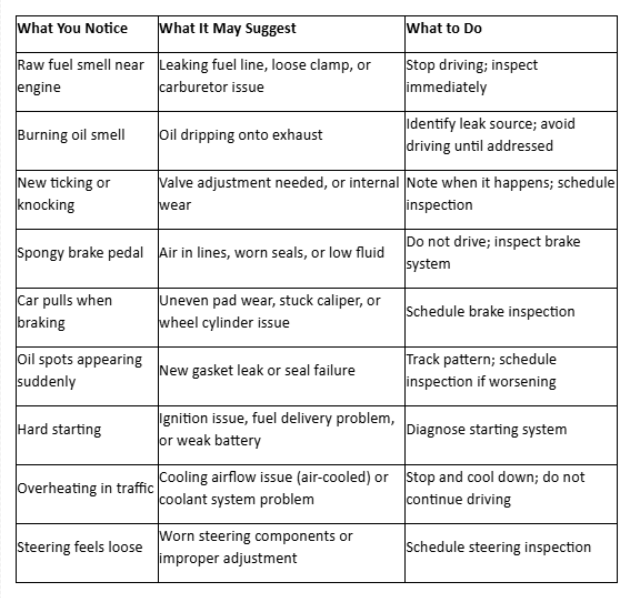
Symptom Quick-Reference: What You Notice → What It May Mean → What to Do
Frequently Asked Questions
How often should oil be changed on a classic VW or classic Porsche?
The standard interval is 5,000 miles or 12 months, whichever comes first. For low-mileage classics, the calendar often governs rather than the odometer.
What should be checked before every drive in a classic car?
A short sensory check: fuel smell, fresh drips, new noises, brake feel, steering feel, and gauge trends (if equipped). The aim is noticing change early.
How does maintenance change if a classic car sits most of the time?
Time-based checks become more important. Rubber ages, fuel can deteriorate, and small leaks can grow. When the car sits three or more weeks, treat the schedule as calendar-driven.
What should be done in the first month after buying a classic VW or Porsche?
Start with a baseline approach: confirm safety items (brakes, tires, steering, fuel integrity), establish the oil interval, and document a simple schedule. Unknown history becomes manageable when tracked.
When should a baseline inspection be scheduled for a newly purchased classic?
Sooner is usually calmer—ideally early in ownership, before the first long drive, or immediately if there is fuel odor, a major leak, or brake/steering feel change.
Next Steps: Build Your Preservation Calendar
You now have everything you need to create a maintenance rhythm that fits your classic VW or Porsche.
Download your printable Vintage Vehicle Preservation Calendar—a garage-wall checklist covering Every Drive, Monthly, Seasonal, Annual, and First-30-Days checks. It's designed to be simple, scannable, and actually useful.
Want classic car maintenance reminders sent to your inbox? Subscribe to our car care tips, and we'll help you stay on schedule.
Ready to Baseline Your Classic?
If you've recently acquired a classic VW or Porsche—or you're overdue for a comprehensive inspection—we're here to help.
Orange Independent Auto Repair 187 S Main St, Orange, CA 92868 (714) 633-7161 orange.independent@gmail.com
Monday–Friday: 7:00 AM – 6:00 PM Saturday: By appointment
We serve classic car owners throughout Orange, Tustin, Anaheim, Yorba Linda, and Villa Park. Schedule your appointment or call us to discuss what your car needs.
Resources
Orange Independent Pages:
- Classic Car Maintenance
- Porsche Services
- Our Services
- About Orange Independent
- Blog
- Testimonials
- Contact Us
External References:
- NHTSA TireWise: Tire Maintenance and Aging
- U.S. Fire Administration: Vehicle Fire Safety
- eCFR: FMVSS No. 116 — Motor Vehicle Brake Fluids
Disclaimer: This content is for informational purposes and reflects general maintenance principles for classic Volkswagens and Porsches. Specific maintenance requirements vary by model, year, and condition. Always consult a qualified classic car specialist for diagnosis and service recommendations tailored to your vehicle.
Our expert team uses AI tools and trusted sources to craft accurate and helpful content. Every article is reviewed for clarity, relevance, and practical value. While AI assists in research and drafting, our final content reflects real-world automotive experience and is intended to inform—not replace professional diagnosis or repair advice.
By: The Orange Independent Auto Repair Insights Team