
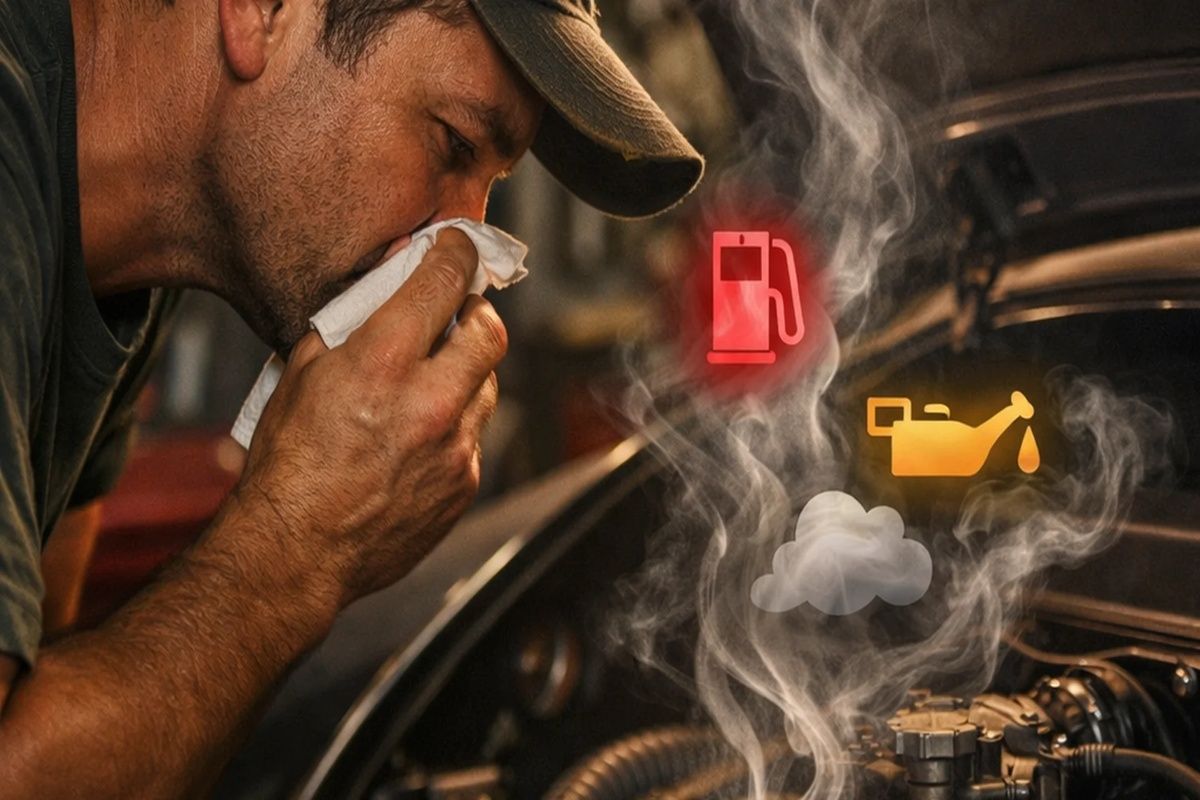
Is That Smell Normal? A Guide to Fuel and Oil Odors in Classics
📌 Key Takeaways
Your nose is your classic car's early warning system—learn which smells mean "stop now" versus "monitor later."
- Raw Fuel Smell Means Stop: A sharp gasoline odor is a fire risk—don't start the car, ventilate the area, and get it inspected before driving.
- Light Oil Scent Can Be Normal: A faint warm-oil smell after driving an air-cooled engine is often fine if it's mild, consistent, and smoke-free.
- Exhaust in the Cabin Is Dangerous: Fumes inside your classic VW or Porsche may signal carbon monoxide exposure—open windows, pull over, and have seals checked immediately.
- Sudden Changes Matter Most: Any smell that's new, stronger, or different from your car's baseline deserves professional attention, even without visible leaks.
- Note What You Observe: Where, when, and what else you notice (smoke, drips, gauge changes) helps a specialist diagnose faster without guessing.
Trust your senses—they're your classic's dashboard.
Classic VW and Porsche owners learning to read their cars will find practical guidance here, preparing them for the detailed smell-by-smell breakdown that follows.
~ ~ ~ ~ ~ ~ ~ ~ ~ ~ ~ ~ ~ ~ ~ ~ ~ ~ ~ ~ ~ ~ ~ ~ ~ ~ ~ ~ ~ ~ ~ ~ ~ ~ ~ ~ ~ ~ ~ ~ ~ ~ ~ ~ ~ ~ ~ ~ ~ ~ ~ ~
Saturday morning. The garage door rolls up. Instead of that satisfying whiff of old vinyl and warm metal, something sharper hits your nose. Gasoline? Oil? You stand there, keys in hand, wondering: Is my car about to catch fire?
That moment of uncertainty is one every new classic VW and Porsche owner faces. You've just become the steward of a vehicle that doesn't flash warning lights or send alerts to your phone. Your senses are the early-warning system now—and smell is often the first signal that something needs attention.
Here's the good news: not every odor means disaster. Some smells are just "old car character." Others demand immediate action. This guide will help you tell the difference in about five minutes, so you can enjoy your classic with confidence instead of anxiety.
The Quick Rule for Classic-Car Smells
A faint oil smell can be normal character; a raw fuel smell is a safety emergency.
Classic cars smell different than modern vehicles. Older seals, different ventilation designs, and air-cooled engines all contribute to odors you'd never encounter in a new car. That's expected. But there's a clear line between "vintage charm" and "genuine hazard."
Old car character typically means:
- A light, warm oil scent after a spirited drive
- Faint traces of old leather, rubber, or exhaust that dissipate quickly
- Smells that have been consistent since you bought the car
Danger signals include:
- Sharp, raw gasoline odor (especially if new or stronger than before)
- Exhaust fumes inside the cabin
- Burning smells accompanied by smoke
- Any sudden change in what you normally smell
When in doubt, treat it as something worth checking. A quick inspection costs far less than a preventable fire or breakdown.
The Sniff Test: Smell Identification Grid
Use this table to quickly identify what you're smelling and what to do next. If you're unsure which category fits, default to BOOK INSPECTION.
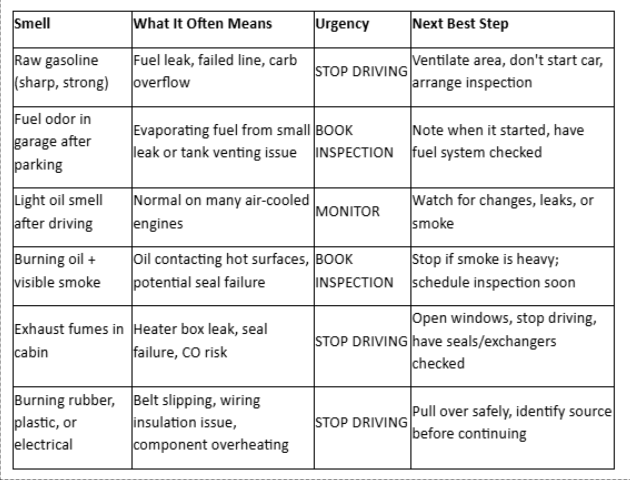
If you smell raw gas, don't start the car. Treat it as urgent.
This grid covers the most common scenarios, but classics can surprise you. When something smells wrong and you can't place it, that's your cue to get a professional opinion. For a deeper understanding of how sensory clues guide classic car care, explore our classic car maintenance for classic VW and Porsche.
If You Smell Raw Fuel: Treat It as Urgent
Gasoline is volatile. According to fire safety guidance from FEMA, mechanical failures—which frequently include hazardous fuel system leaks—are generally the leading cause of vehicle fires, and responding quickly to fuel odors can prevent catastrophic outcomes. The NFPA's vehicle fire safety guidelines reinforce this point: fuel-related fires escalate quickly. Raw fuel smell isn't something to "keep an eye on"—it requires action.
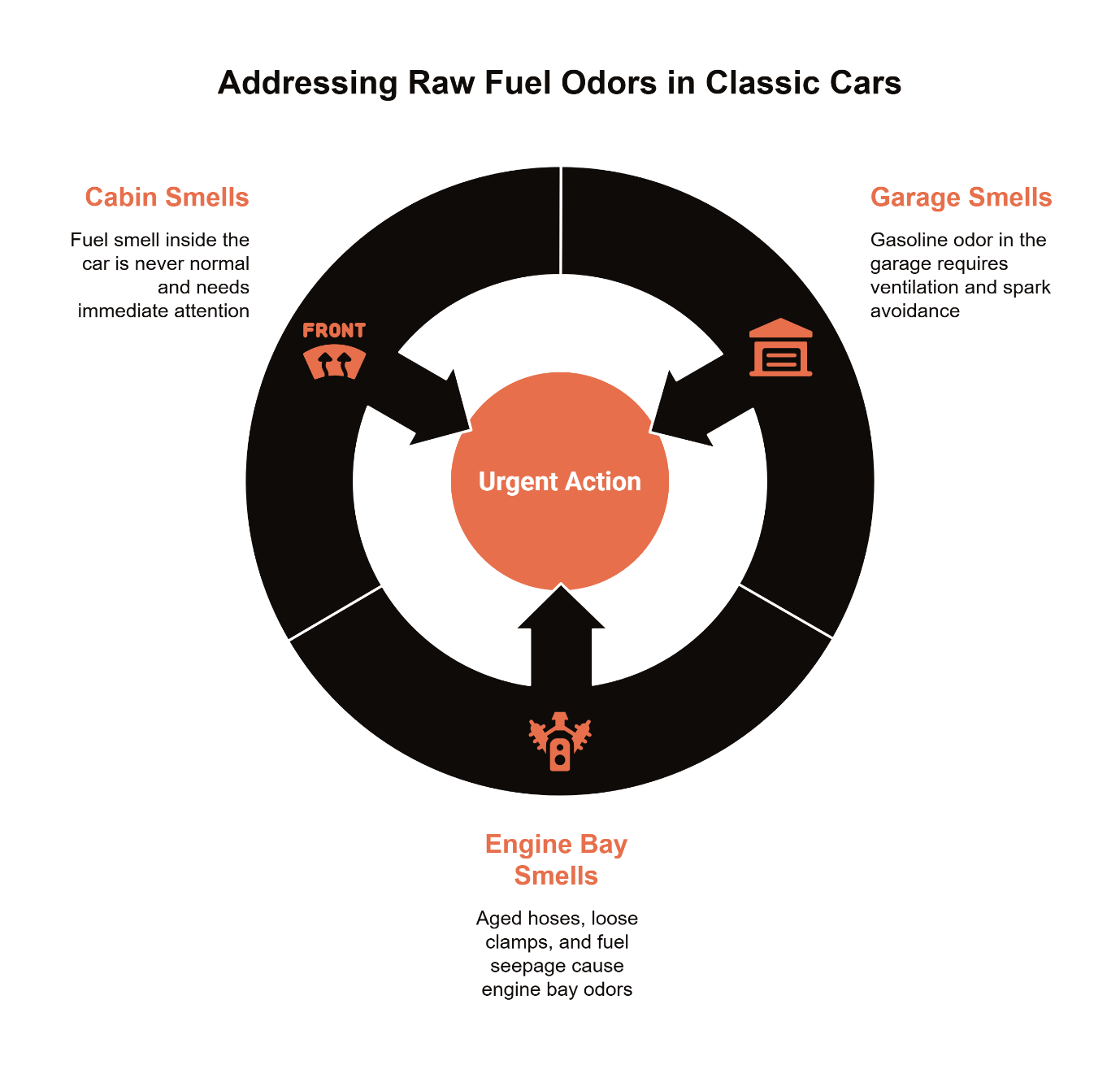
In the Garage
If your garage smells like gasoline when the car has been sitting:
- Don't start the engine
- Open the garage door and ventilate the space
- Avoid any sparks, including light switches near the car
- Look under the vehicle for wet spots or drips (but don't get under the car if you smell strong fumes)
Fuel can evaporate, so you may smell it even without a visible puddle. Gasoline vapors are heavier than air and can accumulate at floor level, creating an invisible hazard. The smell itself is the warning—don't wait for a drip to confirm it.
Around the Engine Bay
Common sources of fuel odor near the engine include aged rubber hoses, loose clamps, carburetor or fuel injection seepage, and cracked filler necks. On classics, fuel lines can degrade internally even when they look fine from the outside. A visual inspection doesn't always reveal the problem; the lines need to be physically checked for brittleness and internal deterioration.
One factor that catches new owners off guard is heat soak. After you shut down the engine, under-hood temperatures can actually rise briefly before cooling. That spike increases evaporation and can make marginal seepage smell much stronger than it did while driving. A smell that appears after parking—not during the drive—often points to this phenomenon.
Inside the Cabin
Fuel smell inside the car is never normal. On a classic Porsche, fuel lines may run through or near the cabin area. On a Beetle or Bus, the fuel tank's location and venting can allow fumes to enter. If you smell gasoline while driving, pull over when safe, ventilate the cabin, and don't continue until the source is identified. For Porsche owners in the area, our Porsche services for owners in Orange County include thorough fuel system inspections.
If You Smell Oil: Normal, Warning, or Problem?
Oil odors are more nuanced than fuel smells. Some are genuinely part of owning an air-cooled classic. Others signal developing problems.
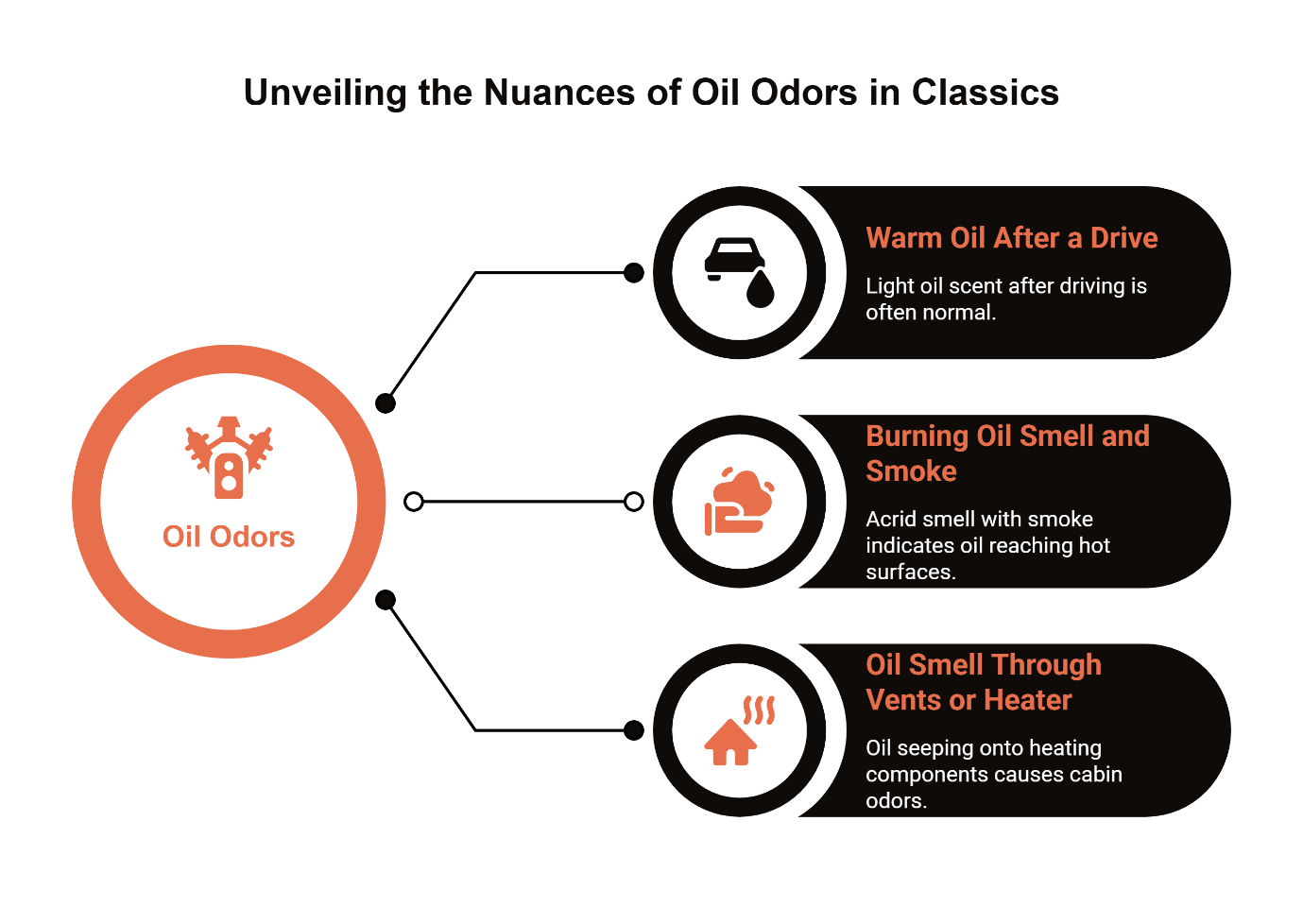
Warm Oil After a Drive
On many air-cooled VWs and Porsches, a light oil scent after driving—especially after highway speeds or warm weather—can be normal. The engine runs hot, oil warms up, and you catch a whiff when you open the engine cover. This is usually fine if:
- The smell has been consistent since you've owned the car
- There's no visible smoke
- Oil level remains stable between checks
What matters most is trend. A smell that stays mild and consistent falls into "monitor" territory. A smell that is new, stronger than usual, or sudden moves from "monitor" to "book inspection." Any accompanying smoke shifts urgency upward still.
For new owners who inherited an unknown maintenance history, establishing a baseline through inspection helps you know what "normal" looks like for your specific car. That way, future changes stand out clearly. For more guidance on reading what your oil is telling you, see oil spots under your classic VW: what's normal vs a real risk.
Burning Oil Smell and Smoke
Burning oil—that acrid, sharp smell often accompanied by wisps of smoke—indicates oil is reaching hot surfaces. This could mean a valve cover gasket seeping onto the exhaust, an oil cooler line dripping onto the engine, or a seal that's given up.
If you see smoke, especially blue or gray smoke, stop driving until you know the source. Heavy smoke is a STOP DRIVING situation. Light wisps with a burning smell still warrant a BOOK INSPECTION response.
Oil Smell Through Vents or Heater
On classic VWs, the heating system routes air over the engine and exhaust components before directing it into the cabin. If oil is seeping onto these hot surfaces, you may smell it through your vents. This isn't just unpleasant—it can indicate a leak that needs attention before it worsens or creates a fire risk. Odors that enter the cabin should always be treated more seriously than odors that stay outside the car.
Exhaust Smells Inside the Car: Don't Ignore This
Exhaust odor in the cabin is serious. Unlike fuel or oil smells that signal mechanical issues, exhaust fumes pose a direct health risk: carbon monoxide poisoning.
Why CO Risk Is Different
Carbon monoxide is odorless on its own, but exhaust contains other compounds you can smell. If you detect exhaust inside the car, you're potentially breathing CO as well. According to the CDC, carbon monoxide poisoning can cause headaches, dizziness, confusion, and in severe cases, death—sometimes before you realize anything is wrong.
Don't treat exhaust smell in the cabin as a minor annoyance. Crack the windows immediately and stop driving until the source is found and fixed. This is a diagnosis-first scenario—not a guess-and-go scenario.
Common Classic Entry Points
On classic VWs, the heat exchangers (heater boxes) wrap around the exhaust and direct warmed air into the cabin. If these components develop cracks or corrosion, exhaust gases mix with your heat. Worn seals around the engine compartment, damaged floor pans, or deteriorated body seals can also allow fumes to enter.
These aren't visible problems you can spot from outside the car. They require inspection from someone who knows where to look on these specific vehicles.
What to Observe Before Calling a Shop
No tools. No fixes. Just observations that speed up diagnosis.
You don't need mechanical knowledge—just your senses and a few notes. This information helps a specialist diagnose the issue faster.
Where is the smell strongest?
- Front of the car, rear, engine compartment, inside the cabin?
- Driver's side, passenger's side, or throughout?
When does it happen?
- Only after driving? Only when parked overnight?
- Cold starts, hot restarts, or all the time?
- Did it start suddenly or develop gradually?
Any visible signs?
- Wet spots or drips under the car?
- Smoke from the engine area? What color?
- Stains on the garage floor that weren't there before?
Gauge behavior (if your classic has gauges)?
- Oil pressure reading normal?
- Temperature gauge showing anything unusual?
These observations—where, when, and what else you notice—give a shop valuable starting points. For more on how sensory information guides diagnosis, read rough idle on an air-cooled Volkswagen: what your senses can tell a specialist.
How a Classic-Focused Inspection Finds the Source
A shop experienced with classic VW and Porsche approaches smell-related concerns differently than a general repair facility. There's no computer to plug into—diagnosis relies on systematic visual inspection, physical testing, and knowing where these cars typically develop issues.
Fuel system inspection involves checking rubber lines for brittleness and swelling, verifying clamp integrity, inspecting the tank and filler neck, and examining carburetor or fuel injection components for seepage.
Oil leak tracing means identifying where oil is escaping (valve covers, pushrod tubes, oil cooler lines, main seals) and determining whether it's reaching hot surfaces.
Cabin fume checks include inspecting heat exchangers for corrosion or cracks, examining body seals and floor pans, and verifying that exhaust routing is sound.
This kind of baseline safety check is especially valuable for new owners establishing what "normal" looks like for their specific car. Our auto repair services include thorough inspections for classic VW and Porsche models. You can also see what a pre-drive reliability check looks like: before a Sunday cruise from Orange Plaza: the reliability check we perform on classic VWs.
FAQ
Is it normal for a classic car to smell like gas?
No. Unlike a faint oil scent, any distinct raw gasoline odor is a safety emergency and should be treated as urgent. If you smell sharp fuel, don't start the car—have the fuel system inspected before driving.
Why does my garage smell like fuel but I don't see a leak?
Gasoline evaporates quickly, so fumes can accumulate even from a small seep you can't see. Heat soak after shutdown can intensify the smell. The fuel may be escaping from a line, connection, or tank vent and evaporating before it drips. The smell itself is the evidence; schedule an inspection even without visible wetness.
Is an oil smell after driving normal on an air-cooled engine?
A light oil scent after a drive can be normal on many air-cooled classics—these engines run hot, and some minor seepage is common. The key is whether it's mild and consistent. Burning smell with smoke, or a sudden change, indicates a problem worth checking.
What does exhaust smell in the cabin mean on a classic VW?
Exhaust odor inside a classic VW often points to deteriorated heat exchangers (heater boxes) or failed seals that allow exhaust gases into the cabin. This is a safety concern because of carbon monoxide risk. Stop driving and have the heating system and seals inspected promptly.
Owning a classic VW or Porsche means learning to read your car through smell, sound, and feel instead of dashboard alerts. Most odors are manageable once you understand what they mean. The key is knowing which ones demand immediate attention and which can be monitored.
If you smell raw fuel or exhaust in the cabin, don't keep driving—have the car inspected. Orange Independent Auto Repair has served classic car owners across Orange, Tustin, Anaheim, Yorba Linda, and Villa Park since 1971. We're family-owned since 1971, and our approach is simple: we'll explain what we find, help you understand your options, and never pressure you into work you don't need.
Serving nearby areas: Tustin | Anaheim | Yorba Linda | Villa Park
Questions about a smell in your classic? Contact Orange Independent Auto Repair or call (714) 633-7161. You can also email us at orange.independent@gmail.com. We're here Monday through Friday, 7am to 6pm, and Saturdays by appointment.
Disclaimer: This article is for general informational purposes only and does not substitute for professional diagnosis. If you smell raw fuel, see smoke, or notice exhaust fumes in the cabin, treat it as a safety issue and have the vehicle inspected before further driving.
Our Editorial Process
At Orange Independent Auto Repair, we believe in transparency—both in our repairs and in the information we share. Every article we publish is written to help you make confident decisions about your vehicle, without scare tactics or sales pressure.
We proudly serve drivers across Orange, Tustin, Anaheim, Yorba Linda, and Villa Park, and our content is designed with real customer questions in mind—especially those that come up in our shop every week.
When we publish advice, it's shaped by decades of hands-on experience working with classic VW and Porsche models. Our goal is to explain what matters, what doesn't, and when to take action—so you can protect your car, your budget, and your peace of mind.
By: Orange Independent Auto Repair Insights Team
This article was written by the Orange Independent Auto Repair Insights Team, a group of service advisors and automotive specialists dedicated to helping drivers in Orange and surrounding communities make informed, confident decisions about their vehicles. Every piece is grounded in real-world shop experience and reviewed for clarity, accuracy, and usefulness.