The Anaheim Driveway Test: 5 Physical Checks Before You Buy a Vintage VW
📌 Key Takeaways
Five simple physical checks help you spot obvious problems on a vintage VW before your excitement writes a check your wallet can't cash.
- Feel the Floors First: Lift the mats and press—damp, soft, or flaky metal means hidden rust that's expensive to fix.
- Bounce Each Corner: Push down on each fender and release—if the car bounces more than once, the shocks are worn or blown.
- Watch the Cold Start: Blue-gray smoke lasting several seconds suggests the engine burns oil; heavy black smoke means fuel problems.
- Look for Fresh Drips: Old dusty grime is normal, but fresh wet spots appearing under a running engine signal active leaks.
- Trust Your Nose: A strong raw gasoline smell is a fire hazard—don't drive a car that smells dangerous until proven safe.
These checks screen cars quickly—but they don't replace a real inspection on a lift.
First-time vintage VW buyers will learn to spot red flags before scheduling a professional pre-purchase inspection, preparing them for the detailed guidance that follows.
~ ~ ~ ~ ~ ~ ~ ~ ~ ~ ~ ~ ~ ~ ~ ~ ~ ~
The seller is telling a great story. The paint gleams under the Anaheim sun. Then you lift the floor mat—and your fingertips press into something damp and soft where solid metal should be.
That moment changes everything.
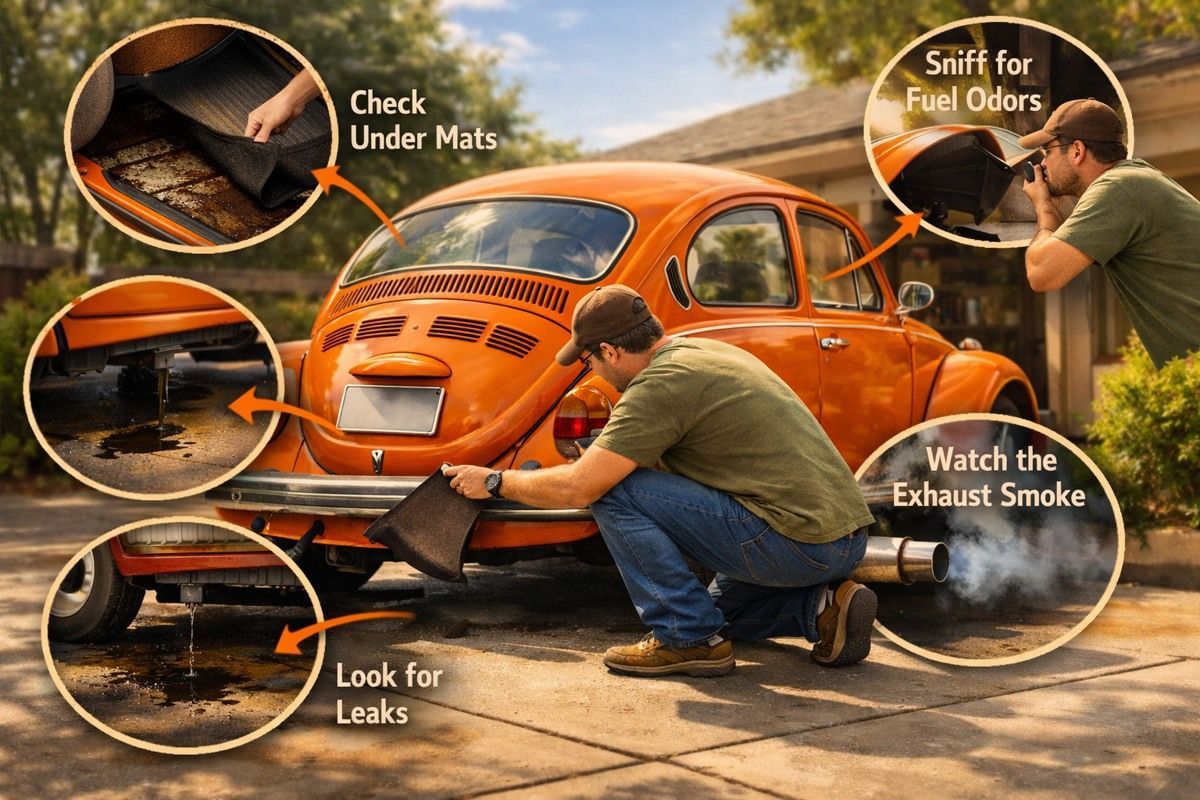
Buying a vintage Volkswagen is part mechanical decision, part emotional leap. These five checks will not replace a professional pre-purchase inspection, but they will help you spot obvious problems before your excitement writes a check your wallet cannot cash. No tools required. Just your eyes, your hands, and your nose.
What This Driveway Test Can and Cannot Tell You
These checks are screening tools—a way to sort promising cars from obvious money pits. They catch red flags hiding in plain sight: hidden rust, blown suspension, active leaks, and safety hazards.
What they cannot do is evaluate compression, diagnose electrical gremlins, or predict whether that rebuilt engine will last. That certainty requires a lift, proper gauges, and someone who has spent decades working on these cars. The driveway test simply helps you decide whether a car deserves that deeper look.
The most useful mindset is simple: observe first, decide later.
Check 1: Lift the Floor Mats and Feel for Dampness, Rust, and Soft Spots
Start here because this is where classic VWs hide their biggest secrets. Floor pans and heater channels rust from the inside out on Beetles, Buses, and Ghias—often invisibly until they become expensive structural problems.
Pull back the mats on both sides. Press your palm flat against the metal. Run your fingers along the seams.
Good sign: Dry, firm metal with consistent texture.
Concerning: Dampness, gritty flakes on your fingers, or small soft spots suggesting active corrosion.
Walk away: Your finger pushes through the metal, the floor flexes underfoot, or fresh undercoating covers questionable areas. Heavy undercoating often means someone is hiding structural rust.
Paint can distract. The floor tells the story underneath. If the mat area feels damp or soft, note exactly where it is and how wide the problem seems. Then keep looking with colder eyes.
Check 2: Bounce Each Corner and Watch How the Car Settles
Stand at one corner. Press down firmly on the fender with both hands, push it down about two inches, then release quickly.
Good sign: The car rises once, settles smoothly, and stops.
Concerning: The body bounces twice before settling. The shocks are wearing out.
Walk away: The car keeps oscillating three or more times. The shocks are blown. Budget for replacement on all four corners.
This is not an exact diagnosis. It is a screening clue. Repeated oscillation suggests the car is not controlling its weight well, which affects ride quality, handling, and cost after purchase.
Repeat at each corner. Vintage VWs often wear unevenly, especially if a previous owner only replaced one or two shocks.
Check 3: Watch the Exhaust the Moment the Engine Starts Cold
Ask the seller to let you start the car cold—before they have warmed it up. A warm engine hides sins that a cold start reveals instantly.
Position yourself where you can see the tailpipe. Turn the key. Watch what comes out during the first thirty seconds.
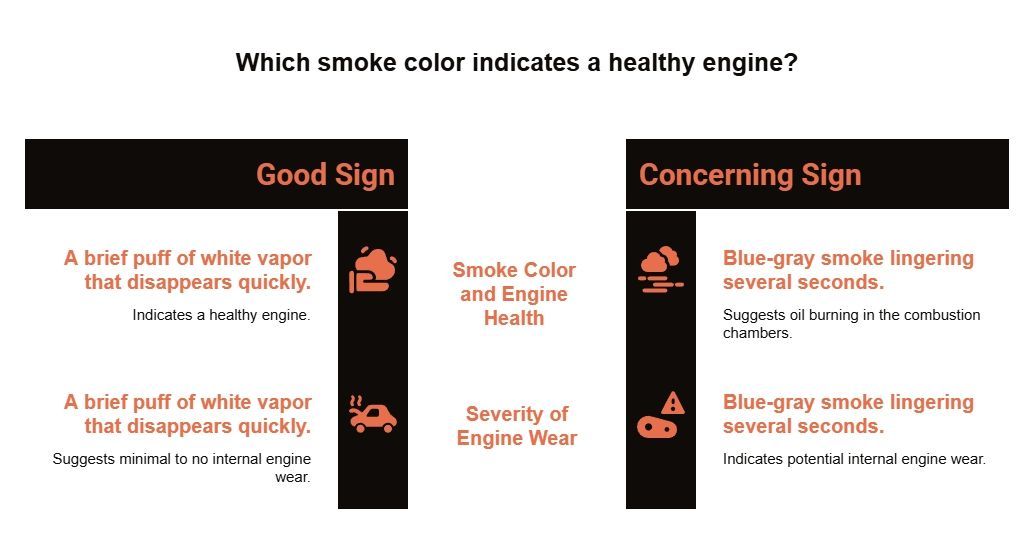
Good sign: A brief puff of white vapor that disappears quickly.
Concerning: Blue-gray smoke lingering several seconds, suggesting oil burning in the combustion chambers.
Walk away: Heavy, continuous blue-gray smoke (indicating severe internal engine wear) or heavy black smoke (carburetor running extremely rich).
The key is not just color. Take a photo or short video if needed, then bring that observation into a real inspection conversation.
Smoke color gives you a quick read on engine health. A professional inspection with compression testing will confirm what you observe. For buyers trying to sharpen their senses further, The Analog Diagnostic Guide: Listening to Your Air-Cooled Engine adds useful context.
Check 4: Look Underneath for Active Leaks, Fresh Drips, and Sudden Wetness
Classic cars leak. The question is how much and from where.
Before the test drive, check the ground underneath. Look again after the engine has run for a few minutes.
Good sign: Dry pavement. A faint oily sheen on old gaskets is normal for an air-cooled VW.
Concerning: Small fresh drips appearing after the engine runs. Note the color and location.
Walk away: Puddles forming actively while you watch. A steady drip from any major component. Fresh wetness spreading across multiple areas.
Dusty seepage and old grime are not the same as fresh fluid. Freshness is the clue. Dusty residue from years of minor weeping is different from fresh, wet oil appearing under a running engine. If the underside shows active wetness, document where it is and resist the urge to explain it away. A seller may call it normal. That does not make it harmless.
For more guidance, read Oil Spots Under Your Classic VW: What's Normal vs. a Real Risk.
Check 5: Smell for Raw Fuel or Burning Oil Before You Trust the Seller's Story
Smell is not vague intuition. On a classic car, it is usable evidence.
Your nose catches problems that your eyes miss. Walk around the car with the engine idling. Open the engine compartment. Breathe normally and pay attention.
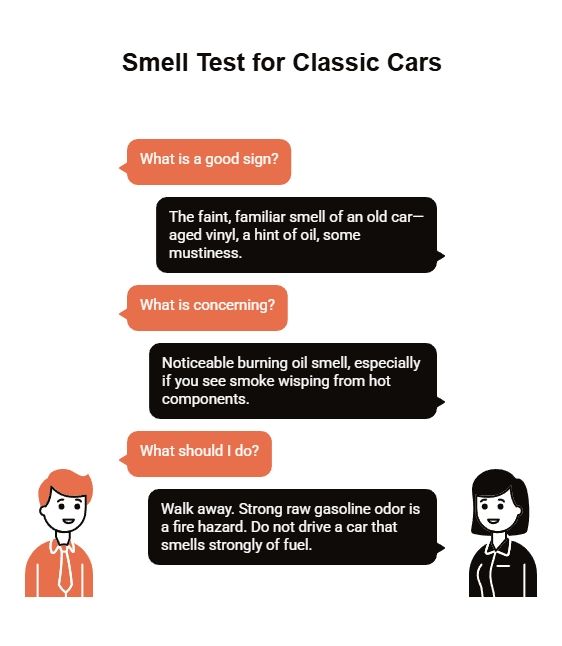
Good sign: The faint, familiar smell of an old car—aged vinyl, a hint of oil, some mustiness.
Concerning: Noticeable burning oil smell, especially if you see smoke wisping from hot components.
Walk away: Strong raw gasoline odor. This is a fire hazard. Do not drive a car that smells strongly of fuel.
Trust what your senses tell you. Sellers sometimes explain away warning signs with stories about recent work or quirks. A car that smells dangerous is dangerous until proven otherwise. For more context, see Is That Smell Normal? A Guide to Fuel and Oil Odors in Classics.
Driveway Walkaround Guide
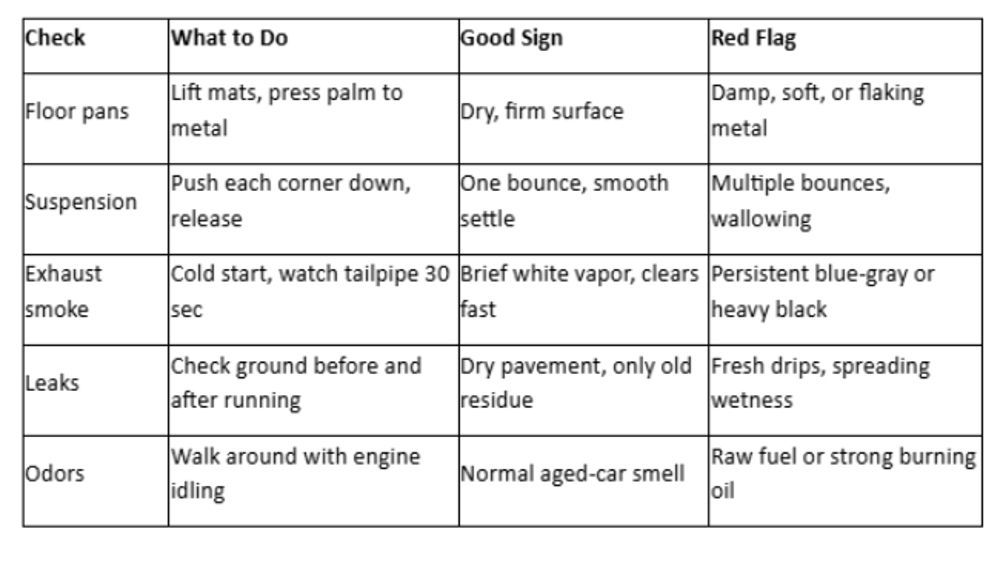
When to Walk Away and When to Escalate to a Professional Pre-Purchase Inspection
Use these checks to sort cars into three categories:
Walk away if you find multiple severe red flags: structural rust, blown suspension, heavy smoke, active puddles, or fuel odors. These problems stack into repair bills exceeding the car's value.
Negotiate carefully if you find isolated manageable issues: a single weak shock, minor seepage, or slightly rough idle. Factor realistic repair costs into your offer.
Proceed to inspection if the car passes your driveway checks. A clean test does not guarantee a healthy car—it simply means obvious problems are absent. The next smart move is getting the car on a lift where a specialist can check brakes, steering, and tires and evaluate what your eyes cannot see.
Before the purchase is finalized, it is also smart to review California DMV guidance for vehicles purchased from a private party and research known model-year safety bulletins through classic VW registries or trusted enthusiast forums, as vintage vehicles lack the 17-digit VIN required for modern NHTSA online databases. These steps do not replace inspection. They support it.
"I went here yesterday for a pre purchase inspection and they did an amazing job and they were very competitively priced. Actually they were less than the dealer and they were able to fit me in right away and I was in and out within 2 hours. I highly recommend them." — Bruce, Google Reviews
If any of these five checks raise questions, the smartest next step is a professional pre-purchase inspection before money changes hands. Contact the shop to schedule an inspection, or review our classic car maintenance page to see how we care for classic VW and Porsche vehicles.
Orange Independent Auto Repair has been family-owned since 1971, serving drivers in Orange, Tustin, Anaheim, Yorba Linda, and Villa Park with a reputation built on honest recommendations, transparent pricing, clear explanations, pre-purchase inspections, and a willingness to refer customers elsewhere when something falls outside its scope.
The goal is not perfection in the driveway. The goal is better judgment. Slow hands. Clear eyes. Fewer expensive surprises.
Our Editorial Process
Our expert team uses AI tools to help organize and structure our initial drafts. Every piece is then extensively rewritten, fact-checked, and enriched with first-hand insights and experiences by expert humans on our Insights Team to ensure accuracy and clarity.
About the Orange Independent Auto Repair Insights Team
Orange Independent Auto Repair is a family-owned auto repair shop serving Orange, CA since 1971. The team is known for honest, practical service and experience with classic VW and Porsche vehicles, including pre-purchase inspections and long-term maintenance.