
Translating the Ticks: What That Air-Cooled Engine Noise Actually Means
📌 Key Takeaways
Not every tick in an air-cooled VW or Porsche signals disaster—learning which sounds are normal protects you from panic and costly mistakes.
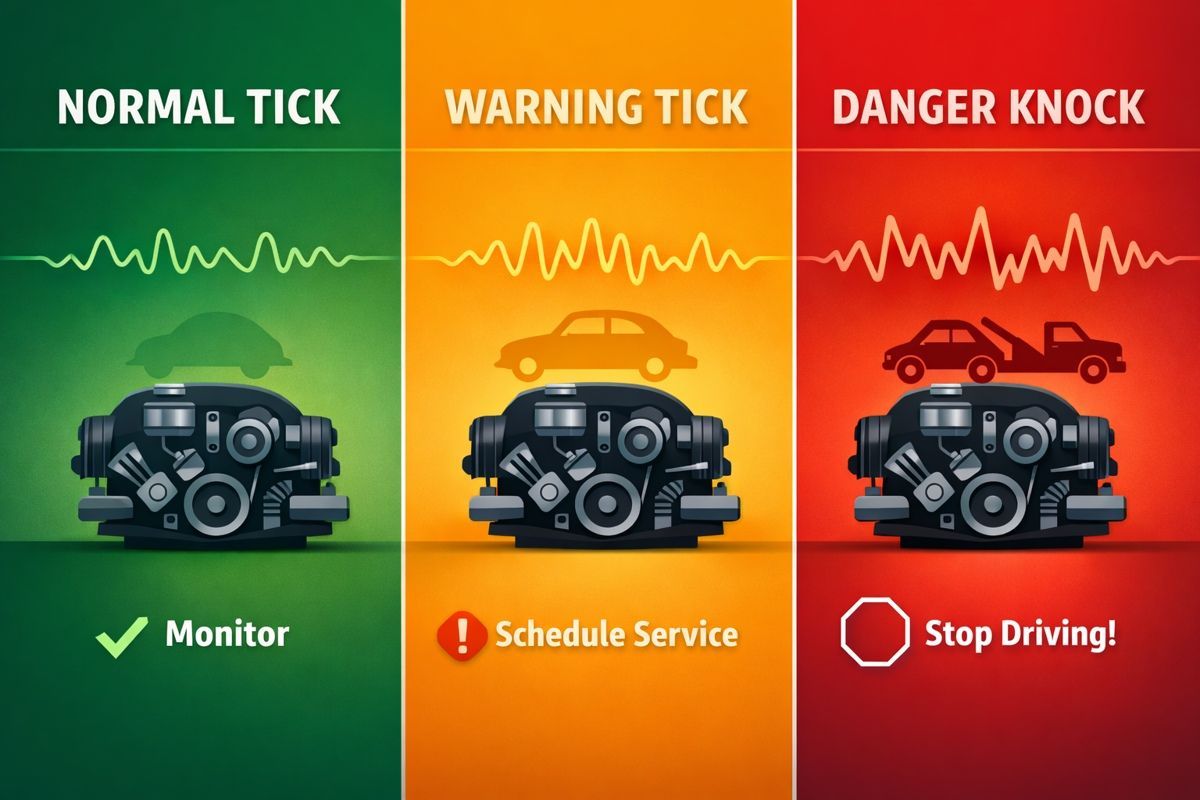
- Consistency Matters Most: A light, steady "sewing machine" tick that stays the same hot or cold is usually normal air-cooled behavior.
- Change Is the Warning Sign: A tick that gets louder when warm, speeds up with the gas pedal, or sounds deeper than before needs professional attention soon.
- Deep Knocks Mean Stop Driving: A heavy thud from the lower engine suggests bearing problems—shut off immediately and arrange a tow to prevent total engine failure.
- Describe, Don't Diagnose: When calling a shop, explain when you hear it, where it seems to come from, what it sounds like, and what changed recently.
- Valve Adjustments Are Routine: Regular valve adjustments at set mileage intervals prevent damage—waiting for noise changes misses tight valves that run dangerously quiet.
Learn your engine's normal voice so you can catch trouble early.
Classic VW and Porsche owners will gain confidence in reading their engine's sounds, preparing them for the diagnostic details that follow.
~ ~ ~ ~ ~ ~ ~ ~ ~ ~ ~ ~ ~ ~ ~ ~ ~ ~
The engine fires up, idles for a moment, and then it starts: a sharp, high-pitched metallic tapping that speeds up when the gas pedal moves. For anyone behind the wheel of a classic VW or Porsche, that sound can trigger an immediate wave of dread. Is this the beginning of a catastrophic failure? Has the dream of owning a vintage air-cooled machine just become an expensive nightmare?
Take a breath. Not every tick signals disaster. Because air-cooled engines lack the dampening effect of water jackets, they are inherently noisier than modern counterparts. Owners must distinguish harmless mechanical character from genuine concern, recognizing when a sound crosses the line from routine adjustment territory into stop-driving-now urgency.
Quick Answer: A light, rhythmic ticking at idle is often normal air-cooled behavior. A tick that grows louder when the engine warms up, changes pitch under acceleration, or sounds deeper and heavier warrants prompt attention. A sudden, heavy resonance from the crankcase necessitates shutting the engine off immediately.
Why a Tick in an Air-Cooled Engine Causes So Much Panic
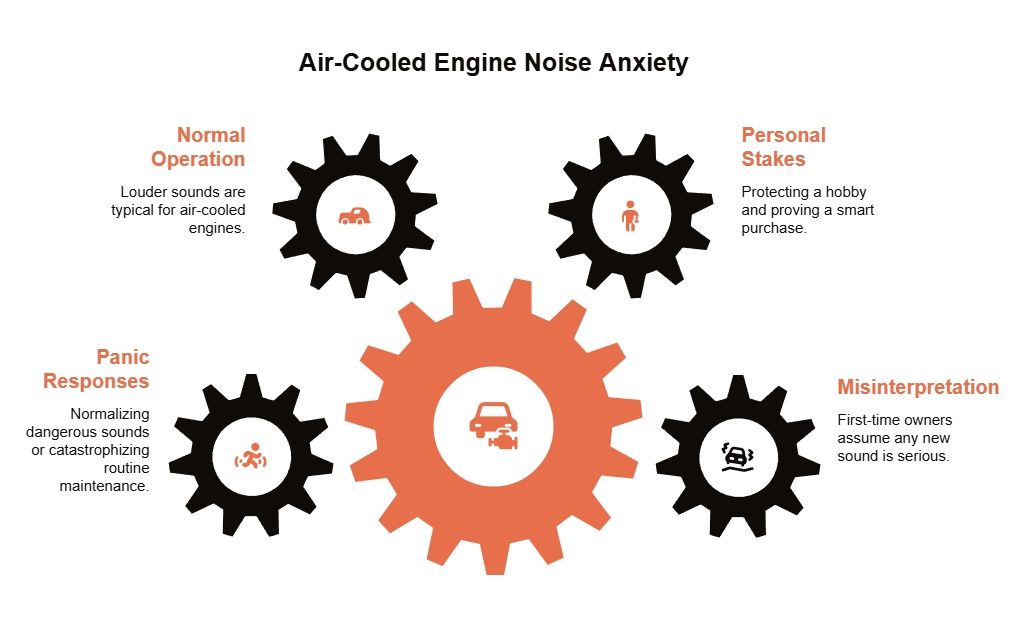
Classic air-cooled engines communicate the old-fashioned way: through sound, smell, vibration, and feel. There is no onboard computer decoding the problem, no app offering reassurance. The engine speaks through analog signals, and learning to interpret those signals takes experience.
This silence creates anxiety. First-time classic owners often assume that any unfamiliar sound must be serious because they have no digital confirmation telling them otherwise. Every tick, rattle, or hum demands interpretation rather than a simple readout.
The pressure intensifies when the stakes feel personal. This is not just about keeping a commuter on the road. It may be about protecting a major hobby purchase, avoiding buyer's remorse, and proving to a spouse or partner that this old machine was a smart decision rather than a sentimental mistake. The cost of misreading the noise feels immediate, and panic makes people either normalize dangerous sounds or catastrophize routine maintenance. Both responses carry their own expense.
Adding to the uncertainty, air-cooled engines simply run louder than modern powerplants. Without water jackets dampening mechanical noise, the valve train, pistons, and other components produce sounds that would seem alarming in a contemporary car but fall within normal range for a vintage Beetle or 911.
When a Tick Is Part of the Air-Cooled Personality
Some ticking is simply the sound of an air-cooled engine doing its job. A light, consistent top-end rhythm—sometimes compared to a sewing machine—often indicates nothing more than normal mechanical operation. This kind of sound tends to remain steady at idle, does not change dramatically when the engine warms up, and does not shift in character under load.
The key word is consistency. A tick that has always been there, sounds the same cold or hot, and does not grow louder over weeks or months is usually part of the engine's natural voice. Owners who drive their classics regularly develop an ear for this baseline sound. Any deviation from the familiar pattern is what deserves closer attention.
The warning threshold is change. Louder. Sharper. Warmer. Faster under throttle. Those shifts matter more than the mere existence of a tick. For a broader listening framework, The Analog Diagnostic Guide: Listening to Your Air-Cooled Engine adds useful context on how experienced owners separate normal character from more concerning sounds.
When a Tick Means a Valve Adjustment May Be Due
Valve adjustments are routine maintenance on air-cooled VWs and Porsches, not emergency repairs. Over time, the clearance between the valve stem and rocker arm changes. While some wear can increase clearance and create a more noticeable ticking sound, the more critical issue in air-cooled engines is when clearances tighten over time due to valve seat wear.
This tightening often makes the engine quieter, not louder. Because tight valves cannot properly transfer heat, they are at risk of burning and causing serious engine damage. For this reason, valve adjustments should always be performed at regular mileage intervals rather than waiting for a change in sound. As the long-standing air-cooled principle goes: a slightly “tappy” valve is far safer than one that is too tight.
A valve adjustment restores proper clearance, which may quiet an overly loose valve or introduce a light, consistent ticking that reflects correct settings. In air-cooled engines, a faint “sewing machine” rhythm is often a sign that the valves are properly adjusted—not a problem to eliminate. Regular adjustments protect the engine by ensuring the valves seat correctly, dissipate heat effectively, and maintain optimal compression. Treating this maintenance as a non-negotiable, mileage-based routine helps prevent small issues from turning into major engine damage.
For background on why valve adjustment matters on older engines, Hagerty's overview and VW Resource's air-cooled reference provide useful context.
When a Tick Becomes a Serious Warning Sign
Not every tick can be dismissed as normal or addressed with a simple adjustment. Certain sounds demand immediate attention.
A tick that changes tempo or rhythm with acceleration often points to valve-train wear or an exhaust leak. Revving the engine briefly can help distinguish between these two possibilities: an exhaust leak typically produces a sharper, more metallic popping sound that may intensify under load, while internal valve-train issues create a tick that speeds up and slows down with engine RPM in a steady, mechanical pattern.
A deep, heavy knock from the lower engine is a critical warning sign. This sound indicates potential bearing failure—a serious condition that can lead to catastrophic engine damage if ignored. A lower-end knock typically sounds duller and more resonant than a top-end tick, almost like a heavy thud rather than a sharp tap.
A classic can sound acceptable sitting still and still be hiding trouble once load is introduced. That is one reason purchase decisions and continued driving decisions should not rest on a quick listen at idle alone.
Engine problems rarely arrive alone. Any tick paired with other symptoms raises the urgency level. If the ticking comes with flat acceleration, unusual vibration, a burning smell, or visible smoke, the engine is communicating distress through multiple channels. Continuing to drive under these conditions risks turning a repairable problem into a complete rebuild.
How to Describe the Noise Before You Call the Shop
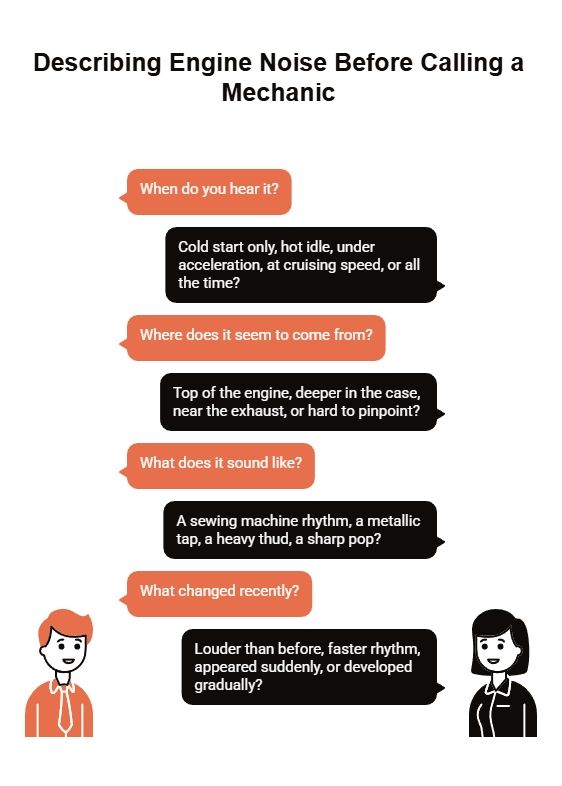
When contacting a specialist, the quality of the description directly affects the quality of the initial guidance. Specific language helps a technician understand the situation before the car even arrives.
Before calling, be ready to answer four practical questions:
- When do you hear it? Cold start only, hot idle, under acceleration, at cruising speed, or all the time?
- Where does it seem to come from? Top of the engine, deeper in the case, near the exhaust, or hard to pinpoint?
- What does it sound like? A sewing machine rhythm, a metallic tap, a heavy thud, a sharp pop?
- What changed recently? Louder than before, faster rhythm, appeared suddenly, or developed gradually?
These observations turn a vague complaint into actionable information. A shop with experience in vehicle inspections for vintage engines can often provide preliminary guidance based on a clear description, even over the phone.
Related symptoms add useful context. A noise paired with rough idle, for example, may benefit from the symptom-specific framework in Rough Idle on an Air-Cooled Volkswagen: What Your Senses Can Tell a Specialist.
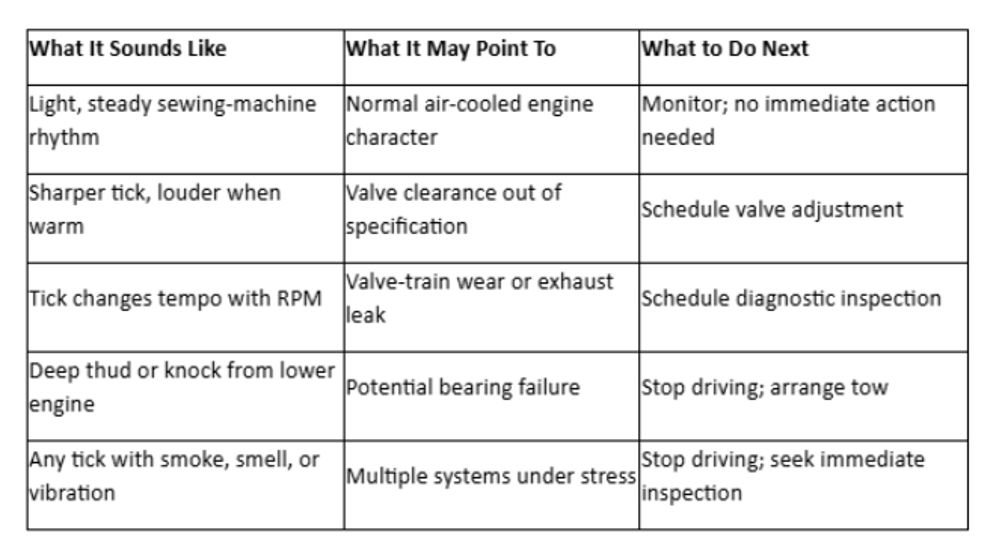
Sound-to-Meaning Reference
The following table provides a general framework for interpreting common engine sounds. Every engine is different, and context matters—but these patterns represent widely recognized starting points for understanding what an air-cooled engine might be communicating.
When to Stop Driving and Schedule a Diagnostic Check
The decision tree for engine sounds comes down to three levels of response.
Monitor: The sound is familiar, light, consistent, and unchanged from the engine's established baseline. Continue driving normally while staying attentive to any changes.
Schedule Service: The sound is new, sharper than before, increasingly noticeable, or clearly different from the engine's usual voice. Driving short distances remains reasonable, but an inspection should happen soon—within days, not weeks.
Stop Driving: The sound is deep, heavy, worsening rapidly, or accompanied by other warning signs like loss of power, unusual smells, or visible smoke. Continuing to drive risks turning a repairable condition into irreversible damage. Arrange a tow.
If a second set of ears would help, Orange Independent Auto Repair has specialized in classic VW and Porsche care since 1971. The shop's technicians can help separate normal air-cooled character from the sounds that deserve closer attention. For Porsche owners seeking marque-specific support, review the shop's Porsche services. Experience with these engines makes all the difference in accurate interpretation.
Related Reading: For maintenance scheduling guidance after the immediate concern is sorted out, explore The Preservation Schedule: A Maintenance Plan for Classic VWs and Porsches.
Request Your Free Estimate Today — Orange Independent Auto Repair offers free estimates and diagnostics for classic and modern vehicles in Orange, CA and surrounding areas including Tustin, Anaheim, Yorba Linda, and Villa Park.
Our Editorial Process
Our expert team uses AI tools to help organize and structure our initial drafts. Every piece is then extensively rewritten, fact-checked, and enriched with first-hand insights and experiences by expert humans on our Insights Team to ensure accuracy and clarity.
About the Orange Independent Auto Repair Insights Team
The Orange Independent Auto Repair Insights Team is our dedicated engine for synthesizing complex topics into clear, helpful guides. While our content is thoroughly reviewed for clarity and accuracy, it is for informational purposes and should not replace professional advice.