
Peace of Mind on Pacific Coast Highway: Knowing Your Vintage Engine is Safe
📌 Key Takeaways
Peace of mind before a long drive comes from knowing what your classic car sounds, smells, and feels like when it's healthy.
- Trust Your Senses First: A steady idle, familiar smells, and no new leaks tell you more than any gauge before a coastal drive.
- Three Quick Checks Save Trips: Listen for new ticks, sniff for raw fuel or burning smells, and look for fresh fluid spots under the car.
- New Signals Mean Wait: A sudden knock, soft brake pedal, or sharp gasoline smell means postpone the drive—not overreact.
- Regular Drives Are Maintenance: Sitting damages classic cars faster than driving; short trips keep seals, fuel, and batteries healthy.
- Find a Specialist You Trust: A good shop explains what needs fixing now versus later, so you spend money wisely and drive confidently.
Confidence builds through small checks repeated, not dramatic fixes.
Classic VW and Porsche owners planning weekend drives will gain a simple pre-trip routine here, preparing them for the maintenance guides that follow.
~ ~ ~ ~ ~ ~ ~ ~ ~ ~ ~ ~ ~ ~ ~ ~ ~ ~
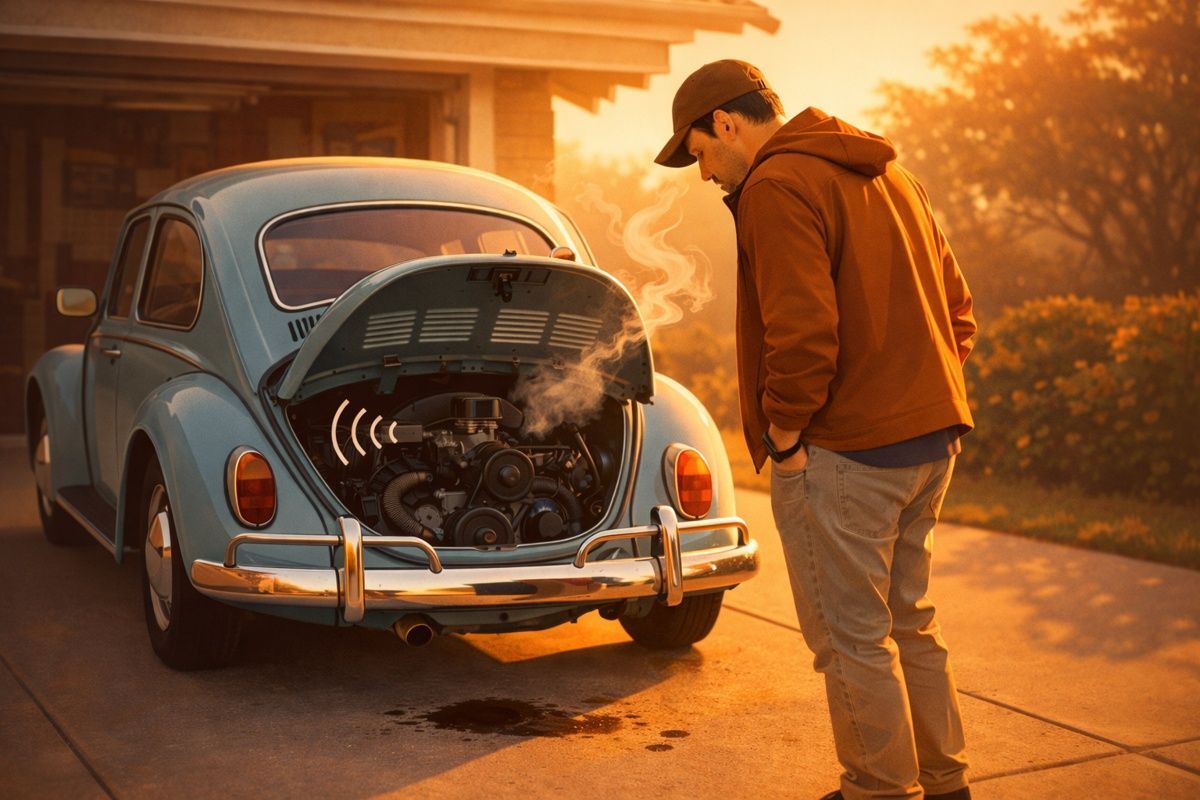
The garage door rolls up. Morning light spills across the hood of a classic Beetle. The key turns, and after that familiar bark, the engine settles into a smooth, steady hum—air-cooled, mechanical, unmistakably alive.
That sound is why you bought this car.
But owning a classic VW or Porsche comes with a question that lingers before every long drive: Can I trust this car to get me there and back? The Pacific Coast Highway is no place to discover the answer is no. Ocean on one side, cliffs on the other, and the nearest help miles away. What gets in the way is not always a dramatic failure. It is the quiet doubt—the mental noise that sits in the back of the mind all the way to the coast.
Here is the truth most new classic car owners need to hear: peace of mind is not luck. It comes from knowing what your car sounds, smells, and feels like when it is healthy—and recognizing the moment something changes. You do not need to become a master mechanic. You need a simple way to confirm the car is ready, and a trusted specialist to call when it is not.
What Peace of Mind Actually Feels Like in a Healthy Classic
A healthy classic tells you it is ready before you leave the driveway. While they possess basic oil and generator warning lights, classic VW and Porsche models lack the comprehensive computer diagnostics of modern cars—meaning they primarily communicate through behavior you can sense.
Start with the idle. A well-tuned air-cooled engine settles into a steady rhythm after the first few seconds. Not perfectly smooth like a modern car, but consistent. If you have owned your classic for a few months, you already know what normal sounds like. That consistency is your baseline.
The smell matters too. Old vinyl, a faint trace of oil from decades of use, maybe a whisper of fuel vapor if the car has been sitting. These are character. What you do not want is anything sharp, burning, or suddenly stronger than last week.
Then there is the ground beneath the car. A few drops of oil in the same spot you have seen for years? That is history. A fresh puddle where there was none before? That is information worth investigating.
This approach—using your senses to confirm normal behavior before asking more of the car—is what experienced classic car maintenance shops rely on every day. The difference is they have decades of experience calibrating what "normal" means across hundreds of vintage engines. You are building that same intuition for your car specifically.
The 3 Quick Analog Checks Before You Head for the Coast
These checks take only a few minutes. They are not meant to replace a proper inspection. They are meant to catch the obvious before it becomes a problem somewhere between Laguna Beach and Dana Point.
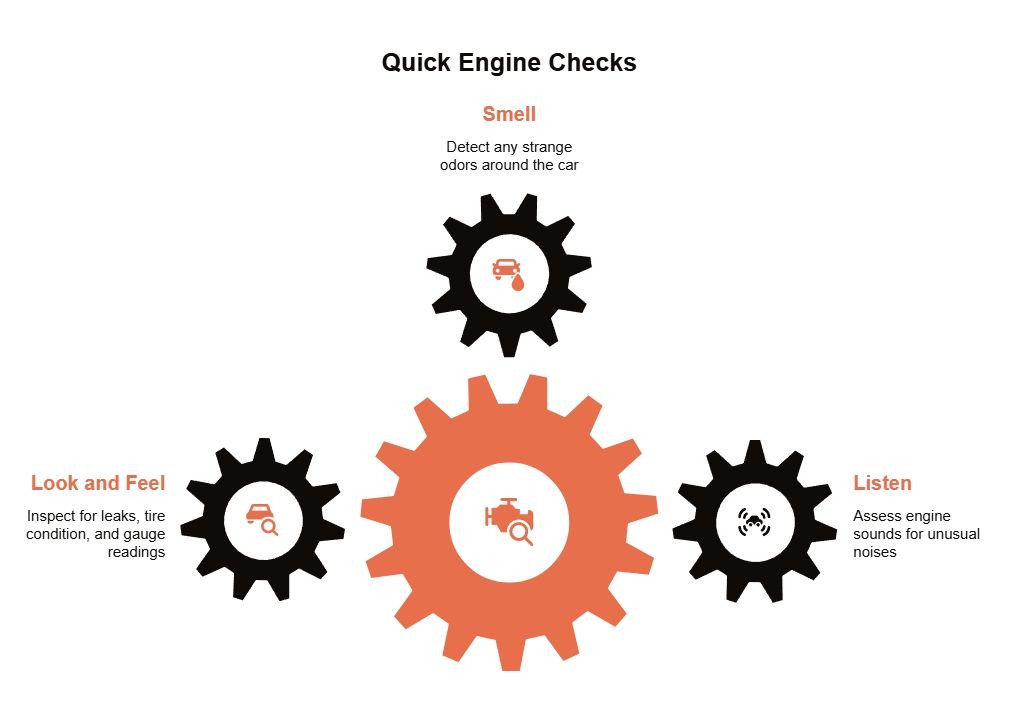
1. Listen
Start the engine and let it settle for thirty seconds. Does it sound like it did last time you drove? A classic air-cooled engine has a distinctive voice—a rhythmic thrum without sharp clicks or deep knocking.
A tick that has always been there is probably valve lash, which is normal in these engines. A tick that just appeared, especially one that grows louder as the engine warms, deserves attention before a long drive. For a deeper understanding of which sounds matter, The Analog Diagnostic Guide: Listening to Your Air-Cooled Engine breaks down the difference between background noise and warning signs.
2. Smell
With the engine running, walk around the car slowly. You are looking for anything that does not belong.
Raw gasoline is never acceptable—it means fuel is escaping somewhere. A sharp, acrid electrical smell could indicate overheating wiring. And on an air-cooled classic, a sweet coolant odor should not exist at all, since these engines do not use liquid cooling systems like modern vehicles.
Some oil smell from an older engine is expected. The question is whether it matches the faint trace you always notice or has become something stronger. Is That Smell Normal? A Guide to Fuel and Oil Odors in Classics can help you distinguish character from concern.
3. Look and Feel
Before pulling out, glance at the ground where the car was parked. Fresh oil, transmission fluid, or brake fluid means something is actively leaking—not "has always leaked a little," but losing fluid right now. Tire condition and inflation also matter before longer trips, which is why NHTSA's tire-safety guidance recommends checking tires for wear, damage, and pressure.
Check your gauges with the engine running. Oil pressure reading where it normally sits? Temperature gauge (if equipped) behaving as expected? Gauges are not the whole story, but they should confirm what your senses are telling you.
Finally, pay attention during the first half-mile. Steering pulling to one side? Brakes grabbing unevenly? Clutch engaging in a different spot than yesterday? Your body knows what this car is supposed to feel like. Trust that.
What Should Make You Postpone the Drive
Not every small quirk means cancel the day. Classics have personality. They also have limits.
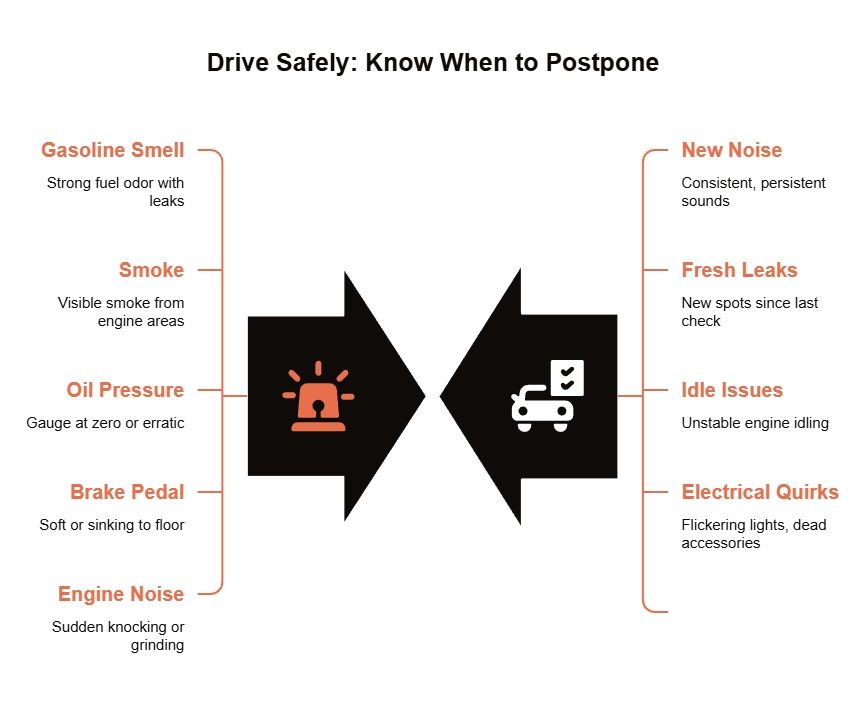
A good rule is to postpone the drive when the car gives a new signal, a strong signal, or a stacked signal. One mild concern may be watchable. Two or three together deserve more caution.
Stop immediately if you notice:
- Sharp gasoline smell, especially with visible wet spots under the engine or fuel system
- Smoke from anywhere other than a brief puff on cold startup
- Oil pressure gauge dropping to zero or fluctuating erratically
- Brake pedal going soft or sinking to the floor
- Sudden new knocking or grinding from the engine
Schedule service before the next long trip if you notice:
- A new tick or noise that stays consistent but was not there before
- Fresh leak spots that appeared since last week
- Idle that hunts or refuses to settle
- Electrical oddities like flickering lights or accessories cutting out
The article Oil Spots Under Your Classic VW: What's Normal vs. a Real Risk provides additional guidance on distinguishing harmless seepage from genuine problems.
The goal is not paranoia. It is clear boundaries. If the car feels wrong, postponing the drive is not overreacting. It is stewardship.
Why Routine Sensory-Based Maintenance Protects the Weekend Experience
Classic cars do not survive on software updates and extended warranties. They run on oil changes, valve adjustments, and regular attention from someone who knows what healthy looks and sounds like.
Sensory-based maintenance—where a trained technician checks sounds, smells, leaks, and mechanical behavior—catches problems while they are still small. A slightly loose exhaust connection gets tightened before it becomes roadside failure. A slow brake fluid leak gets traced to an aging seal before your brakes fade on a canyon descent.
The maintenance interval that serves most classic VW and Porsche models well is an oil change every 5,000 miles or 12 months, whichever comes first. Beyond oil, these vehicles benefit from periodic tuning and adjustment, especially as weather changes affect carbureted engines and aging ignition systems. General service organizations such as the Car Care Council recommend paying attention to fluids, belts, hoses, filters, and related systems because regular inspection helps keep a vehicle dependable over time. On a classic, that general principle still applies, even though the exact service priorities vary by model, age, and condition.
The Preservation Schedule: A Maintenance Plan for Classic VWs and Porsches outlines what to check and when. For weekend-driven classics, Driving is Maintenance: Why Your Classic Needs to Run explains why regular use matters as much as regular service. The underlying principle is straightforward: maintenance is not an end in itself. It exists to keep the car ready for the drives you bought it for.
A Sunday morning through Trabuco Canyon. A sunset run down PCH to Corona del Mar. Those moments do not happen if you are worried about whether the engine will make it home.
Confidence is not built in one dramatic moment. It is built in repetition.
When a Local Specialist Is the Smart Next Step
You do not need to become a mechanic to own a classic car confidently. What you need is enough awareness to recognize changes—and a shop you trust when something requires expert attention.
A good classic car specialist does more than fix problems. They help you understand what is happening, what matters now versus later, and how to keep enjoying the car without constant worry. For the nuances of vintage air-cooled engines, local expertise matters.
"We've been going to Orange Independent for years. Rick never tries to sell you on stuff you really don't need. Has an amazing talent for letting you know what is a fix now vs what can wait a few months. Very helpful with how money has been tight for a lot of people the last 15 months." — Jason F.
Orange Independent Auto Repair has been a family-owned shop in Orange, CA since 1971, specializing in classic VW and Porsche care. They offer vehicle inspections, Porsche services, maintenance planning, and the kind of straightforward guidance that helps owners feel confident rather than pressured. Their approach reflects an education-first philosophy: treating customers fairly and helping them understand how their automobile works.
If your classic no longer feels, sounds, or smells the way it should, that is the moment to contact Orange Independent Auto Repair before the next long drive. A quick check can turn uncertainty back into peace of mind—so the next time you point the car toward the coast, the only decision left is where to stop for coffee.
For a broader view of your first year with a classic, From "New Owner" to "Steward": Your Year 1 Classic Car Roadmap provides a quarterly framework for building confidence in your vehicle.
Our Editorial Process
Our expert team uses AI tools to help organize and structure our initial drafts. Every piece is then extensively rewritten, fact-checked, and enriched with first-hand insights and experiences by expert humans on our Insights Team to ensure accuracy and clarity.
About the Orange Independent Auto Repair Insights Team:
The Orange Independent Auto Repair Insights Team is our dedicated engine for synthesizing complex topics into clear, helpful guides. While our content is thoroughly reviewed for clarity and accuracy, it is for informational purposes and should not replace professional advice.