
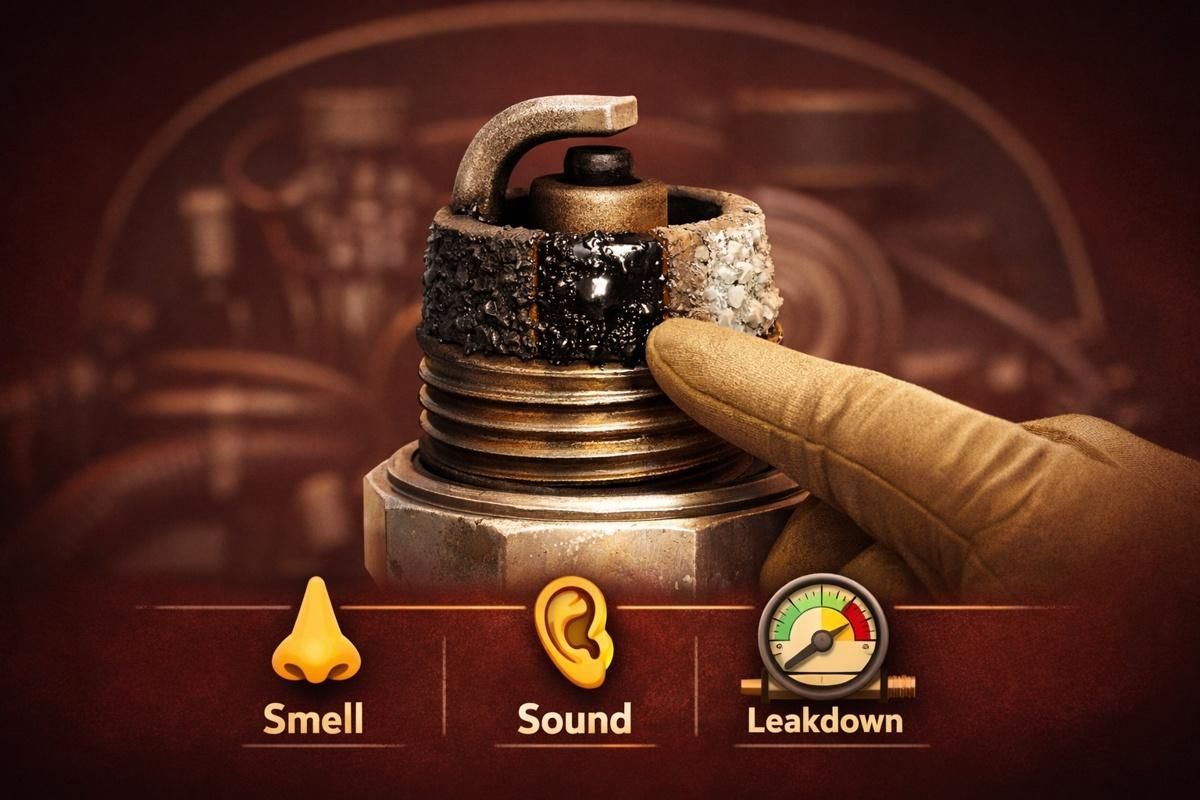
Carbon Foul-Ups: How Modern Fuels Impact Vintage Valve Seating in Anaheim (and How to Spot the Residue)
📌 Key Takeaways
Black soot on spark plugs tells you something is off—but not what. Pair visual clues with smell, sound, and specialist testing before deciding.
- Soot Is a Clue, Not a Verdict: Dark residue can mean rich fuel, oil leaks, or weak valve sealing—one plug alone won't tell you which.
- Modern Fuel Changes the Picture: Today's gas burns differently in old air-cooled engines, so vintage "plug color charts" can mislead you.
- Smooth Idle Can Hide Problems: An engine that purrs at rest may still struggle under load—don't trust the driveway demo alone.
- Stack Your Observations First: Note which cylinders show soot, whether it's dry or oily, and how the engine feels under throttle before adjusting anything.
- Leakdown Testing Ends the Guessing: When soot returns after fixes, flat throttle response persists, or valve lash keeps drifting, a pressure test confirms where air escapes.
See the clue, respect the uncertainty, then confirm the truth.
Classic VW buyers and owners in Orange County will gain confidence in spotting real problems versus surface residue, preparing them for the detailed diagnostic guidance that follows.
~ ~ ~ ~ ~ ~ ~ ~ ~ ~ ~ ~ ~ ~ ~ ~ ~ ~
Black soot can fool you.
You pull a plug on a warm air-cooled VW, catch that sharp raw-fuel smell, and see dark residue on the tip. The engine even idles with a friendly little purr. That combination calms a lot of buyers. It shouldn’t.
If you are comparing vintage VWs in Anaheim or anywhere in Orange County, treat black soot as a clue, not a verdict. It can point toward rich running, incomplete combustion, oil contamination, or weak sealing at the top end. The safe move is to pair what you see with what you smell, hear, and feel, then use specialist testing when the clues begin to stack up.
Orange Independent Auto Repair has been family-owned since 1971, and the shop’s vintage focus is part of why this distinction matters. Their classic-car work centers heavily on VW and Porsche platforms, and the trust signal is not bravado. It is careful explanation, honest diagnostics, and a willingness to say when a problem is smaller than feared or outside the shop’s lane. Eddie’s Beetle-specific experience also matters here; the shop’s own trust layer includes more than 50 years of Beetle work and repeated customer praise for straightforward, honest guidance.
The Fast Answer: What Black Soot Usually Means on a Vintage VW
On a vintage VW, black soot usually means the engine is not burning the mixture cleanly. That often puts you in one of four buckets:
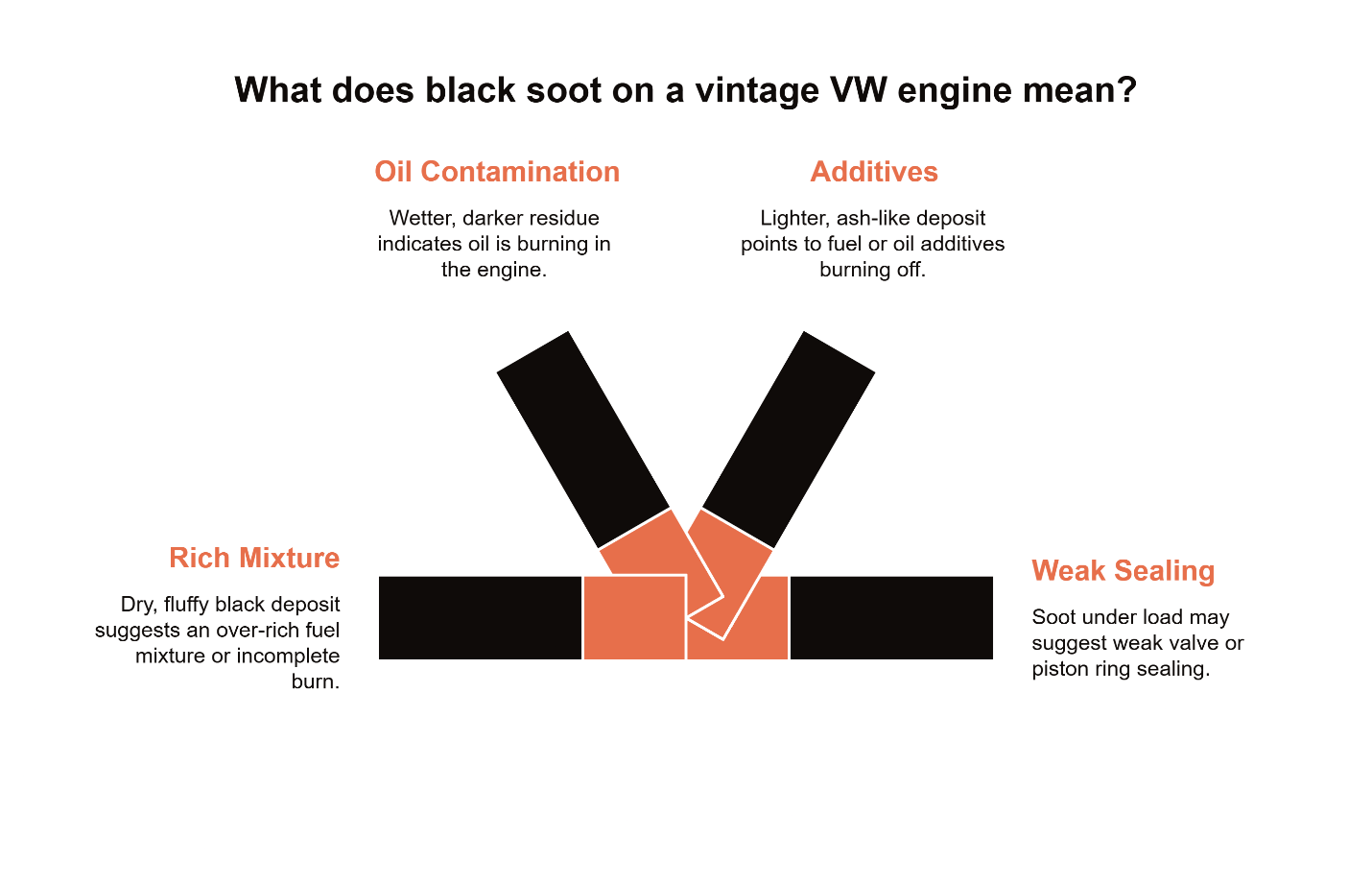
- rich running
- incomplete combustion
- oil contamination
- weak sealing under load
That does not mean all four are equally likely. It means soot is only the start of the conversation.
A dry, fluffy black deposit often leans toward an over-rich mixture or incomplete burn. A wetter, darker residue can push you to think about oil contamination. A lighter, ash-like deposit usually points to fuel or oil additives burning off, rather than a rich mixture. The mistake is treating one plug, one glance, or one seller explanation as enough. It isn’t.
If you want the broader compression and leakdown context before you go further, the related guide on engine health on a vintage VW helps frame what these clues can and cannot prove.
Why Modern Fuels Change the Picture on Older Air-Cooled Engines
Today’s pump gas is not identical to the fuel many older air-cooled engines were calibrated around. That does not make every residue pattern mysterious. It does mean deposits, heat cycling, and drive patterns can look different than the old rule-of-thumb plug charts suggest.
That matters in Anaheim and the wider Orange County pattern of short trips, stop-and-go traffic, longer heat soak periods, and occasional freeway bursts. A vintage VW that spends plenty of time idling, warming up, or crawling through traffic can show residue differently than one that gets longer, steadier runs. Deposits may build faster. The clues may blur.
The point is practical. Modern fuel chemistry changes how residue presents on older engines, which is one reason surface color alone is a weak foundation for a buying decision. Resources from the U.S. EPA on gasoline standards and the California Air Resources Board on California reformulated gasoline give the background, but your real takeaway is simpler: old engines running on modern fuel deserve modern skepticism.
What Carbon Residue Can and Cannot Tell You
Residue can help you sort observations. It cannot give you a final diagnosis.
Here is the useful way to think about it:
- Dry black soot can suggest rich running or incomplete combustion.
- Oily wetness raises the question of oil getting where it should not.
- Ash-like deposits can point you toward a different contamination or burn pattern.
- One dirty plug is one data point.
- A repeated pattern across cylinders is a stronger signal.
That last distinction matters. If one cylinder is ugly and the others look normal, you may be looking at a localized problem. If several cylinders tell the same story, the odds shift toward something more systemic.
You also want to compare the plugs with the exhaust tip. If the pipe is sooty too, that strengthens the case that the engine is not burning cleanly as a whole. Still not a verdict. Just stronger context.
When Soot Points Toward Valve-Seating Trouble
This is where many buyers drift into false certainty. They see carbon buildup and assume carburetion. Sometimes that is right. Sometimes it misses the bigger issue.
A valve seat needs to seal like a vault under immense pressure. It must lock shut, not just block a draft.
If the top end is not sealing cleanly, combustion efficiency drops. The engine may leave residue that looks like a simple fueling problem. Under real load, though, the weakness starts to show. You may feel flatter throttle response. You may notice a subtle miss. You may hear a hollow puffing note that does not sound right. You may also see valve-lash changes that keep coming back.
That is why vintage valve seating belongs in the conversation when soot appears alongside other clues. Not because soot proves it. Because soot can be part of the pattern.
For another angle on sensory pattern recognition, rough idle on an air-cooled Volkswagen is worth reading.
The Smooth-Idle Trap
A smooth idle does not clear the top end.
That trap catches buyers all the time. A seller starts the engine. It settles down. No dramatic stumble. No obvious smoke cloud. Maybe it’s fine. That is the moment where people over-trust what the engine does at rest and underweight what it does under load.
Idle quality can mask deeper sealing weakness. The engine may sound calm enough in the driveway while the real problem shows up only when cylinder pressure, temperature, and load rise together. That is why a friendly idle can coexist with weak performance, recurring lash changes, and residue that keeps coming back.
The disciplined approach is to separate driveway observations from shop-level verification. You can notice the smell, the soot, the idle behavior, the feel under throttle. A specialist confirms what those clues actually mean.
What to Check Before You Blame the Carburetor
Start with observation. Not adjustment.
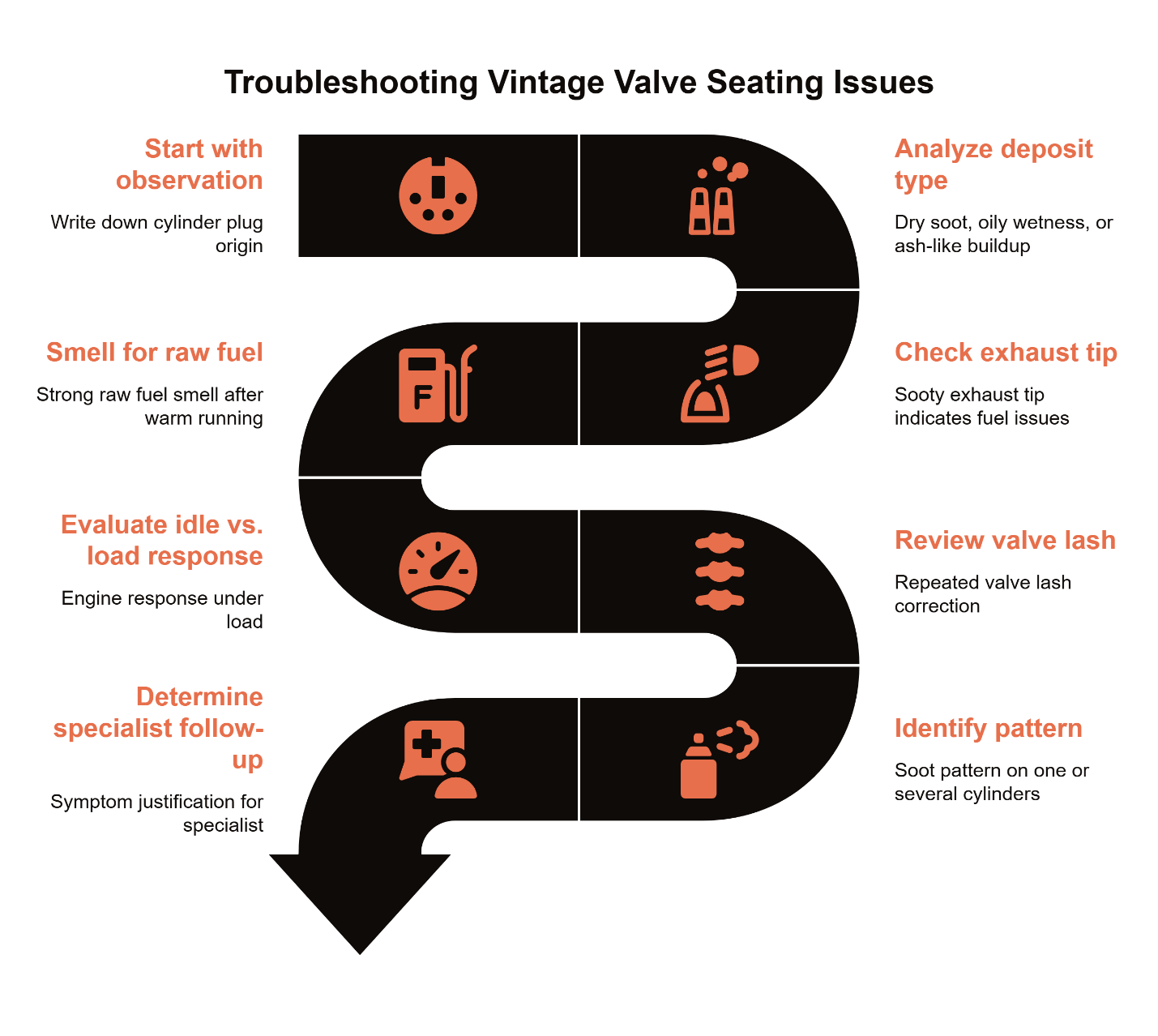
Before you assume the carburetor is the whole story, write down:
- which cylinder each plug came from
- whether the deposit is dry soot, oily wetness, or ash-like buildup
- whether the exhaust tip is also sooty
- whether the engine smells strongly of raw fuel after warm running
- how it idles versus how it responds under load
- whether valve lash has needed repeated correction
- whether the pattern shows on one cylinder or several
- what symptom would justify specialist follow-up
That checklist slows you down in a good way. It keeps you from turning one clue into a lazy diagnosis.
If you are trying to separate ignition, carburetion, and deeper mechanical issues, carb sync or timing is a helpful next read.
When to Schedule a Leakdown Test
Stop guessing when the symptoms start stacking.
A leakdown test helps confirm where air is escaping and whether the problem points more toward valve-related loss or ring-related loss. It isolates exactly where the pressure is bleeding out—past the rings into the crankcase, or out through unseated valves.
A leakdown conversation becomes hard to avoid when you have several of these together:
- persistent soot that returns after correction
- flat response under load
- a raw-fuel smell plus weak performance
- repeated valve-lash changes
- a subtle misfire that idle alone does not explain
- a pattern across multiple cylinders
- an engine that sounds acceptable parked but disappointing on the road
That is the moment to stop trying to read the whole engine from color alone. The California Bureau of Automotive Repair’s repair guidance is useful on the consumer side, but the practical point is simple: a good shop confirms before it concludes.
What an Honest Next Step Looks Like in Orange County
An honest next step is quiet. No drama. No pressure.
If you are still in research mode, spend a few minutes with the shop’s classic car maintenance page and the related educational posts so you know the vintage focus is real. If the residue pattern, smell, throttle behavior, and lash history keep pointing in the same direction, bring those observations to Orange Independent Auto Repair before you buy the car, drive it hard, or start tearing into the engine.
That is what good vintage diagnosis looks like. See the clue. Respect the uncertainty. Confirm the truth.
Talk through what you are seeing before you buy or tear down the engine. If you have plug photos, valve-lash history, or leakdown numbers, bring them to Orange Independent Auto Repair and get the next step explained in plain language.
Disclaimer: This article is for educational purposes and does not replace an in-person inspection or diagnostic test.
Reviewed by: Orange Independent Auto Repair editorial team
By: Orange Independent Auto Repair