
Road Trip Insurance: How a Verified Baseline PSI in Orange County Sets the Stage for Decades of Family Memories
📌 Key Takeaways
Testing a vintage VW's engine before you buy reveals whether it can actually support the road trips you're dreaming about.
- Two Tests Tell the Full Story: Compression shows how much pressure each cylinder builds; leakdown shows where air escapes and why—you need both to understand engine health.
- Consistency Beats High Numbers: Four cylinders reading 125 PSI each is healthier than one at 140 and three below 110—even wear matters more than peak performance.
- Smooth Idle Can Lie: A Beetle can purr in the driveway yet struggle under load because timing adjustments mask internal problems the baseline numbers reveal.
- Numbers Guide Your Decision: Strong readings mean buy with confidence; borderline results mean budget for repairs; poor readings mean walk away or negotiate hard.
- Baseline Data Prevents Surprises: Knowing what's inside the engine lets you plan maintenance instead of reacting to breakdowns on the freeway.
Verified engine numbers turn seller promises into facts you can plan around.
Buyers shopping for classic VWs in Orange County will gain the confidence to negotiate smarter and plan ahead, preparing them for the detailed inspection guidance that follows.
~ ~ ~ ~ ~ ~ ~ ~ ~ ~ ~ ~ ~ ~ ~ ~ ~ ~
Picture the drive you've been imagining: Pacific Coast Highway on a Sunday morning, your vintage Beetle purring through the curves, the cabin carrying that old-car mix of vinyl, warm metal, and a faint hint of fuel. The ocean stretches out beside you. Maybe there's a kid in the back seat asking questions about the engine. Maybe it's just you and the road. Either way, the car running beneath you isn't just transportation—it's the foundation for years of memories you haven't made yet.
That future is worth protecting. And the protection starts before you sign the paperwork, before you hand over the check, before you fall completely in love with a car that might not love you back.
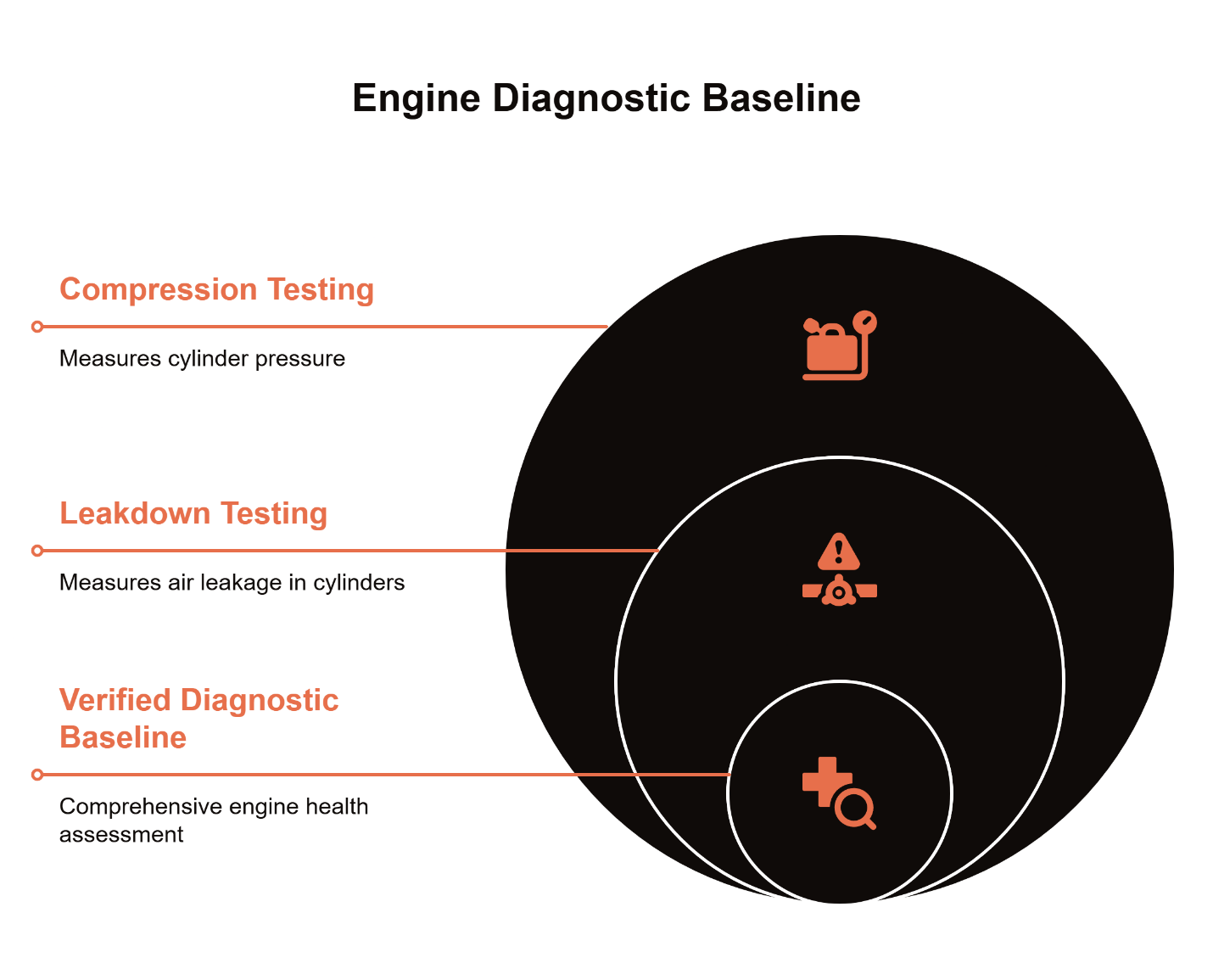
A verified diagnostic baseline—your engine's compression PSI and leakdown percentage readings taken together—tells you whether the mechanical heart of that vintage VW can actually support the life you're picturing. Compression works like the engine's blood pressure: how well each cylinder builds and holds the force it needs to run. Leakdown is more like lung capacity and breath control—how much air escapes (measured as a percentage), and where it's going. Together, they translate seller optimism into something you can actually plan around.
What a Verified Diagnostic Baseline Actually Tells You
A verified diagnostic baseline tells you how the engine is doing internally right now, before your emotions do too much negotiating for you.
A single number scribbled on a napkin isn't a baseline. A seller saying "it passed compression" isn't a baseline either. "The seller says it runs great" is not a baseline. A true baseline is a complete picture: all four cylinders tested under consistent conditions, with the results compared against each other and against what a healthy air-cooled engine should produce.
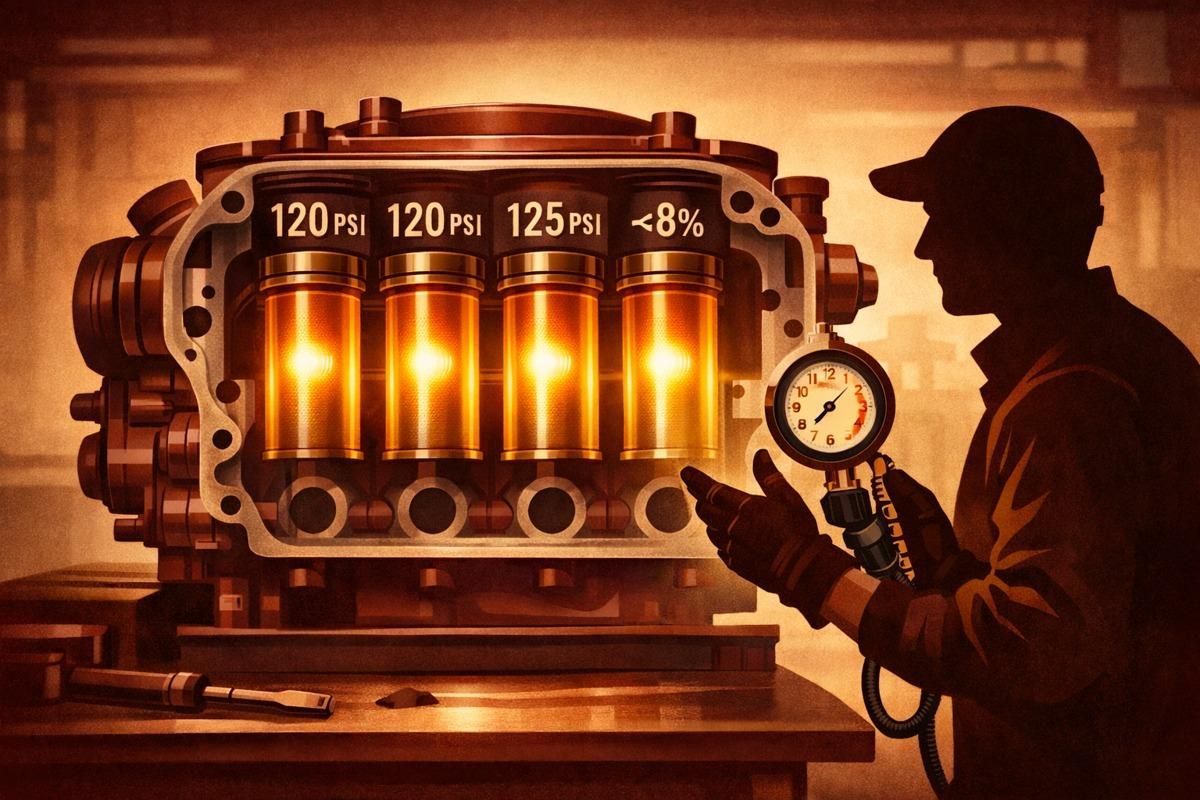
Compression testing measures how much pressure each cylinder can build. On a vintage VW, healthy stock engines generally show 110-135 PSI (though modified or built motors often run higher), with cylinders within ±10% of each other. The total number matters, but so does the spread. Four cylinders reading 125, 123, 127, and 124 tell a very different story than four cylinders reading 135, 110, 128, and 105.
Leakdown testing goes deeper. It pressurizes each cylinder and measures how much air escapes as a percentage—and lets a technician listen to where that air is going. Hissing at the oil filler cap suggests ring wear. Air escaping through the carburetor points toward intake valve issues. Leakdown under 10% is strong; over 20% typically means work is coming sooner rather than later.
Neither test alone tells the whole story. Together, they create a diagnostic foundation you can actually make decisions from.
Why This Matters More Than People Think When the Goal Is Family Use
A healthy diagnostic baseline doesn't promise a perfect future. It changes the odds.
When you're shopping for a vintage VW, you're not only buying sheet metal, charm, and nostalgia. You're deciding how much surprise you may be carrying into the first year of ownership. Good baseline numbers make budgeting more predictable because they reduce the chance that the first "fun weekend car" turns into an immediate rescue mission.
That shift affects more than your wallet. It affects whether you can picture local cruises, coffee runs, canyon drives, or eventually family memories without a constant layer of dread. Instead of wondering whether the engine will strand you on the 91 during rush hour, you know what you're working with. Instead of budgeting for "whatever happens," you can budget for specific maintenance within a realistic timeline.
The difference between a car that needs valve adjustment in six months and a car that needs a full rebuild tomorrow is the difference between a project and a crisis.
For buyers imagining weekend drives to Joshua Tree or annual trips up the coast, that clarity is worth more than a fresh coat of paint. You're not just buying a car. You're buying the confidence to actually use it.
What Healthy-Enough Looks Like on a Vintage VW
Healthy doesn't mean perfect. It means sustainable.
On an air-cooled VW, look for compression readings typically in the 110-135 PSI range for stock configurations (or slightly higher for modified builds), with good consistency across all four cylinders. A car reading 120 across the board is often healthier than one reading 140-95-125-90—because consistency suggests the engine is wearing evenly, while big swings suggest one cylinder is already struggling.
One impressive cylinder does not rescue three weak ones. A seller may point to the highest reading. A specialist looks for spread, balance, and what the leakdown result says alongside the compression result.
Leakdown context fills in the gaps. A cylinder showing 8% leakdown is doing its job. One showing 25% is telling you something needs attention. Where the air escapes—valves, rings, head gasket—helps determine whether you're looking at a tune-up or a teardown.
That's where interpretation becomes more useful than raw data. An engine with decent but not perfect numbers may still make sense if the price, your expectations, and the next maintenance steps all line up. An engine with uneven readings and poor leakdown may be telling you that the dream needs a much bigger budget than the seller is admitting.
The goal isn't to find a car with perfect readings. It's to find a car whose readings make sense for the price, the condition, and the ownership you're planning.
Why a Smooth Idle Can Fool Buyers
A smooth idle is comforting. It's not proof.
Here's where experienced sellers sometimes have an advantage over hopeful buyers: a vintage VW can idle smoothly and still carry hidden internal weakness. Timing adjustments can mask low compression at idle. The engine hums along in the driveway, the exhaust sounds clean, and everything feels fine—until you load the engine going up a grade and the problems surface.
So if the car idles sweetly but the baseline numbers are uneven, believe the baseline first. The better question isn't "Does it sound nice standing still?" It's "What do the cylinder vitals say when we stop guessing?"
This is also where sensory clues matter. The sharp smell of raw gasoline over a warm air-cooled engine, a lumpy feel through the seat, or a note that changes when the engine is working harder can all add context. They don't replace the numbers. They help explain them.
If you want a better sense of how feel, sound, and smell can complement formal testing, read about rough idle clues on an air-cooled Volkswagen. For symptom-versus-cause thinking, Carb Sync or Timing? is useful too.
The Reliability Roadmap: Turning Numbers Into Next Steps
Once you have verified baseline data, the question becomes: what do I do with it?
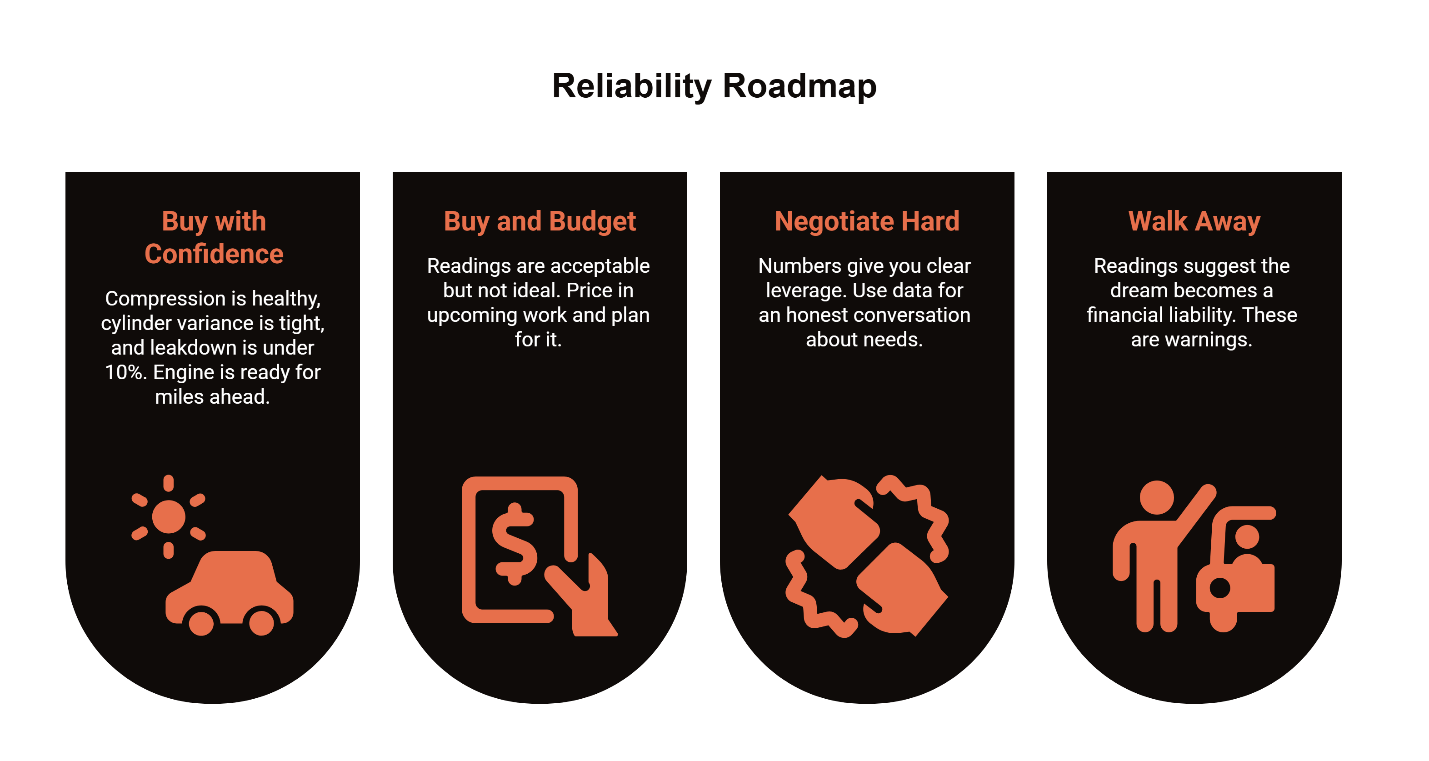
Buy with confidence when compression is in the healthy range for the engine configuration, cylinder variance is tight (within 10%), and leakdown is under 10%. These numbers suggest an engine that's ready for the miles ahead—local drives, longer trips, years of reasonable use with standard maintenance.
Buy and budget when readings are acceptable but not ideal. Maybe compression is slightly lower than you'd hope, or one cylinder shows 15% leakdown. The car can work, but you should price in upcoming work and plan for it rather than hoping it won't arrive.
Negotiate hard when the numbers give you clear leverage. A car with one weak cylinder or borderline leakdown isn't worthless, but it isn't worth asking price either. Use the data to have an honest conversation about what the car actually needs.
Walk away when the readings suggest the dream becomes a financial liability before it even leaves the driveway. Compression wildly out of spec, high leakdown across multiple cylinders, air escaping from places it shouldn't—these aren't bargaining chips. They're warnings.
From there, sort what you learn into a simple framework:
- Must-Do: Issues that need attention before regular driving
- Soon: Work that should happen within the first few months of ownership
- Monitor: Items to watch but not panic about
This turns analysis paralysis into a plan you can actually follow.
What Orange County Buyers Should Do Before Calling It Road-Trip Ready
Get the baseline before you tell yourself the story.
Engine health is necessary, but it's not the whole picture. Brakes, steering, and tires still matter in a classic VW inspection, and hidden rust zones can change the decision too.
For buyers in Orange, Tustin, Anaheim, Yorba Linda, or Villa Park, the path forward is straightforward: get a pre-purchase inspection from someone who understands these cars. Not a quick scan and a handshake—a real diagnostic session that includes compression testing, leakdown testing, and an honest conversation about what the numbers mean for your specific goals.
Shop character matters here. Orange Independent Auto Repair has specialized in classic VW and Porsche care since 1971. The shop's approach—period-correct thinking, analog diagnostics, and straightforward communication rather than upsell theater—fits exactly what vintage VW buyers need: clarity without drama, and guidance without pressure.
A reliability check before a Sunday cruise extends the same logic to cars you already own. Baseline data isn't just for buying. It's for planning, maintaining, and enjoying with less worry.
The Gift Your Future Self Needs Today
A verified diagnostic baseline doesn't promise perfection. Engines wear. Parts age. Classic cars demand attention in ways modern cars don't.
But a baseline gives you something seller reassurance never can: a realistic starting point. It tells you whether the car in front of you matches the life you're imagining—or whether you're falling in love with a project that isn't ready for the road.
The Sunday drives, the canyon runs, the trip to see family three hours away—those memories are built on trust. Not blind faith, but earned trust. The kind that comes from knowing what's inside the engine, understanding what it needs, and planning accordingly.
A verified diagnostic baseline is not pessimism. It's respect for the car, your time, and the life you hope to build around both. That's the real road trip insurance: not a policy, but a verified foundation for decades of driving ahead.
Ready to verify your baseline? Schedule a classic VW or Porsche pre-purchase inspection or call Orange Independent Auto Repair at (714) 633-7161 to discuss what your vintage vehicle needs before the next trip.
Frequently Asked Questions
What is a good compression reading for a vintage VW?
Healthy stock air-cooled VW engines generally show 110-135 PSI, with all four cylinders within about 10% of each other. Built or modified engines will often read higher. Consistency matters as much as the raw number.
What does leakdown tell me that compression alone cannot?
Leakdown reveals where air is escaping—through the rings, valves, or head gasket—and quantifies how much as a percentage. Compression shows that a problem exists; leakdown helps identify what's causing it.
Is one low cylinder enough to cancel a purchase?
Not necessarily. One weak cylinder might mean a valve adjustment or a negotiating opportunity. But it depends on how low, what the leakdown shows, and whether the price reflects the reality.
Can a Beetle sound fine at idle and still have internal engine issues?
Yes. Timing adjustments can mask low compression at idle. A smooth-running engine in the driveway doesn't guarantee health under load.
Should I get a compression and leakdown baseline before a road trip even if I already own the car?
Absolutely. Baseline data helps catch developing problems before they leave you stranded far from home.
Disclaimer: This article is intended to help readers interpret classic-VW engine health signals and plan next steps more confidently. It does not replace an in-person inspection or vehicle-specific professional diagnosis.
Our Editorial Process:
Our expert team uses AI tools to help organize and structure our initial drafts. Every piece is then extensively rewritten, fact-checked, and enriched with first-hand insights and experiences by expert humans on our Insights Team to ensure accuracy and clarity.
By: The Orange Independent Auto Repair Insights Team
The Orange Independent Auto Repair Insights Team is our dedicated engine for synthesizing complex topics into clear, helpful guides. While our content is thoroughly reviewed for clarity and accuracy, it is for informational purposes and should not replace professional advice.