Before a Sunday Cruise from Orange Plaza: The Reliability Check We Perform on Classic VWs
📌 Key Takeaways
A pre-cruise reliability check focuses on four critical systems—tires, brakes, fuel delivery, and ignition—to prevent weekend surprises on your classic VW.
- Four Systems Prevent Most Failures: Tires, brakes, fuel lines, and ignition components cause the majority of unexpected breakdowns on short weekend drives.
- Three-Bucket Prioritization Protects Budgets: Must-Do, Soon, and Monitor categories separate immediate safety concerns from items that can wait, preserving originality without unnecessary replacements.
- Fuel Odor Demands Immediate Action: Any fuel smell signals fire risk from aging rubber lines in high-heat engine compartments and stops the cruise until corrected.
- Heat-Soak Failures Hide at Home: Components like coils and condensers pass cold tests but fail after warming up, causing the frustrating "won't restart" scenario at your destination.
- Baseline Documentation Reveals Patterns: Following the same inspection sequence each time creates comparison points that identify aging trends specific to your VW.
Methodical inspection beats guesswork for air-cooled reliability.
Classic VW owners planning weekend cruises from Orange County will gain confidence through this focused approach, preparing them for the detailed inspection framework that follows.
A reliability check is a focused, pre-drive inspection that verifies your classic VW's critical systems are trip-ready. Think of it like tuning an instrument before a performance—you're confirming everything works in harmony before you commit to the road.
Picture this: It's Sunday morning, and you're planning a leisurely cruise from Orange Plaza through the tree-lined streets of Old Towne. The coffee shop awaits, the weather's perfect, and your vintage Beetle is gleaming in the driveway. But there's that quiet uncertainty—will everything hold together, or will you end up stranded three blocks from home?
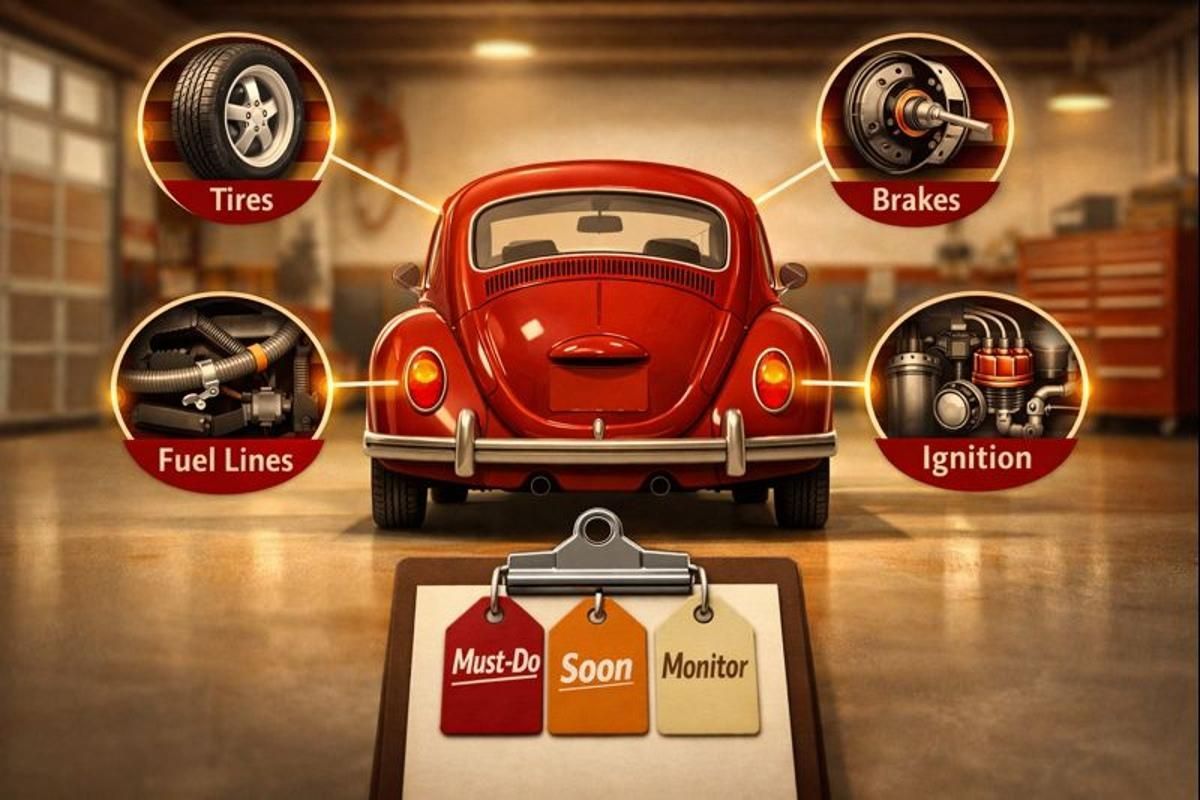
That's exactly what a shop-led reliability check prevents. We walk through a repeatable sequence focused on the four systems that cause most weekend surprises: tires, brakes, fuel delivery, and ignition. You get a clear plan divided into three buckets—Must-Do before cruising, Soon for drivability, and Monitor for items we'll track over time. This approach preserves your car's originality while protecting your budget and peace of mind.
What a 'Reliability Check' Means Before a Short Cruise
A reliability check isn't a full vehicle inspection or a bumper-to-bumper teardown. It's a targeted sanity-check designed to catch the common trip-stoppers before they interrupt your plans. We're looking at the four systems most likely to fail on a short weekend drive—especially after your classic VW has been sitting for a while between outings.
The goal is simple: confident cruising without surprises. We follow the same inspection sequence every time, which means nothing gets missed and you can compare results from one check to the next. This consistency matters because air-cooled Volkswagens age in predictable patterns, and a methodical approach beats guesswork every time.
If you're planning any weekend drive and want to eliminate that nagging uncertainty, this check gives you a clear answer: go ahead and enjoy the cruise, or here's what needs attention first. Our auto repair services include this focused inspection as a standalone option or as part of regular maintenance planning.
Why Classic VWs Need a Repeatable Pre-Cruise Routine
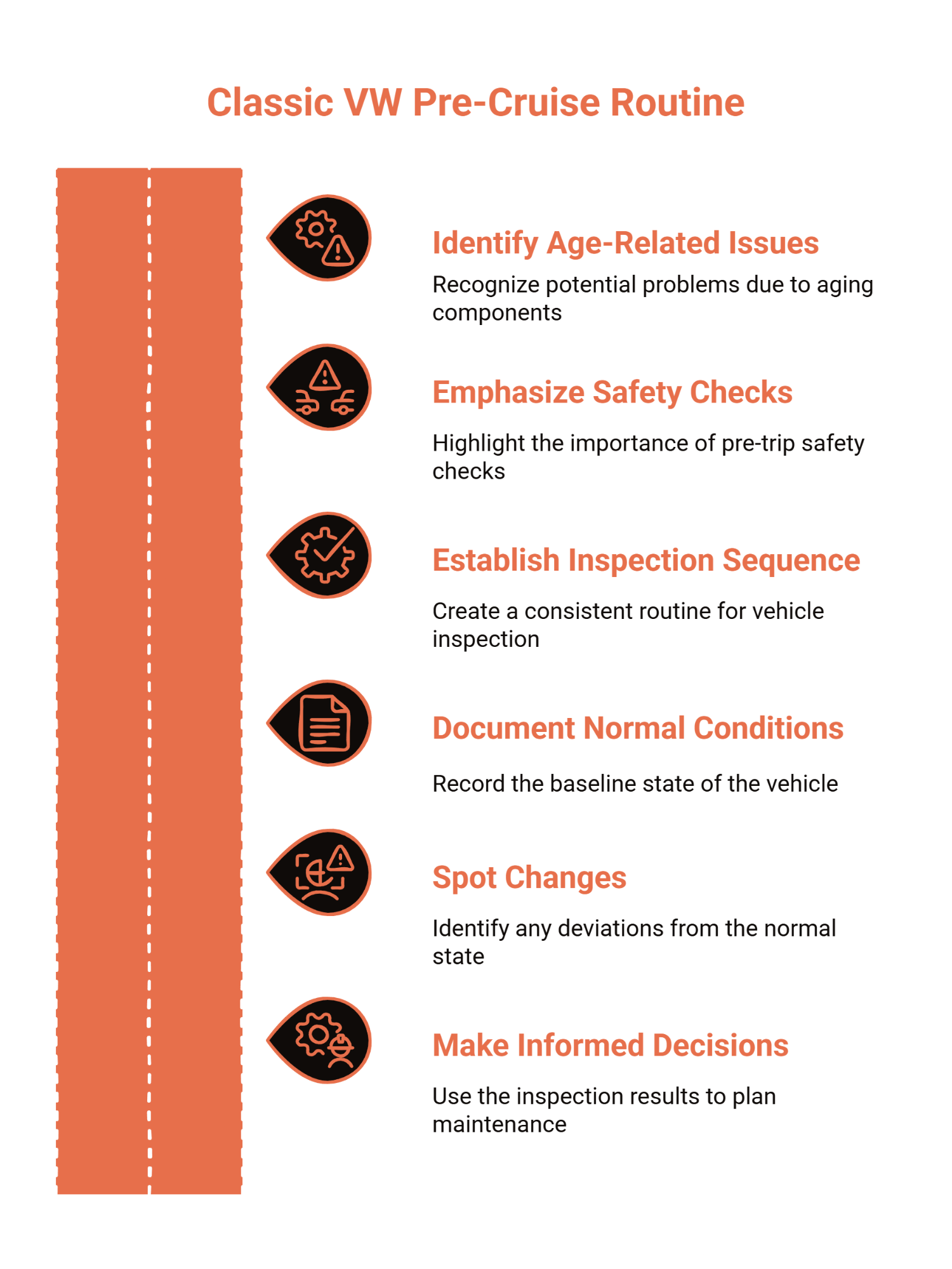
Age changes everything. Rubber fuel lines harden and develop hairline cracks. Brake fluid absorbs moisture over the years, reducing stopping confidence. Ignition components that worked fine last month can fail after sitting through temperature swings. Even tires that look acceptable in the driveway might reveal stress cracks or slow leaks under close inspection.
The California DMV emphasizes pre-trip safety checks for all vehicles, noting that proper tire condition, brake function, and visibility systems are fundamental driver responsibilities. For classics, these concerns multiply because parts are older and driving patterns are less frequent. A car that sits for two weeks between Sunday drives faces different stresses than a daily commuter.
Following the same inspection sequence each time creates a baseline. We document what's normal for your specific car, which makes it easier to spot changes that signal developing problems. This isn't about finding things to fix—it's about understanding your VW's current state so you can make informed decisions about timing and priorities.
The Four Priority Systems We Check First (and Why)
We start every reliability check with these four areas because they account for the majority of "why did this happen now?" moments:
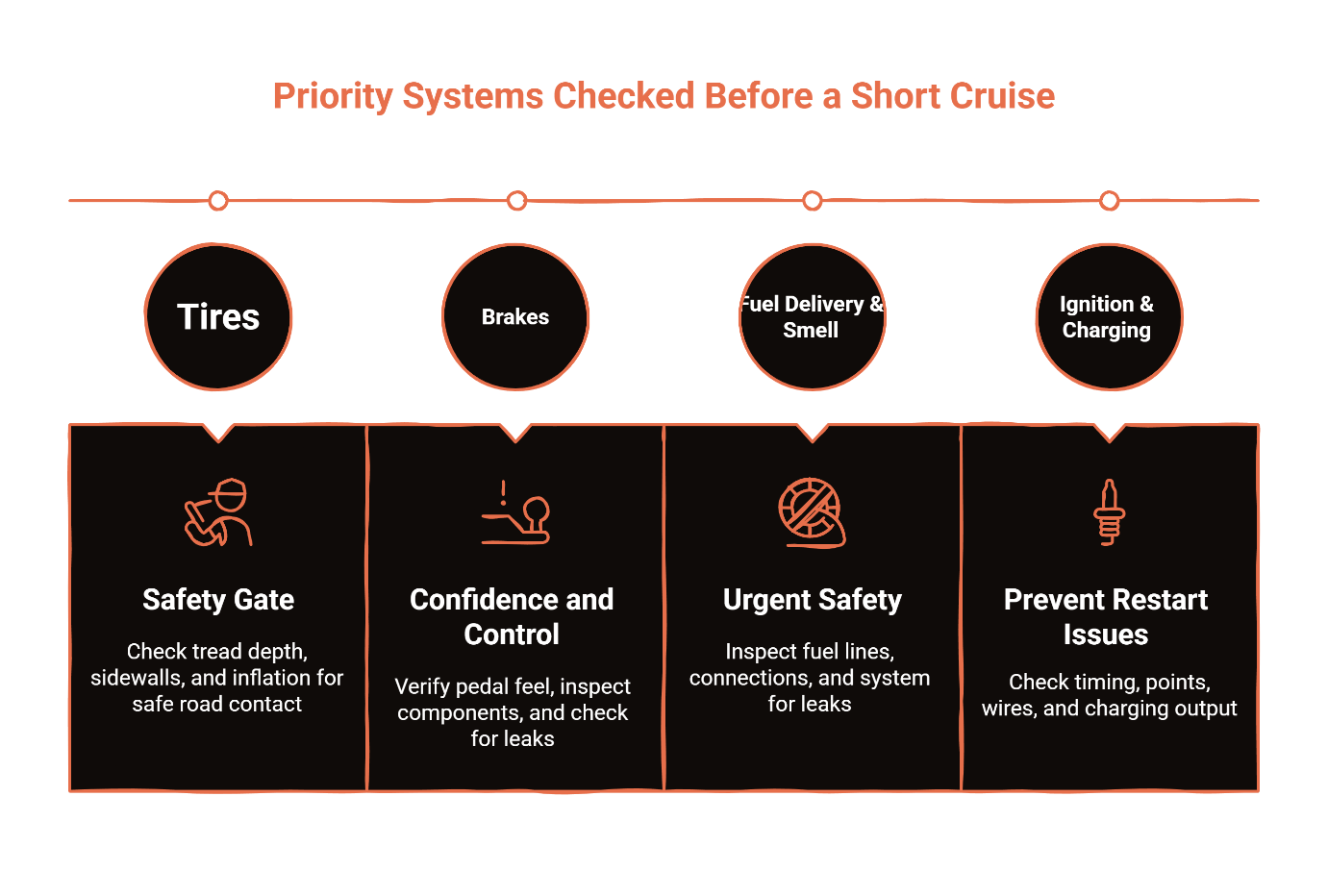
Tires – The Safety Gate
Tire condition is your primary safety consideration. We check tread depth, sidewall integrity, age-related cracking, and proper inflation. Long periods of sitting can create flat spots or allow slow leaks to go unnoticed. Even if tires look fine from a distance, we're examining them for bulges, embedded objects, and uneven wear patterns that could become problems at highway speeds.
Your tires are literally your contact with the road, which is why NHTSA's TireWise guidance emphasizes regular condition checks as essential to safe vehicle operation.
Brakes – Confidence and Control
We verify brake pedal feel, inspect visible brake components, and look for fluid leaks or signs of contamination. Air-cooled VWs have specific brake geometries that require proper adjustment and maintenance. A brake system that feels adequate around the neighborhood might reveal its weaknesses when you need to stop quickly on Chapman Avenue or need consistent control on the steady inclines toward Villa Park or the canyons.
Fuel Delivery and Fuel Smell – Treat as Urgent
Any fuel odor demands immediate attention due to fire risk. We inspect fuel lines for cracks, check connections for seepage, and verify that the fuel system is sealed and functioning correctly. Vintage fuel systems use rubber components that deteriorate over time, and a small leak can quickly become a safety hazard.
This is non-negotiable—if we smell fuel or see evidence of leaks, the car doesn't cruise until it's corrected. NFPA's car fire safety guidance emphasizes that identifying fuel odors and aging rubber lines early and addressing them immediately prevents the magnesium-block engine and pressurized fuel lines from becoming a fire risk in the high-heat environment of an air-cooled compartment.
Ignition and Charging Basics – Preventing the "Starts Fine at Home" Scenario
There's a frustrating pattern many classic car owners recognize: the car fires up perfectly in the driveway, runs beautifully to your destination, then refuses to restart after cooling down at the coffee shop. We check ignition timing, point gap and condition (on non-electronic ignitions), plug wire integrity, and charging system output. These checks identify components prone to 'heat soak'—like aging coils or failing condensers— that pass a cold-continuity test but fail once thermal expansion increases resistance as the engine bay heat-saturates.
For additional context on pre-trip vehicle preparation, AAA's summer travel checklist offers a helpful broader framework—even if your classic VW has its own personality and specific needs.
What 'Borderline' Looks Like—and Why Clear Communication Matters
Not everything falls cleanly into "failed" or "perfect" categories. Borderline items occupy that gray zone where something isn't broken yet, but it's trending toward risk—especially for weekend drives where you want reliability, not surprises.
For example, brake pads might have 40% material remaining. That's not failed, but it's moving toward the threshold where performance degrades. A fuel line might show surface checking without active leaks. Tire sidewalls might display minor weather cracking that hasn't compromised structural integrity yet.
This is where clear communication changes everything. Instead of vague warnings that create anxiety, we show you exactly what we're seeing—either by walking you over to your car or by describing the condition in plain language you can understand. You get a clear explanation of the brake pad thickness, the nature of the fuel line surface wear, or what kind of tire sidewall cracking we're observing.
Transparent communication reduces fear-based decision-making. You're not wondering if the shop is overselling repairs—you're getting a straightforward assessment based on what we've observed, and you can make an informed choice about when to address each item.
"Excellent service, reasonable prices and honest, yes really honest," shares Jonathan C. from Orange. "Does the work that is needed and gives an honest assessment of anything else needed but never recommends stuff that is not needed. Thank you!"
That's the standard we aim for: calm, clear, and backed by what we can actually show or explain to you.
What You Get After the Check: Must-Do, Soon, and Monitor Plan
Every reliability check concludes with a prioritized action plan divided into three clear categories:
Must-Do items present immediate reliability or safety concerns that should be addressed before your cruise. This might include active fuel leaks, brake issues affecting stopping confidence, or tire damage that compromises structural integrity. These aren't optional—they're the gate between "ready to drive" and "needs attention first."
Soon items affect drivability or will accelerate wear if left unaddressed. These are things you could technically drive with this weekend, but they'll become problems in the near term. Examples include brake pads approaching replacement threshold, ignition components showing early wear, or charging system output that's marginal but functional.
Monitor items get documented now and revisited on the next check. These are early-stage concerns that don't require immediate action but warrant tracking. Maybe those tire sidewall cracks aren't severe enough to demand replacement yet, or that slight oil seepage isn't active enough to cause immediate problems. We note them in your service record and check them again next time.
This three-bucket system directly supports preserving originality while respecting your budget. You fix what matters now, plan for what's coming soon, and keep an eye on everything else without unnecessary replacements. Our classic car maintenance approach emphasizes this kind of thoughtful prioritization over one-size-fits-all recommendations.
When to Call or Pause the Drive
Here's a simple decision framework for handling concerns before or during your cruise:
Pause the drive immediately if you notice strong fuel smell, brake pedal feel that's different or requires more pressure, obvious tire damage or bulging, or sudden loud mechanical noises that weren't present before. These signal immediate safety concerns that shouldn't be ignored.
Call us to describe what you're seeing for situations like fluid leaks or spots under the car, frayed or cracked lines, questionable tire sidewall cracks you're uncertain about, loose components, or anything that looks wrong but isn't actively preventing driving. We can often provide guidance over the phone to help you decide whether to proceed or bring the car in first.
Book a check when you're planning a weekend drive and want confidence instead of crossed fingers. The best time for a reliability check is before you commit to the cruise, not after something goes wrong three miles from home. We keep the process quick and focused so it doesn't disrupt your weekend plans.
We're based in Orange and regularly serve classic car owners throughout Orange County, including Anaheim, Villa Park, Tustin, and Yorba Linda. Our Orange location makes it convenient to drop off your VW before weekend plans and pick it up with a clear understanding of what's ready and what needs attention.
Frequently Asked Questions
How long does a pre-cruise reliability check take?
Most checks take 45 minutes to an hour, depending on what we find. We keep it focused on the four priority systems unless something else catches our attention during the inspection.
Is this the same as a full vehicle inspection?
No, it’s a high-velocity triage. A full vehicle inspection covers everything from body condition to interior components. The reliability check focuses on the 'Critical Four'—tires, brakes, fuel, and ignition—to ensure the car is safe for immediate use without the cost of a full bumper-to-bumper report, tires, brakes, fuel, and ignition. Think of it as a confidence check, not a comprehensive evaluation.
What should I bring or tell you before the check?
Let us know about any symptoms you've noticed, even minor ones. Mention if the car has been sitting for a while between drives, or if you've recently noticed new sounds, smells, or handling changes. This context helps us pay extra attention to the right areas.
Will you show me what you found?
Yes. We explain findings in plain language and, when helpful, can walk you over to show you exactly what we're seeing on your car. You'll understand why something made the Must-Do list versus the Monitor list.
Can you prioritize fixes if my budget is limited?
That's exactly what the three-bucket system is designed for. We separate immediate safety and reliability concerns from items that can wait, giving you a clear path forward that respects both your budget and your car's needs.
Do you work on stock and lightly modified classic VWs?
Yes to both. We handle original air-cooled Volkswagens and cars with common period-correct modifications. If your VW has extensive custom work that's outside our expertise, we'll let you know upfront and can often recommend specialists who focus on heavily modified builds.
How often should I do a pre-cruise check?
That depends on how frequently you drive and how the car's been maintained. For cars that sit between monthly drives, a check before any significant outing makes sense. For more frequently driven classics with established maintenance histories, seasonal checks often provide adequate confidence. We can recommend a schedule based on your specific situation and driving patterns.
Book Your Pre-Cruise Check in Orange
Ready to eliminate that pre-cruise uncertainty? Contact us to schedule your reliability check or call (714) 633-7161 to speak with our team. We've been helping Orange County classic car owners maintain their VWs with straightforward communication and methodical inspections since 1971.
Our shop is located at 187 S Main St, Orange, CA 92868—convenient for quick drop-offs before weekend plans. We'll walk through the four priority systems and provide you with a clear Must-Do, Soon, and Monitor plan that preserves your car's character while delivering the confidence you need for that Sunday cruise from Orange Plaza.
About the Orange Independent Auto Repair Insights Team
Orange Independent Auto Repair has helped Orange County drivers make confident car-care decisions since 1971 by focusing on straightforward communication, careful inspections, and long-term reliability.
Our Editorial Process: Our expert team uses AI tools to help organize and structure our initial drafts. Every article is reviewed, fact-checked, and edited by our team to ensure accuracy, clarity, and helpfulness.