
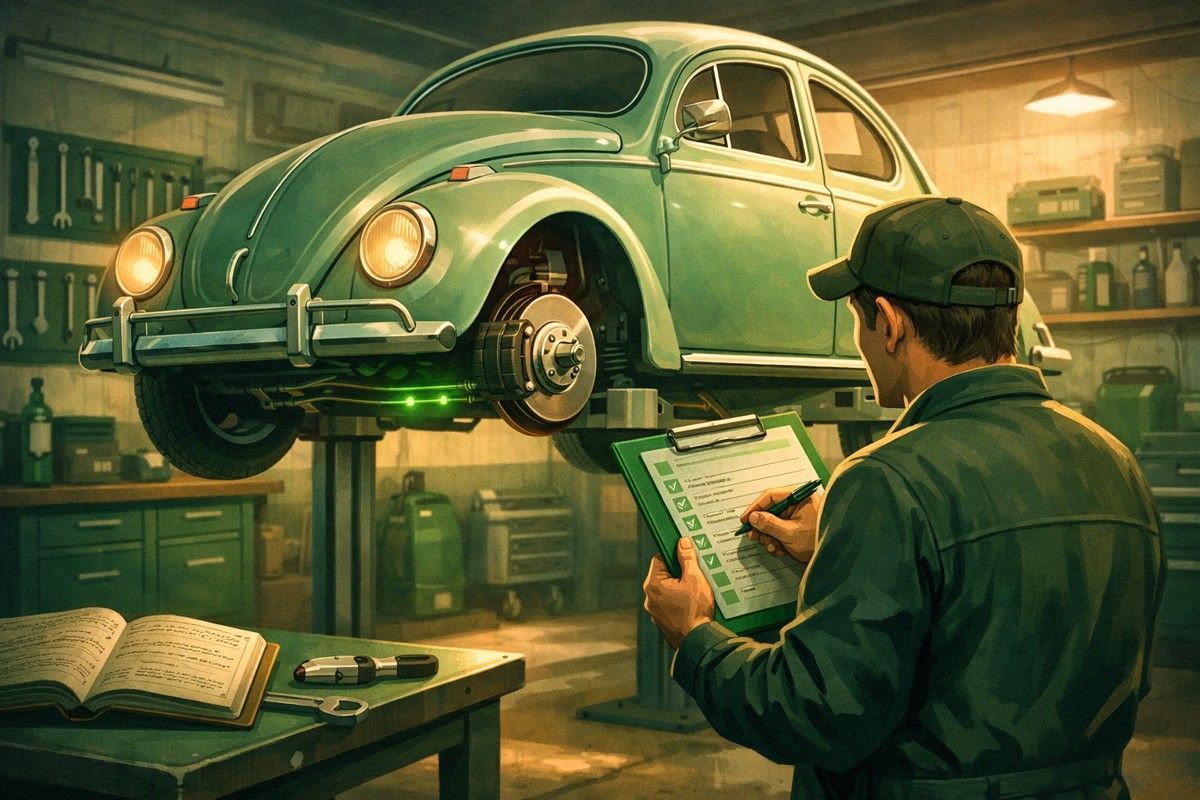
From 'New Owner' to 'Steward': Your Year 1 Classic Car Roadmap
📌 Key Takeaways
Your first year with a classic car isn't about perfection—it's about learning what's safe, what's fresh, and what could surprise you later.
- Safety First, Always: Check brakes, steering, tires, and fuel lines before anything else—these are the systems most likely to cause real trouble.
- Start a Simple Logbook: Write down every service, part, and symptom you notice—this record becomes your car's memory and protects its future value.
- Drive to Learn: Short trips reveal problems that inspections miss; pay attention to new smells, sounds, or changes in how the car feels.
- Rubber Ages Even When Parked: Hoses, seals, and bushings crack over time regardless of mileage, so inspect them by month six and plan replacements before they fail.
- Small Fixes Prevent Big Breakdowns: A fresh fuel filter costs a few dollars; a clogged one can leave you stranded miles from home.
Confidence comes from knowing your car, not hoping it holds together.
Classic VW and Porsche owners navigating their first year of ownership will find a clear, staged roadmap here, preparing them for the detailed quarterly checklist that follows.
~ ~ ~ ~ ~ ~ ~ ~ ~ ~ ~ ~ ~ ~ ~ ~ ~ ~ ~ ~ ~ ~ ~ ~ ~ ~ ~ ~ ~ ~ ~ ~ ~ ~ ~ ~ ~ ~ ~ ~ ~ ~ ~ ~ ~ ~ ~ ~ ~ ~ ~ ~
Saturday morning. The garage door rolls up, and there it is—your classic Beetle, Bus, or early 911, waiting in the half-light. You slide behind the wheel, turn the key, and the engine settles into its familiar idle. Then you catch it: a faint whiff of fuel, just enough to make you pause. Is that normal? Has it always done that?
That question—can I trust this car?—follows every new classic owner home. The previous owner's maintenance records are thin, or missing entirely. The car runs, but its history is a black box. You want to drive it, enjoy it, preserve it. But you don't know where the gremlins are hiding.
Here's the truth: you don't need a full restoration to earn peace of mind. You need a classic car maintenance plan—a staged, first-year roadmap that takes you from anxious owner to confident steward. This guide walks you through exactly that: what to check first, how to build reliability, and when to shift into preservation mode. By the end of year one, you won't just own this car. You'll know it.
From Ownership to Stewardship: What Year One Is Really For
Year one is not about perfection. It's not about chasing every cosmetic flaw or tuning for maximum horsepower. It's about building a known baseline—understanding what's safe, what's fresh, and what's a potential hazard waiting to surface.
Think of your classic car as a living organism with habits and tells. It has weak points that age even when it sits still: rubber seals dry out, fuel lines crack, electrical connections corrode. Low mileage doesn't mean low risk. A car that's been parked for years can be more fragile than one that's been driven regularly.
The goal of your first year is simple: take the car from "unknown" to "trustworthy." You do that in stages. First, you establish a safety baseline. Then you build reliability through careful driving and scheduled service. Finally, you shift into preservation—addressing the age-related issues that protect the car's soul for the long haul.
The mindset shift matters as much as the mechanical work. An owner asks, "What's wrong with it?" A steward asks, "What's known, what's unknown, and what's the next right check?" That second question leads to better decisions, calmer ownership, and a car that improves over time instead of surprising you at the worst moments.
A simple roadmap turns anxiety into confidence. Confidence turns into stewardship. And stewardship is what separates someone who merely owns a classic from someone who truly cares for one.
The First 30 Days: Reset the Baseline
The first month is about safety, not speed. Before you chase tuning, cosmetics, or performance, you need to confirm that the car isn't one fuel leak or brake fade away from a disaster.
Start with your senses. Walk around the car after it's been parked overnight. Look under the chassis for fresh drips—oil, coolant, brake fluid, fuel. Note where they fall. Many classics mark territory; a small, stable seep might be normal for a 50-year-old engine. A sudden puddle is not.
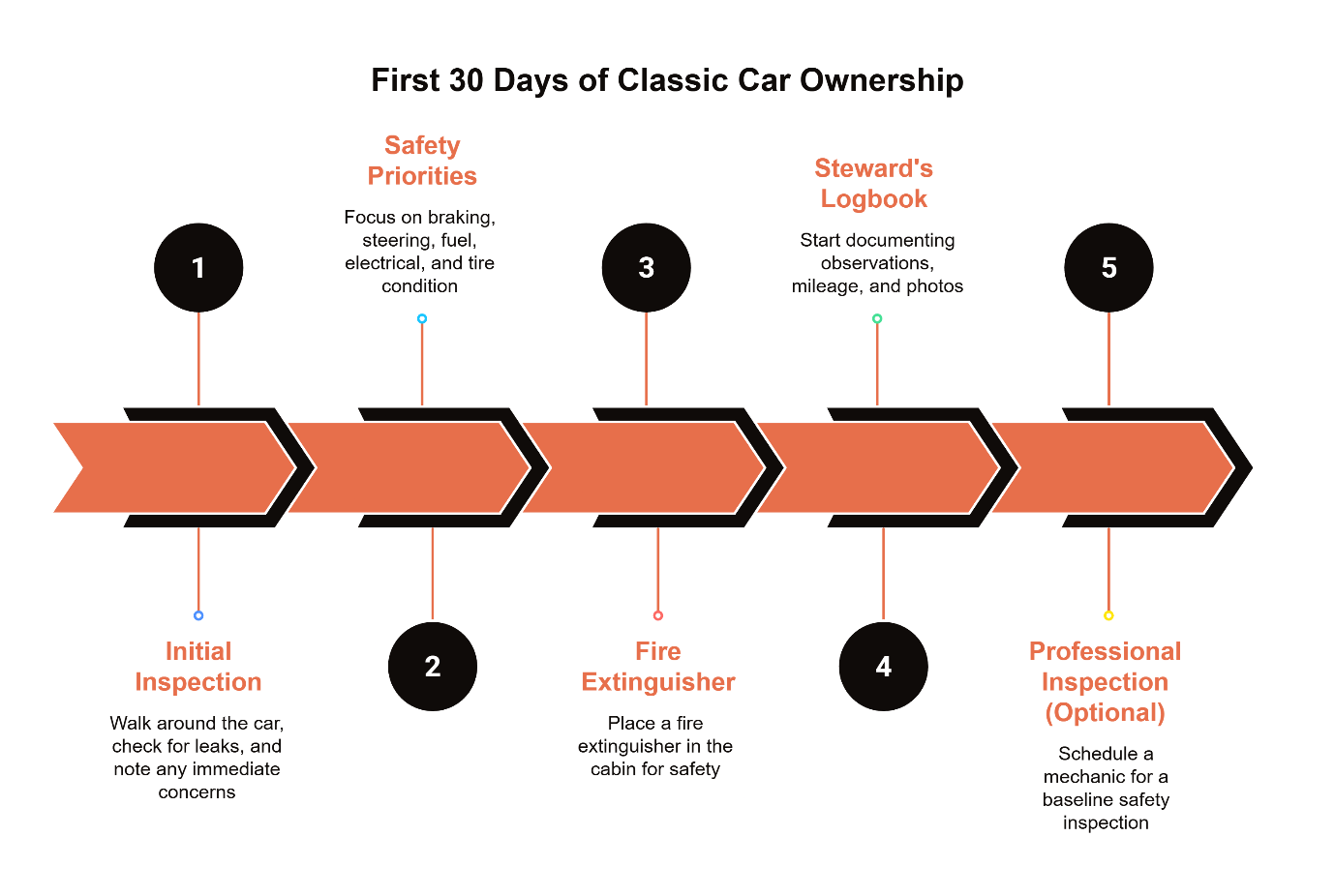
Safety-first priorities for the first 30 days:
- Braking feel: Does the pedal feel firm and predictable? Any pull to one side?
- Steering feel: Does it track straight? Any looseness or wander at highway speed?
- Fuel system: Any fuel odor in the cabin or engine bay? Inspect rubber fuel lines for cracks or swelling.
- Electrical sanity: Do all lights work? Any flickering or intermittent failures? Check for melted insulation or corroded connections.
- Tires: Check age (the last four digits of the DOT code tell you the week and year they were made), tread depth, and sidewall condition. Old tires fail without warning.
- Fire extinguisher: Keep one in the cabin. This isn't paranoia—it's prudent stewardship.
This is also the moment to start your steward's logbook. Write down the date, the mileage, and what you observe. Take photos of anything that concerns you. This documentation becomes the foundation for everything that follows.
If the car's history is truly unknown, consider scheduling a professional baseline inspection. A trained eye can spot worn brake components, deteriorated fuel lines, and electrical risks that aren't obvious from a walk-around. At Orange Independent Auto Repair, we've been helping classic VW and Porsche owners in Orange, CA establish this kind of baseline since 1971. No work is performed without your approval—we discuss every recommendation before anything gets done, so there are no surprises on the invoice.
Months 2–3: Reliability Foundations
With the safety baseline established, months two and three are about building the habits and service cadence that make the car dependable.
Set your oil service interval: For most classic air-cooled engines, plan on changing oil every 5,000 miles or 12 months, whichever comes first. Even if you don't drive much, oil degrades over time. Fresh oil is cheap insurance.
Address the known-baseline items:
- If fluids weren't documented as recently changed, change them now: engine oil, transmission fluid, brake fluid.
- Replace filters: oil filter and fuel filter at minimum. Service filters and screens: Clean the oil strainer screen (or replace the spin-on oil filter, if your classic Porsche or upgraded VW is equipped with one) and replace the fuel filter at minimum. Air filters can typically wait until around 10,000 miles unless they're visibly dirty.
- Inspect and adjust: valve clearances, ignition timing, and carburetor balance (if applicable). These small adjustments make a real difference in how the car runs and how much you enjoy driving it. For a full list of what we handle, see our auto repair services.
This phase is about small fixes that prevent big weekends from being ruined. A fresh fuel filter costs a few dollars. A clogged one can leave you stranded. A quick timing check takes minutes. A badly timed engine runs hot, wastes fuel, and wears faster.
Think of reliability as earned, not assumed. Each service interval you complete, each system you verify, adds to your confidence. And that confidence is what lets you actually enjoy the car instead of worrying about it.
Months 3–6: Drive, Observe, and Adjust
Now comes the fun part—and the most important diagnostic tool you have: driving.
Short shakedown drives teach you more about a classic car than any inspection alone. Take it on different kinds of roads. Pay attention to how it feels when it's cold versus warmed up. Notice what happens under acceleration, at cruise, and during braking.
What to observe during shakedown drives:
- New leaks: Check the ground after every drive. Did anything change?
- Changing smells: A fuel odor that wasn't there before is a signal. So is a hot electrical smell.
- Charging behavior: Does the battery stay charged? Does the charging light flicker?
- Brake feel changes: Any softness, fade, or pulling that develops over time?
- New sounds: A tick, a rattle, a hum. Note when it happens (cold start, warm cruise, under load) and describe it clearly.
The goal here is to catch issues while they're small. A minor leak addressed now is a simple fix. Ignored, it becomes a bigger problem—and a more expensive one.
When something doesn't feel right, write it down. Good symptom descriptions help a specialist diagnose the root cause faster. Structure your notes around three questions: When does it happen (cold start, warm, under load, at idle)? What does it feel like (hesitation, vibration, pull, stumble)? What changed recently (service, storage, new fuel, longer drive)? A note like "ticking sound at cold start that fades after two minutes" is far more useful than "it makes a noise sometimes."
For more on translating what you hear and feel into useful information, see our guide on what your senses can tell a specialist about a rough idle.
Months 6–9: Preservation Mode
By now, you've driven the car enough to trust its basics. The safety baseline is solid. The reliability cadence is established. Months six through nine shift the focus to preservation—the age-related issues that protect the car's long-term health and value.
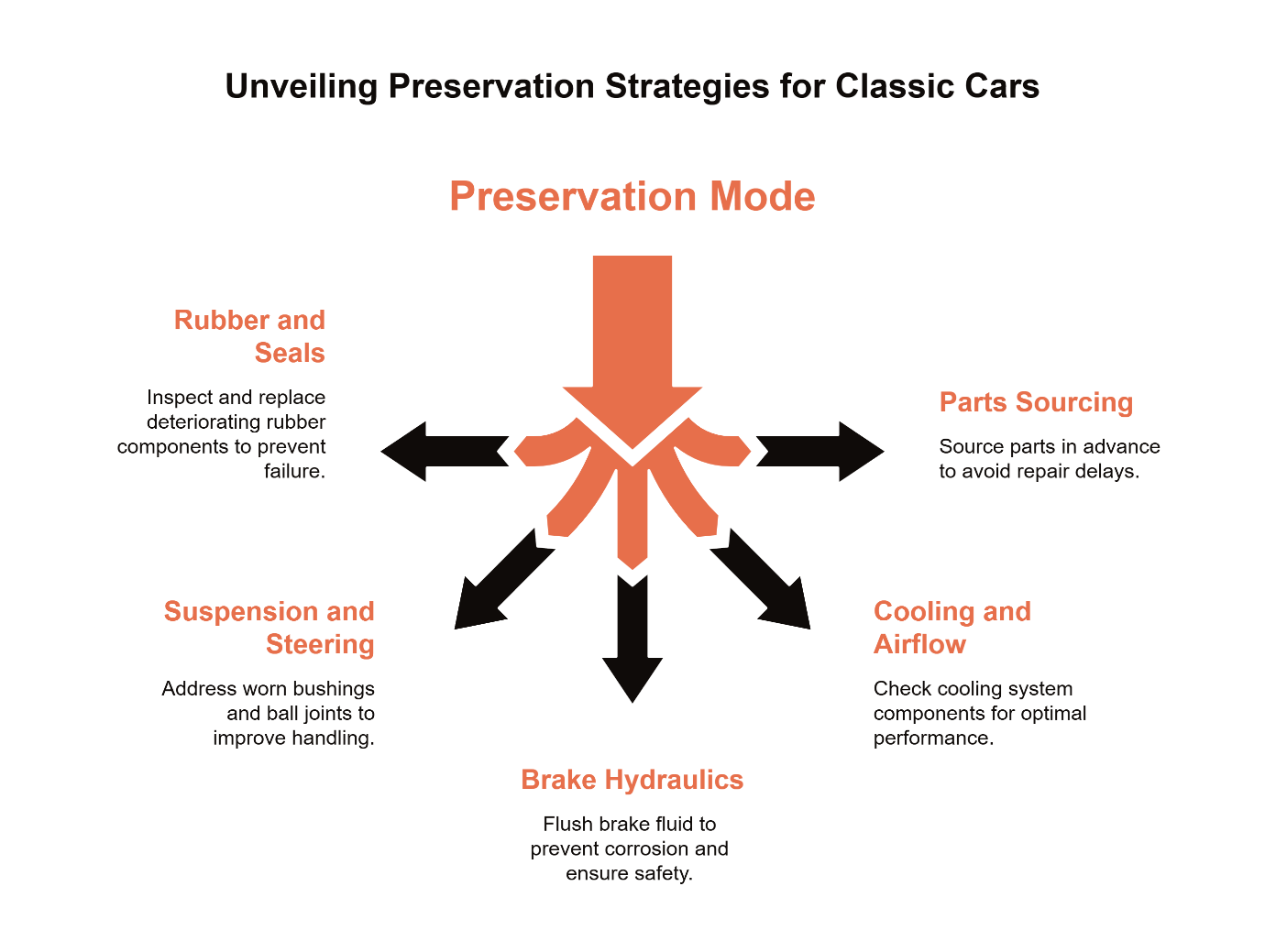
Rubber and seals: Rubber components deteriorate with age, not just mileage. Window seals, door seals, fuel system hoses, brake hoses, suspension bushings—all of these can crack, harden, or fail even on a low-mileage car that's been sitting. Inspect them carefully. Plan replacements before they fail.
Suspension and steering: Worn bushings and ball joints don't just affect handling—they accelerate wear on other components. A clunk over bumps or a vague feeling in the steering wheel often points here.
Brake hydraulics: Brake fluid absorbs moisture over time. If the fluid hasn't been flushed in the past two years, schedule it. Contaminated fluid can corrode internal components and lead to soft pedals or worse.
Cooling and airflow: For air-cooled cars, this means checking fan belts, shrouds, and the thermostat (if equipped). For water-cooled classics, inspect hoses, the radiator, and coolant condition.
This is also the time to start sourcing parts for anything you know will need attention in year two. Some classic VW and Porsche parts have lead times. Planning ahead means repairs happen on your schedule, not in a panic. Preservation mode is also where "preserve originality" becomes a practical decision filter: improvements should enhance safety and drivability without erasing the car's character.
Months 9–12: Refine and Plan Year Two
The final quarter of year one is about refinement. You've moved through the critical stages—safety, reliability, preservation. Now you can think about comfort and drivability improvements that make the car more enjoyable without compromising its originality.
Build a thoughtful punch list for year two:
- What small annoyances have you noticed? A sticky latch, a dim gauge light, a seat that needs refoaming?
- Are there upgrades that improve safety or reliability without altering the car's character? Better lighting, a modern ignition module, an upgraded fuel pump?
- What preservation items need scheduling? Paint correction, interior conditioning, underbody protection?
A simple way to choose year-two priorities: safety items first, then reliability items that interrupt driving confidence, then preservation items that prevent time-based deterioration, and finally comfort and drivability refinements that respect originality.
Take a moment to reflect on how far you've come. Twelve months ago, this car was an unknown. Now you have a documented history, a service cadence, and the confidence that comes from truly knowing a machine.
That's the identity shift at the heart of year one.
The Steward's Logbook: What to Track
Documentation is the quiet engine of stewardship. A well-kept logbook prevents repeat work, builds resale value, and creates a record that future owners (or future you) will appreciate.
What to record:
- Service dates and mileage: Every oil change, fluid flush, filter replacement, and adjustment.
- Parts used: Brand, part number, source. If you ever need to reorder, you'll have the information.
- Observed symptoms: Any new sounds, smells, leaks, or behaviors—even if they turned out to be nothing.
- Photos: Before-and-after shots of repairs. Condition of components when removed. Anything unusual.
- Invoices and receipts: Keep them organized by date. They're proof of what was done and when.
A logbook doesn't have to be fancy. A simple notebook works. So does a spreadsheet or a notes app on your phone. The key is consistency: record everything, and do it right after the work is done.
For guidance on understanding what's actually listed on a repair invoice, see how to read repair invoices so your records stay useful.
When to Bring in a Specialist
Some things can be monitored. Others need professional attention sooner rather than later. Knowing the difference is part of stewardship.
Monitor (log it and watch for change):
- A minor seep that stays stable over several drives
- A new smell that appears once and does not repeat
- A sound that is faint, consistent, and not worsening
Schedule soon (don't wait it out):
- Persistent fuel smell
- Recurring leaks that grow or appear after every drive
- Steering wander, clunks, or looseness
- Brake pull, vibration, or inconsistent pedal feel
- Intermittent electrical issues that affect starting, charging, or lighting
Stop and check promptly:
- Strong fuel odor
- Sudden change in braking or steering behavior
- Visible active leaking that is worsening quickly
- Any symptom you can't explain that feels unsafe
Classic cars reward attentive owners. But they also hide problems in ways modern cars don't. A specialist who knows these platforms—their common failure points, their quirks, their tells—can spot issues before they strand you.
If you're in Orange, CA or the surrounding areas (Tustin, Anaheim, Yorba Linda, Villa Park), schedule an inspection and get a clear picture of where your car stands. Our team has been working on classic VWs and Porsches for over 50 years. We'll tell you what we find, explain your options, and let you decide what to prioritize.
Sample Year-One Checklist (Quarterly View)
Use this checklist as a quick reference. It mirrors the timeline and gives you a scan-friendly summary of each phase.
Quarter 1 (Months 1–3): Baseline + Reliability
- Complete safety walk-around (brakes, steering, tires, fuel lines, electrical)
- Start steward's logbook
- Change oil and filter (5,000 miles or 12 months, whichever first)
- Replace fuel filter
- Flush brake fluid if unknown or older than 2 years
- Check and adjust timing, valves, carb balance (if applicable)
Quarter 2 (Months 4–6): Shakedown + Observation
- Drive regularly; note any changes in feel, smell, or sound
- Re-check for new leaks after each drive
- Monitor charging system behavior
- Document any new symptoms in logbook
Quarter 3 (Months 7–9): Preservation
- Inspect all rubber: seals, hoses, bushings
- Evaluate suspension and steering components
- Plan parts sourcing for year-two needs
- Schedule brake hydraulic flush if not yet done
Quarter 4 (Months 10–12): Refine + Plan
- Build year-two punch list
- Address minor comfort/drivability items
- Review logbook for patterns or recurring issues
- Celebrate the transition from baseline to reliability
Frequently Asked Questions
What should I service first after buying a classic car?
Start with safety-critical systems: brakes, steering, tires, and the fuel system. Verify that fluids are fresh and that there are no active leaks. Then establish an oil service cadence (5,000 miles or 12 months) and begin documenting everything in a logbook.
Is it normal for a classic car to smell like fuel or oil?
A faint oil smell near the engine can be normal, especially on air-cooled cars where the engine runs hot. But a persistent fuel smell—especially in the cabin or near fuel lines—is not normal and should be investigated immediately. Fuel leaks are fire hazards. For more on distinguishing normal seepage from real risks, see oil spots under your classic VW: what's normal vs. a real risk.
How do I know if a classic car is safe for longer drives?
Confidence comes from verification. Complete the first-30-days safety checklist, address any issues that surface, and take several short shakedown drives before planning a long trip. If brakes, steering, tires, and cooling are solid—and you've observed no concerning symptoms—you're ready. Our guide on pre-cruise reliability checks covers the essentials.
What records should I keep to be a good steward?
Track service dates and mileage, parts used (with part numbers), observed symptoms, photos of condition before and after repairs, and all invoices. Consistent documentation prevents repeat work, helps diagnose patterns, and builds resale or heritage value over time.
Your Next Step
You don't have to figure this out alone. If you want a confident baseline—a clear picture of where your classic VW or Porsche stands and what to prioritize—start with a professional inspection and a written plan.
Contact Orange Independent Auto Repair to schedule your baseline inspection in Orange, CA. Or call us directly at (714) 633-7161. We've been helping classic car owners become confident stewards since 1971—and we'd be glad to help you, too.
Resources
- Classic car maintenance in Orange, CA: what we inspect and why
- Safety priorities in a classic VW pre-purchase inspection
- How to read repair invoices so your records stay useful
- Testimonials
Disclaimer: This guide is for informational purposes. Maintenance needs vary by vehicle, condition, and driving habits. For safety-critical concerns or complex repairs, consult a qualified specialist.
Our Editorial Process
We base our recommendations on decades of hands-on experience, current best practices, and the specific realities of driving in Orange County. When we make a claim about maintenance intervals, safety, or repair decisions, we either (a) rely on established service standards, (b) cite a reputable authority, or (c) clearly label it as professional judgment. Our goal is simple: help you make safe, informed decisions and keep your vehicle reliable.
By: The Orange Independent Auto Repair Team, a family-owned shop in Orange, CA serving drivers since 1971. We specialize in classic VW and Porsche service, European auto repair, and careful diagnostics that respect originality while keeping your car safe and enjoyable to drive.