Classic VW Project Car Budget Fit: Inspection Questions to Ask Before You Commit
📌 Key Takeaways
A classic VW fits your budget only when you understand both the known work and the important unknowns.
- Define The Project: Judge how much work you understand before trying to attach repair prices to every inspection finding.
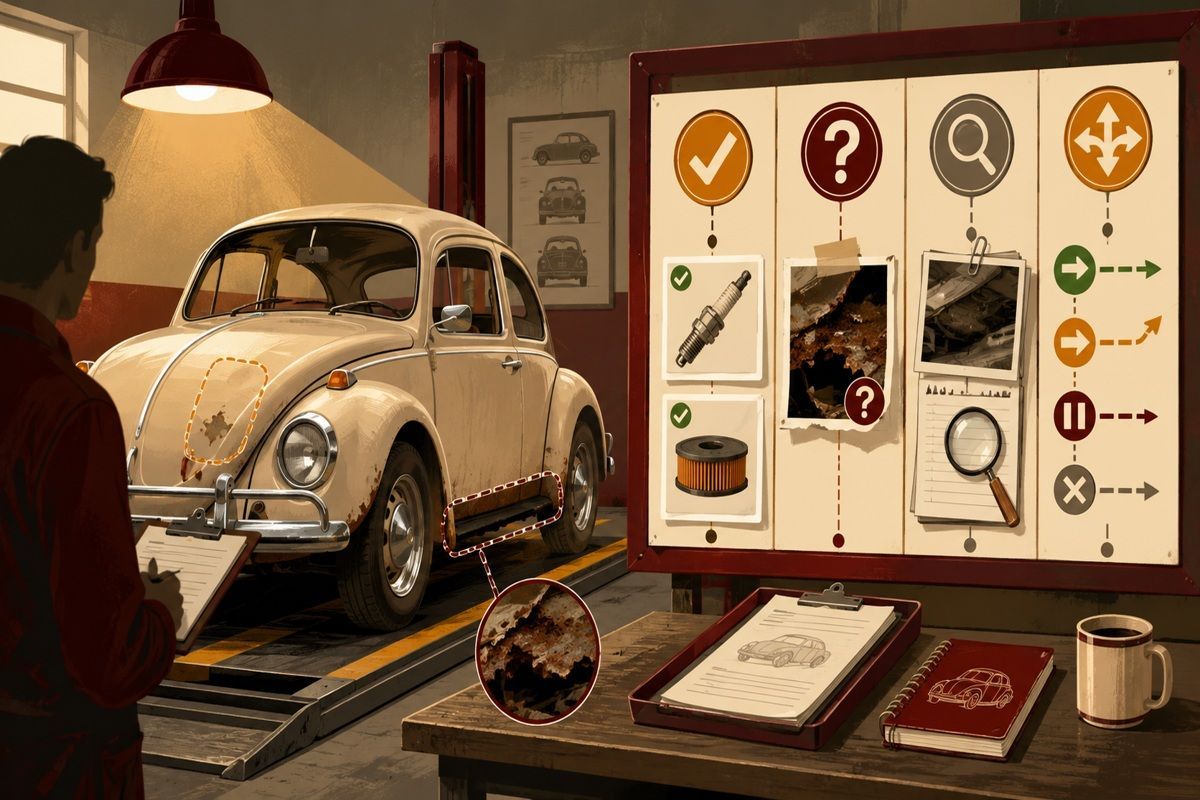
- Separate Facts From Unknowns: Ask what the inspection confirmed, what remains unverified, and what evidence could make the decision clearer.
- Weigh Risk, Not Count: One unclear corrosion concern may create more project risk than several routine maintenance items.
- Question Rust Carefully: Visible rust or old repairs do not reveal their full extent when nearby areas remain inaccessible.
- Choose Your Next Step: Use the findings to proceed, renegotiate, seek more information, or keep looking based on your project tolerance.
Clear scope makes a manageable classic VW project.
Classic VW buyers will make stronger purchase decisions by using these questions before applying the inspection framework that follows.
~ ~ ~ ~ ~ ~ ~ ~ ~ ~ ~ ~ ~ ~ ~ ~ ~ ~
A classic VW inspection can leave a first-time buyer with a page of findings but no clear answer to the question that matters most: is this still the project I thought I was buying?
Whether you are shopping around the Orange area or elsewhere, you may have rust notes, prior repair observations, mechanical findings, and areas the inspector could not fully access. The temptation is to attach a guessed price to every line and add them up. That falls apart when you do not yet know how far a problem extends, especially when you already like the car enough to rationalize findings you do not fully understand.
A more useful starting point is a set of questions that separate what the inspection established from what remains an unresolved unknown. The answer may be to proceed, renegotiate, pause for more information, or keep looking.
Start With Project Scope, Not a Repair-Price Guess
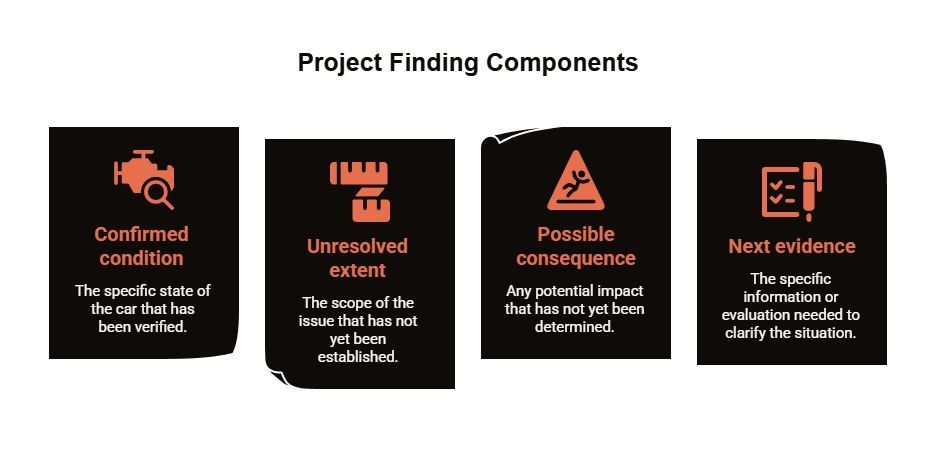
Project scope includes the amount and type of work the car requires, plus any major uncertainties that could change that picture. A finding with clear scope is one you can plan around: a confirmed condition, a sense of how far it extends, a reasonable idea of what the work involves, and what evidence you would need if anything remains uncertain.
Suppose one classic VW has several clearly described maintenance items. Another has a single corrosion or previous-repair concern whose extent cannot yet be established. The second car does not automatically have the bigger problem, but it may be harder to budget because the condition is not yet bounded. Compare that with a situation where the visible condition appears limited but surrounding areas could not be evaluated. That finding may be minor, or it may represent a much larger project. Until someone evaluates it more closely, a cost guess has nothing solid behind it.
A car that runs smoothly at idle can still carry unresolved unknowns in its body or previous repair history. Drivability alone does not settle the question of structural condition — the overall integrity of the body, floor, and load-bearing areas that keep the car safe and solid. The first budget question is not, "What does this cost?" It is, "How much of this problem do I actually understand?"
This answers the common objection that because every old VW needs work, individual findings do not matter. They do, but not because every item needs a price tag. The relevant question is whether the important findings are understood well enough for you to decide what you are accepting. Before reaching for the full matrix below, separate four things for each important finding: the confirmed condition, the unresolved extent, any possible consequence that has not been established, and the next evidence needed.
Turn Every Inspection Finding Into Four Budget-Fit Questions
You do not need to diagnose the car yourself. Every finding on a vehicle inspection report can be filtered through the same four questions:
- What did the inspection actually establish?
- What remains unknown or inaccessible?
- Could that uncertainty materially expand the project?
- What additional evidence would make the decision clearer?
An optional fifth question brings the decision back to you personally: if the uncertainty remains, am I comfortable accepting it?
An unresolved unknown is a condition that has not been evaluated well enough to support a confident conclusion. Do not treat it as good condition simply because no problem was confirmed. For example, finding a visibly rusted battery tray is a known condition if the inspector can evaluate the metal underneath. If that same tray is buried under heavy, hardened undercoating that cannot be scraped away during a visual check, it remains an unresolved unknown. The matrix below shows how these questions apply to common inspection situations.
Budget-Fit Inspection Question Matrix
| Inspection Finding or Unknown | Question to Ask | What the Answer Should Clarify | Decision Relevance |
|---|---|---|---|
| Rust or corrosion noted | "How much of this area could actually be inspected, and what remains unverified?" | Known extent versus unknown extent | Whether project scope is bounded |
| Previous patch or repair | "What can be established about the repair and the condition around it?" | Evidence versus assumption | Whether further inspection is warranted |
| Mechanical or drivability issue | "What did the inspection confirm, and what is still only a possible cause?" | Confirmed condition versus diagnostic uncertainty | Prevents budgeting around a guessed diagnosis |
| Multiple findings | "Which items materially change the project and which are routine or secondary?" | Priority and scope | Prevents list length from controlling the decision |
| Area not accessible or insufficient evidence | "What would need to be inspected or documented before this question is resolved?" | Next evidence step | Helps you decide whether to pause |
| Seller explanation without records | "Is there documentation or inspection evidence that supports that explanation?" | Seller statement versus verified information | Reduces reliance on reassurance alone |
The buyer's goal is not to force certainty where it does not exist. It is to understand whether the uncertainty itself fits the project you are willing to take on.
Apply this matrix to the actual inspection report, not to generic online advice. Conflicting enthusiast opinions can be useful as questions to investigate, but vehicle-specific inspection evidence should carry more weight in your purchase decision.
Be careful about counting findings rather than weighing them. A long list of clearly described maintenance items can look alarming, yet each one may have bounded scope. A single dramatic-looking issue can overshadow a car whose overall condition is otherwise well documented. Conversely, one poorly defined corrosion concern may carry more project risk than ten routine items combined. Weight matters more than quantity.
Ask More Precise Questions About Rust and Previous Repairs
Rust and prior repair work generate the most anxiety for classic VW buyers, and corrosion can range from a well-understood surface condition to something whose full extent is concealed. Structural condition refers broadly to the state of body or supporting areas that affect how the vehicle is assembled and carries loads. Whether a particular finding has structural significance depends on the vehicle and its condition and requires vehicle-specific professional evaluation. The label matters less than what the inspector could actually observe.
When an inspection notes corrosion, ask which areas were visible and accessible, and which were not. If the visible condition appears limited but surrounding areas could not be evaluated, that is an incomplete picture rather than a reassuring one. "Surface rust" is a description of what was seen, not a complete diagnosis of extent. That observation is a reason to ask another question, not a diagnosis by itself.
The same reasoning applies to a patch, old repair, door gap, or sag. A visible clue may deserve further inspection, but it does not automatically prove concealed damage or poor repair quality. A seller may explain that an area "was repaired years ago," but limited records make it difficult to evaluate the scope or quality of that work. Ask what can be established about the repair itself, the condition of the surrounding area, and whether the inspection provides enough evidence to judge. Useful documentation before an offer may include repair records, relevant inspection notes, and a clear record of which areas were accessible and which remain unresolved.
One more question worth asking: would another inspection step, such as closer access to a concealed area, materially reduce the remaining uncertainty? If the answer is yes, that step may be worth completing before you commit.
For a closer look at common areas where classic VWs deserve attention before a purchase, see classic VW rust areas to ask about before making an offer.
Separate Known Work From Major Unknowns
Once you have asked the right questions, sort your findings into categories:
- Known: The finding is established well enough to describe. You understand what the work involves, even if you have not priced it.
- Needs clarification: The finding is real, but its extent or cause is not clear enough for confident planning.
- Unverified: The area or condition could not be assessed sufficiently during the inspection. Lack of evidence is not evidence that the condition is good.
- Outside my project tolerance: The remaining uncertainty exceeds what you are prepared to accept.
That last category is a buyer decision, not a universal technical verdict. Two buyers looking at the same findings may reasonably reach different conclusions based on their own budget, timeline, mechanical support, and appetite for open questions.
Pay attention to friction that can distort this sorting process. Incomplete records make prior work harder to evaluate. Areas that could not be inspected create unknowns rather than confirmed results. Vague "recently repaired" statements from a seller are not the same as documented evidence. Outside opinions from forums or fellow hobbyists can add noise when they lack physical evidence. If an important area could not be inspected, record that limitation explicitly rather than leaving a blank that later feels reassuring. If online advice conflicts, return to the same question: what does the vehicle-specific inspection actually establish? Sort by what the inspection found, not by what someone who has not seen the car believes.
Use the Findings to Choose Among Four Next Steps
After sorting, you are choosing among four outcomes:
- Proceed. Condition is understood well enough for your project tolerance. Known work fits your budget and timeline, and remaining uncertainty is minor. Proceeding does not mean the car has no problems. It means you have enough clarity to make the commitment on your own terms.
- Renegotiate. Findings change the scope you believed you were purchasing. New information can reasonably change what you are willing to pay, even without a precise repair estimate. The point is not a fixed dollar deduction for each rust spot or finding. It is that the project is different from what you expected. If exact repair costs matter to the negotiation, use a vehicle-specific estimate with a defined repair scope rather than a generic online range.
- Pause for more information. A material unknown might be clarified before you commit. If one question could meaningfully change the decision, it may be worth answering before money changes hands, even if the listing feels time-sensitive or the seller is pressing for a quick answer.
- Keep looking. The unresolved scope or required work exceeds what you want to accept. Continuing to search is a legitimate buying decision. The time and effort you have already invested do not obligate you to close a deal that no longer fits.
These are decision categories, not mechanical diagnoses.
If you are choosing between two classic VW project cars, apply the same framework to both. Car A may look cosmetically cleaner but have areas that could not be fully evaluated. Car B may look rougher but come with better documentation and clearer findings. Compare the quality of evidence and remaining uncertainty, not paint or asking price alone. A California location does not establish the condition of an individual classic VW, and it should not be treated as proof that corrosion is minimal. For a structured approach, see how to compare two classic VW project cars when rust risk is unclear.
What a Pre-Purchase Inspection Can Clarify, and What It Cannot Promise
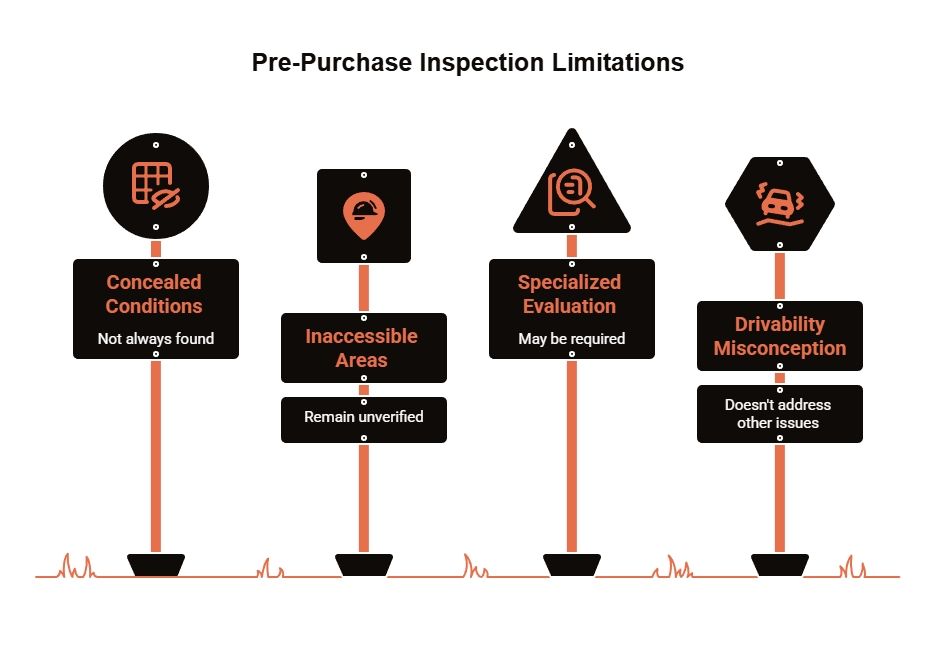
A pre-purchase inspection is a vehicle inspection performed before you commit to buying. It can help clarify observed condition, organize important questions, and separate an inspection finding from an assumed cause or repair plan. An inspector evaluates what is accessible and documents observations that help a buyer ask better questions.
No inspection should be understood as a guarantee that every concealed or future condition has been found. Inspection quality depends on access, the vehicle's current state, and evaluation scope. Some areas may remain inaccessible, and some conditions may not be apparent without further disassembly or specialized evaluation. Good drivability does not settle an unrelated rust, previous-repair, or inaccessible-area question.
If you have already had one inspection and feel reluctant to take another step, consider whether the remaining questions are significant enough to affect your decision. Paying for one inspection does not obligate you to accept an unresolved condition. If another inspection step or better documentation could materially change your decision, asking for it can be reasonable before money changes hands. One more conversation may cost far less than an unresolved unknown that surfaces after purchase.
A useful question to ask any inspector is: "What was inspected, what was observed, and what remains unverified?"
If important questions are still unresolved after reviewing your findings, a classic VW pre-purchase inspection may be a practical next step before committing.
Frequently Asked Questions
What inspection finding should make me reconsider a classic VW project car?
No single finding settles the question for every buyer. A more useful warning sign is a condition whose extent cannot be established well enough for you to understand the project you would be accepting. When an important unresolved unknown remains open and no practical next step would resolve it before purchase, that deserves careful consideration. Specific structural or safety conclusions require vehicle-specific professional evaluation.
Can I use inspection findings to renegotiate the price?
Yes. Findings can change what you believe the project includes, and that can reasonably affect what you are willing to pay. Avoid using a standard dollar deduction for each item. The useful negotiation point is the changed project scope, not a universal deduction for a particular defect. If exact repair costs matter to the negotiation, vehicle-specific estimates from a qualified professional are more useful than generic ranges.
Is a pre-purchase inspection enough to know the full restoration budget?
No. A pre-purchase inspection can reduce uncertainty and clarify observed condition, but it should not be framed as a complete restoration budget or a guarantee that every concealed or future condition is known. Some questions may remain because of access, inspection scope, incomplete records, or concealed areas. Those remaining questions belong in your project decision, not in an assumed zero-cost column.
Does buying a classic VW in California mean rust is less of a concern?
Geography does not establish the condition of an individual vehicle. A car's history, storage, previous repairs, and actual inspection findings matter more than its current location. Treat every classic VW as a vehicle that deserves its own inspection evidence rather than relying on location as a substitute.
A Manageable Project Starts With the Right Questions
A manageable classic VW project is not necessarily one with no problems. It is one whose known work and remaining uncertainty fit what you are prepared to take on. If you liked the car before the inspection, that enthusiasm is worth acknowledging honestly: it can help you commit to a good project, or it can make you overlook questions that deserve answers.
If important questions remain unresolved, consider clarifying them before you commit. Orange Independent Auto Repair is a family-owned shop in Orange, CA that has served the area since 1971 and lists pre-purchase inspections among its classic-car services. Contact Orange Independent Auto Repair to discuss your situation.
Disclaimer: This article is for general informational purposes only and does not constitute compliance, safety, technical, or professional advice. Requirements, risks, and best practices may vary by context, jurisdiction, system, provider, or use case. Confirm important decisions with the appropriate qualified professional, authority, or technical expert.
Our Editorial Process
Our expert team uses AI tools to help organize and structure our initial drafts. Every piece is then extensively rewritten, fact-checked, and enriched with first-hand insights and experiences by expert humans on our Insights Team to ensure accuracy and clarity.
By Orange Independent Auto Repair Insights Team
The Orange Independent Auto Repair Insights Team develops owner-level, evidence-first guidance shaped by decades of hands-on experience serving classic VW and Porsche owners in Orange and the surrounding communities.