
Before the Next School Run, Commute, or Family Trip: What Orange-Area Drivers Should Recheck
📌 Key Takeaways
Before the next trip, record how the vehicle changed and ask whether it needs an inspection before planned use.
- Report Changes Clearly: Record changes in frequency, strength, duration, conditions, and drivability so your repair provider can reassess the concern.
- Connect Companion Symptoms: Note whether a new smell, leak, noise, warning, or vibration appears alongside the original issue.
- Separate Plans From Diagnosis: Important travel increases the impact of a breakdown, but it does not prove that repairs are urgent.
- Use Vehicle-Specific Guidance: Check the owner’s manual for warning meanings, then share the exact message without guessing which part failed.
- Know When To Stop: Stop driving safely if a warning flashes or the vehicle suddenly loses power or severely overheats.
Report what changed; let an inspection find the cause.
Orange-area drivers managing school, work, caregiving, or family travel will make better repair decisions using the recheck steps that follow.
~ ~ ~ ~ ~ ~ ~ ~ ~ ~ ~ ~ ~ ~ ~ ~ ~ ~
The vehicle made the last trip, but its warning, leak, noise, smell, gauge change, or drivability concern remains unresolved. Before the next school run, commute, caregiving trip, or family outing, compare what the vehicle is doing now with what happened when the concern was first noticed.
For Orange-area households coordinating school, work, or caregiving, the schedule pressure is real. It does not determine the vehicle’s mechanical condition.
The useful question is not simply whether the symptom remains. Note whether it has changed in frequency, intensity, duration, operating conditions, accompanying symptoms, or drivability. Drivability means how the vehicle starts, idles, accelerates, shifts, brakes, steers, or otherwise feels during ordinary operation.
These observations can help a repair provider reconsider an earlier recommendation. They cannot diagnose the cause or determine whether a particular vehicle should be used for a particular trip.
Recheck What Changed, Not Just Whether the Symptom Is Still There
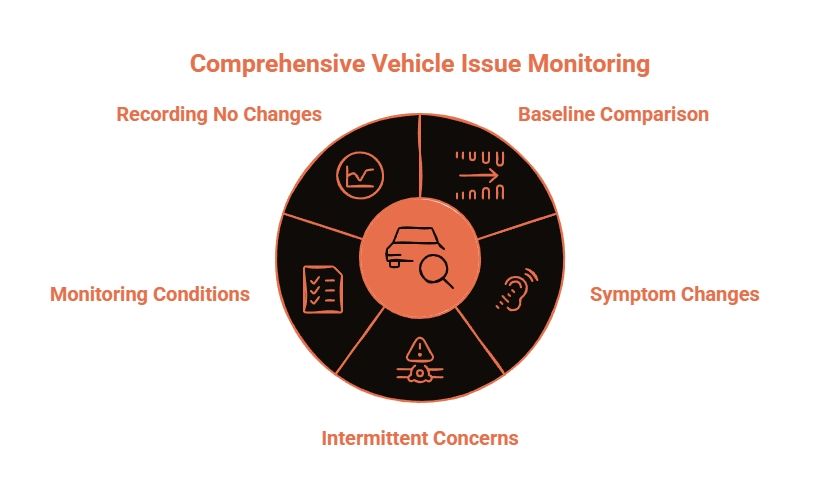
Not every warning, leak, noise, maintenance finding, or repair recommendation has the same timing or consequences. Begin with the baseline: the earlier pattern against which the current symptom can be compared.
A baseline might be “a brief noise only at the first startup,” “one spot after the vehicle sat overnight,” or “a dashboard warning that appeared and then went away.”
Now compare that description with the current behavior. Has the concern started happening more often? Is it stronger, louder, larger, or longer-lasting? Does it appear under different conditions? Does the vehicle feel different at the same time?
An intermittent concern can still produce a useful pattern. A noise once limited to startup may now occur after the vehicle warms up. A spot may appear more frequently or in a different place. A warning may remain present longer. Hesitation may occur during a different part of the trip.
None of those observations identifies the failed component. They give the repair provider a clearer before-and-after comparison.
The same principle applies when the earlier recommendation was to monitor the issue. A monitoring condition is a specific change the owner was asked to watch for, such as increased frequency, a second symptom, or different vehicle behavior. Monitoring should not mean forgetting the concern until the next routine service. When no monitoring conditions were explained, ask what changes should prompt reassessment.
This guide to monitoring a vehicle issue without guessing offers additional context.
It is also useful to record when nothing observable has changed. “The noise still occurs only during the first startup and has not become louder” gives the provider more information than “It seems the same.”
Separate Modern Warning-Light Changes From Classic Vehicle Symptoms
Modern and classic vehicles do not always communicate concerns in the same way. Keeping the two frameworks separate helps the owner report useful details without forcing every vehicle into a dashboard-warning discussion.
Modern or OBD-Era Vehicles
For a modern vehicle, record the exact dashboard warning or message without translating it into a component diagnosis. Note whether it is newly present, intermittent, persistent, or behaving differently from the earlier occurrence.
Then record what happened at the same time. Did another indicator appear? Did the vehicle start, idle, accelerate, shift, brake, or steer differently? Did a gauge or other control behave differently?
The vehicle-specific owner’s manual is the first source for the meaning of an indicator and any manufacturer instructions. Warning symbols and messages can vary by make, model, year, and system. A dashboard warning also does not identify the failed part by itself.
However, if a warning light begins flashing, or if you experience a sudden loss of power or severe overheating, pull over safely and stop driving immediately.
A useful hypothetical report might read: “The indicator previously appeared briefly, but it now remains present. The idle also feels different, and the exact dashboard message says ____.” That describes the change without claiming to know the cause.
Classic VW and Porsche Vehicles
For classic VW and Porsche vehicles, useful observations may come more from smell, sound, leak pattern, vibration, drivability, or analog gauge behavior than from a modern warning-light system.
Record whether a familiar seep appears more frequently, in a different location, or alongside a new odor or sound. Note changes in starting, idling, hesitation, stalling, vibration, or temperature behavior. Where equipped, describe how an analog gauge or charging indicator differs from its earlier pattern.
Not every classic vehicle has the same gauges, cooling system, or instrumentation. A familiar characteristic should not automatically be labeled normal, and a new observation should not be assigned a component diagnosis without inspection.
Do not deliberately recreate a symptom, inspect hot or moving components, crawl beneath the vehicle, or perform a home test to improve the report. Describe only what occurred during normal use.
A Second Symptom Can Change the Question
A companion symptom is another warning or observable change occurring with the original concern. It could be a smell, leak, noise, vibration, gauge movement, dashboard message, or difference in drivability.
The important detail is whether the observations occur together. A concise report can follow this structure:
“Original issue: ____. New observation: ____. Both occur when ____.”
A second observation does not prove that the two concerns share a cause. It does give the provider information that was unavailable during the earlier discussion. Depending on the vehicle and the symptoms involved, that new pattern may justify reconsidering the earlier timing or evaluating both concerns together.
The owner does not need to decide which symptom is primary. Plain descriptions usually preserve more useful information than uncertain technical labels.
Let the Next Trip Change the Planning Conversation, Not the Diagnosis
Upcoming vehicle use matters because it changes the household’s exposure to disruption. A vehicle used only occasionally may now be needed for repeated school and work trips. A shared vehicle may be required for caregiving, passenger transportation, or a longer family outing.
Tell the provider about that planned use. It helps explain the decision the household is trying to make.
The trip itself does not diagnose the vehicle or mechanically change the concern. An important trip does not automatically make a repair urgent, and a short local trip does not establish that the vehicle is appropriate to use. Distance alone cannot answer the question.
A useful question is: “When this concern was first discussed, the vehicle was used occasionally. It is now needed for repeated daily trips. Does the earlier priority still apply, or is a vehicle inspection needed first?”
This separates transportation planning from mechanical assessment. It also creates time to consider alternatives rather than expecting a general article or phone conversation to provide a vehicle-specific clearance.
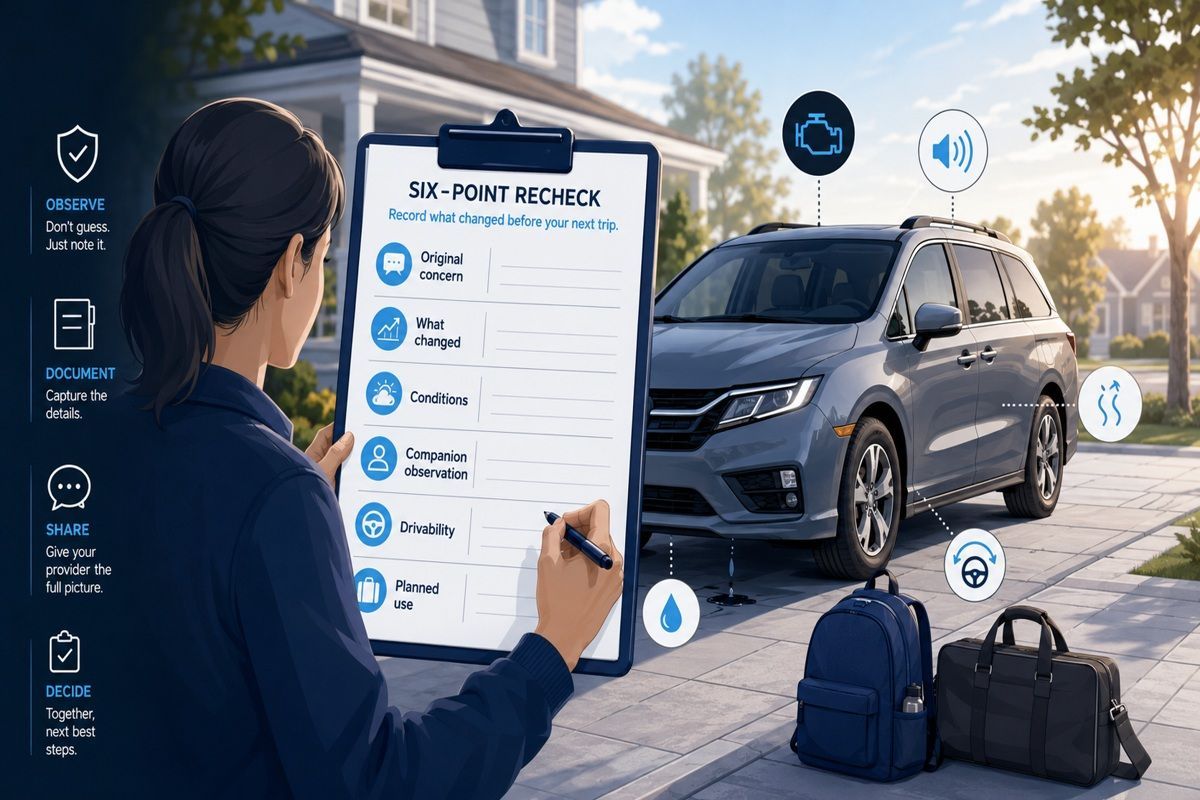
Use the Six-Point Vehicle Recheck Note
A short written note keeps the conversation centered on observable information. Complete it from memory, dashboard messages, and ordinary-use observations. Do not recreate the concern deliberately.
| Recheck field | What to record |
|---|---|
| Original concern | A plain description of the warning, leak, noise, smell, gauge movement, or drivability issue |
| What changed | More frequent, stronger, longer-lasting, larger, different, or accompanied by another observation |
| Conditions | Cold start, warmed up, braking, turning, accelerating, idling, after parking, or another observable circumstance |
| Companion observation | Another warning, message, smell, leak, vibration, gauge change, noise, or control change |
| Drivability | Any change in starting, acceleration, shifting, braking, steering, idle, or general feel |
| Planned use | School, work, caregiving, repeated daily use, passengers, a longer trip, or another transportation need |
Use approximate timing when exact timing is unavailable. “It happened three times this week after the vehicle had been running” is more useful than “It happens sometimes.” Record “no observable change” when that is accurate.
The note is intended to help reassess one concern. It does not make every item on an existing repair list equally urgent.
Questions to Ask When You Report the Change
Read the note before contacting the repair provider. Then ask:
- “Does this change affect the priority previously assigned to the concern?”
- “What specific changes mean monitoring should end and a vehicle inspection should be arranged?”
- “Should the new symptom be evaluated with the original one?”
- “What information from the owner’s manual or dashboard message should be provided?”
- “Does the vehicle need an inspection before the planned use?”
- “If this cannot be assessed remotely, what is the appropriate next step?”
A provider may not be able to make a vehicle-use determination by phone. That limitation is reasonable when the answer depends on the vehicle’s actual condition.
Requesting reassessment is not the same as approving every recommended repair. Ask for the reason behind the updated priority, the evidence supporting it, the possible consequence of waiting, and the proposed timing. These questions to ask before approving a repair recommendation can help structure the conversation.
Report, don’t diagnose: Describe what changed, when it happened, what occurred at the same time, and how the vehicle felt. Let an appropriate vehicle inspection determine the cause.
When General Information Cannot Answer Whether to Drive
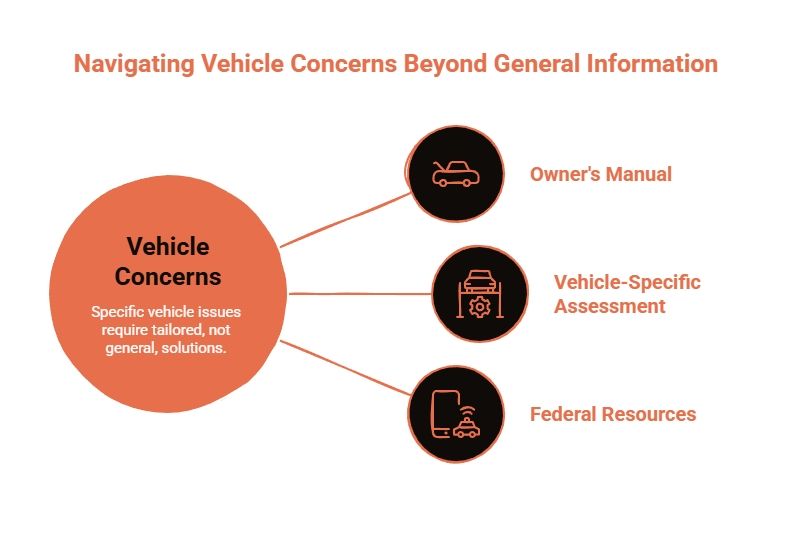
General information cannot evaluate a specific vehicle’s warning, leak, noise, smell, gauge behavior, or drivability concern. It cannot account for the make, model, year, condition, previous findings, or current circumstances.
For a modern dashboard indicator, follow the vehicle-specific owner’s manual instructions and report the exact message. For any unresolved concern, report the change and ask whether a vehicle-specific assessment is needed.
Specific drive, stop, or tow guidance must be based on technically appropriate information about the actual vehicle. When the provider cannot make that determination remotely, a vehicle inspection may be required before the planned use.
For official federal resources, the National Highway Traffic Safety Administration provides a VIN-based recall lookup and a process to report a possible vehicle safety problem. These resources do not replace the owner’s manual or a vehicle-specific assessment.
Frequently Asked Questions
Does a Longer or More Important Trip Automatically Make the Repair Urgent?
No. The trip does not diagnose the vehicle or determine its mechanical priority. It may increase the practical consequences of a breakdown or loss of function, so tell the provider about the planned use and ask whether the earlier recommendation still applies.
Make the Next Conversation More Useful
Before your next drive, check if the vehicle's condition has shifted from your initial notes. Document any newly developed physical signs—such as a fresh leak, a different engine noise, or a change in drivability—along with how you plan to use the vehicle. With this updated context, your repair provider can accurately determine if a previous recommendation requires an immediate priority upgrade.
Orange Independent Auto Repair offers vehicle inspections in Orange, CA, and has been family-owned and -operated since 1971. Write down what changed, then contact Orange Independent Auto Repair to schedule service and ask whether a vehicle inspection is appropriate before the planned use.
Disclaimer: This article is for general informational purposes only and does not constitute safety, technical, or professional advice. Vehicle warnings and symptoms can have different meanings depending on the vehicle and circumstances. Follow the instructions in the vehicle’s owner’s manual and consult an appropriate repair professional about the specific vehicle before making an important driving decision.
Our Editorial Process
Our expert team uses AI tools to help organize and structure our initial drafts. Every piece is then extensively rewritten, fact-checked, and enriched with first-hand insights and experiences by expert humans on our Insights Team to ensure accuracy and clarity.
By Orange Independent Auto Repair Insights Team
The Orange Independent Auto Repair Insights Team develops owner-level, evidence-first guidance shaped by decades of hands-on experience serving classic VW and Porsche owners in Orange and the surrounding communities.