The Repair Recommendation Translator: What to Ask Before You Say Yes
📌 Key Takeaways
A clear repair decision starts by asking what the shop found, why it matters, and what happens next.
- Ask The Purpose: A part name is not enough; ask what problem the repair is meant to solve.
- Demand Real Evidence: Good advice connects symptoms, inspection findings, and plain proof before asking for approval.
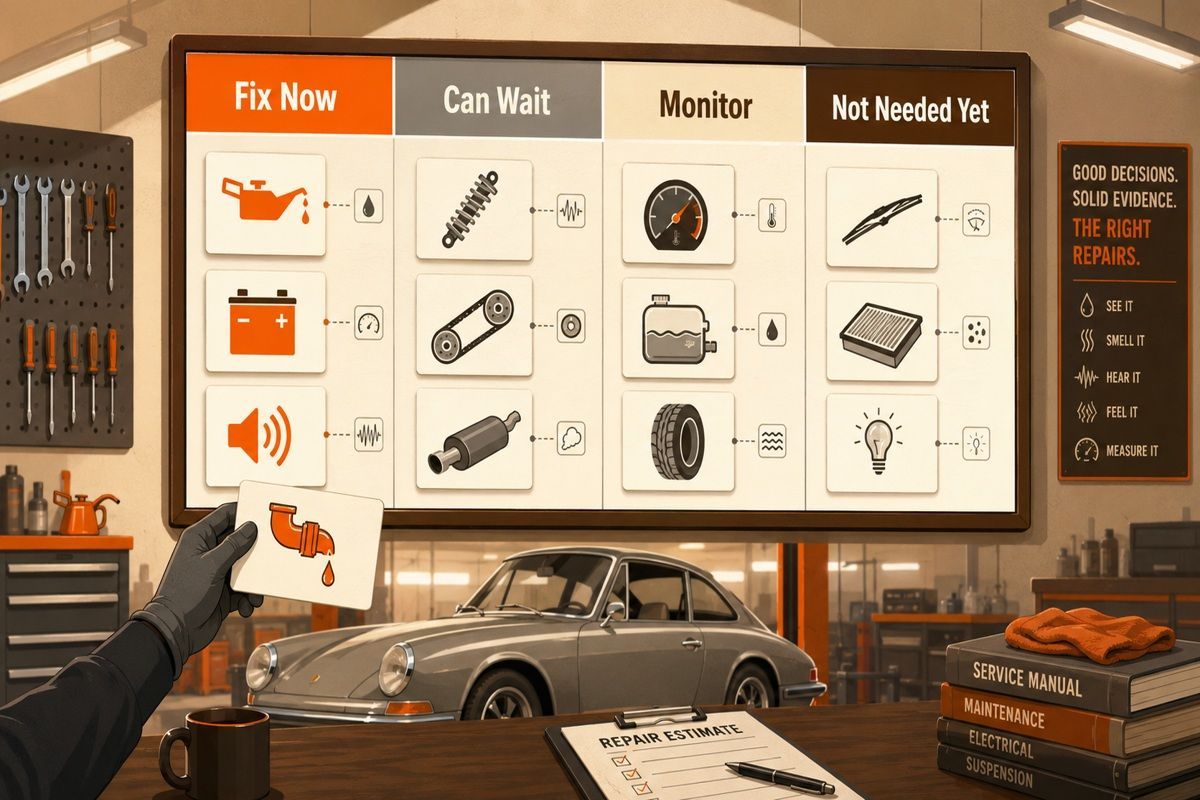
- Sort The Priority: Label each item as fix now, wait, monitor, or not needed yet.
- Understand Waiting Risk: Waiting makes sense only when you know what could change and what to watch.
- Confirm Next Steps: Clear guidance should end with approval, planning, monitoring, or no repair today.
Clear evidence plus clear priority turns repair pressure into a calmer decision.
Classic VW and Porsche owners facing repair estimates will gain clearer questions here, preparing them for the detailed overview that follows.
~ ~ ~ ~ ~ ~ ~ ~ ~ ~ ~ ~ ~ ~ ~ ~ ~ ~
The estimate is on your phone.
The number is easy to see. The part name is not. Maybe the shop mentioned a charging issue, a leak, a worn suspension part, or something tied to the way your classic VW and Porsche feels on the road. You know the car needs attention, but the recommendation still sounds like shop language.
You do not need to become a mechanic to ask a fair question.
You need enough plain-language explanation to understand what the shop found, why it matters, how soon it matters, and what your next step should be. That is the difference between feeling pushed into a repair and making a calm decision.
For owners of classic VW and Porsche vehicles, that clarity matters even more. Many classics do not communicate through modern warning lights or computer-driven alerts. They speak through smell, sound, vibration, leaks, drivability, and analog gauges. A recommendation should translate those clues into practical repair priority.
Start With the Real Question: What Are We Solving?
Before approving any repair, ask:
“What problem is this recommendation solving?”
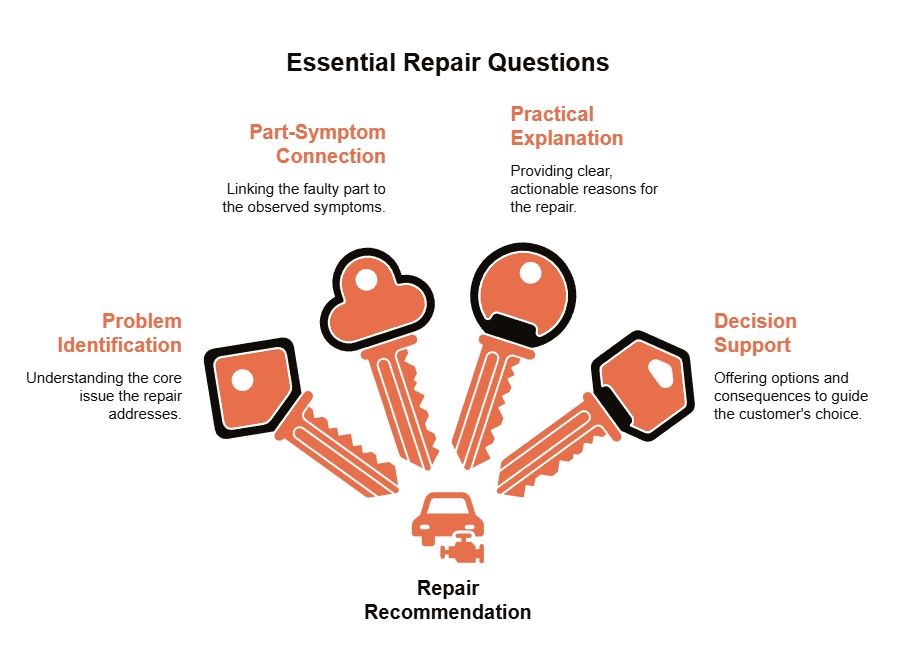
That question keeps the conversation grounded. A part name alone does not tell you much. A repair recommendation should connect the part, the symptom, and the reason for action.
For example, a classic VW with a fuel smell is different from a modern car with an OBD-era fault code. A vintage or air-cooled Porsche with a charging issue may need a different explanation than a late-model feature concern. A suspension noise on a daily driver is different from a small maintenance item found during a pre-purchase inspection.
A good answer should sound practical:
“This part affects starting reliability.”
“This leak is small now, but it is active.”
“This noise matches the wear we found during inspection.”
“This is not failed yet, but it should be monitored.”
That kind of answer gives you a decision, not just a diagnosis.
Orange Independent Auto Repair is a family-owned shop serving Orange, Tustin, Anaheim, Yorba Linda, and Villa Park. The shop’s official pages describe its focus on honest service, fair treatment, and care for classic VW and Porsche vehicles, along with broader vehicle service where appropriate. You can learn more about the shop on the Orange Independent Auto Repair About page.
Question 1: What Does This Part or System Do?
Ask this first:
“What does this part or system do?”
This is the easiest way to slow down a confusing recommendation. You are not asking for a technical lecture. You are asking for the part’s job in normal owner-level language.
If the recommendation involves the charging system, the explanation should connect to charging behavior, battery condition, starting reliability, or gauge readings. If it involves suspension, the answer should connect to ride quality, steering feel, uneven tire wear, or control. If it involves a leak, the answer should explain what fluid may be leaking, where it appears, and why that matters.
For classic VW and Porsche owners, this conversation should often start with physical clues:
- A fuel smell after parking
- A new tick, knock, grind, or belt squeal
- A fresh drip under the car
- Hesitation, stalling, or overheating behavior
- Oil pressure, temperature, or charging behavior on analog gauges
Those clues are not “old car quirks” to ignore. They are the language of the vehicle. A good repair explanation should translate them clearly.
For modern vehicles, warning-light or scan language is acceptable when it is clearly scoped to OBD-era diagnostics. The key is context. A code or warning light should not be treated as the whole answer. It should support the diagnosis, not replace explanation.
Question 2: What Evidence Shows This Needs Attention?
Next, ask:
“What evidence shows this needs attention?”
This question helps separate a real finding from a vague recommendation. Evidence can include an inspection finding, a leak pattern, wear, abnormal movement, smell, noise, gauge behavior, test result, or a symptom you already noticed.
A weak recommendation sounds like:
“You need this done.”
A clearer recommendation sounds like:
“We found fresh oil at this location, and it matches the drip you noticed after driving.”
Or:
“The charging behavior is inconsistent, and that lines up with the starting problem you described.”
That second type of answer gives you a chain of reasoning. It connects what you experienced to what the shop found.
For classic VW and Porsche vehicles, evidence should often be sensory and mechanical. A classic owner may describe a hot-oil smell, a vibration through the floor, or a gauge needle that behaves differently than usual. Those details matter.
For modern vehicles, evidence may include modern diagnostics where appropriate. Still, the shop should explain what the finding means in plain English.
For general consumer guidance, the Federal Trade Commission’s Auto Repair Basics recommends asking questions and understanding repairs before authorizing work. California drivers can also review consumer information from the California Bureau of Automotive Repair through its A Consumer's Guide to Auto Repair resources.
Question 3: Is This Fix Now, Can Wait, Monitor, or Not Needed Yet?
This is the most useful question in the whole conversation:
“Is this a fix now, can wait, monitor, or not needed yet item?”
Those four categories make the decision clearer.
Fix now means the issue affects safety, reliability, drivability, or the risk of causing more damage. A strong fuel smell, sudden leak, severe overheating behavior, grinding noise, or major charging failure may fall into this category depending on the inspection.
Can wait means the concern is real, but it does not need to be approved today. It may belong on a planned service visit.
Monitor means the shop sees something worth watching, but there may not be enough evidence to justify repair yet.
Not needed yet means the part or system does not currently justify replacement or repair. That is a useful answer.
This category system is especially helpful for classic VW and Porsche owners because age alone does not mean every part must be replaced immediately. A small seep, light wear pattern, or mild noise may need context. Some concerns are urgent. Others are planning items.
Maintenance timing also belongs in this conversation. If the discussion turns to oil changes, 5,000 miles or 12 months—whichever comes first—is a reliable baseline. For an engine air filter, around 10,000 miles can be a baseline, though real timing can vary with condition, dust, and vehicle use.
Priority comes before pressure.
Question 4: What Happens If Waiting Is the Choice?
After priority, ask:
“What happens if waiting is the choice?”
This question is practical, not confrontational. It helps you understand risk.
A helpful answer might be:
“If you wait, watch for a stronger smell, a larger drip, or a change in temperature behavior.”
Or:
“If you wait, the noise may get louder, but we do not see a safety concern today.”
Or:
“This is not something to delay because it could affect starting reliability.”
The best answer gives you a symptom to watch for and a point where the plan changes.
For classic VW and Porsche vehicles, the key is monitoring whether normal quirks begin changing in intensity or frequency. A faint odor becoming stronger, a minor seep turning into an active drip, intermittent hesitation becoming consistent, or gauges trending outside their normal range can all signal that the issue is progressing rather than stabilizing.
For modern OBD-era vehicles, a warning light may be part of the discussion. The shop should still explain whether the vehicle is safe to drive, whether use should be reduced, or whether the vehicle should be inspected before continued driving.
The answer should not create panic. It should create clarity.
Question 5: What Is the Clear Next Step?
Now ask:
“What is the clear next step?”
A clear next step should match the priority.
If the item is urgent, the next step may be approval, further inspection, or avoiding continued driving. If the item can wait, the next step may be scheduling it for the next service. If the item should be monitored, the next step should include what symptom to watch for.
Good repair guidance sounds like this:
“Approve this now because it affects reliability.”
“Plan this for the next visit.”
“Monitor it and call if the smell gets stronger.”
“We do not recommend replacing it today.”
That last sentence matters. Honest advice sometimes means restraint.
Orange Independent Auto Repair’s service pages describe vehicle inspections, pre-purchase inspections, engine repair, transmission repair, suspension service, starters and alternators, oil changes, and classic car care. You can review the shop’s documented service categories on its auto repair services page. For classic vehicle-specific care, see the Classic Car Maintenance page. For Porsche-focused service information, see the Porsche Services page.
A Simple Checklist Before You Approve the Work
Use this as a conversation tool before saying yes. It is not a repair procedure, and it does not replace a vehicle inspection.
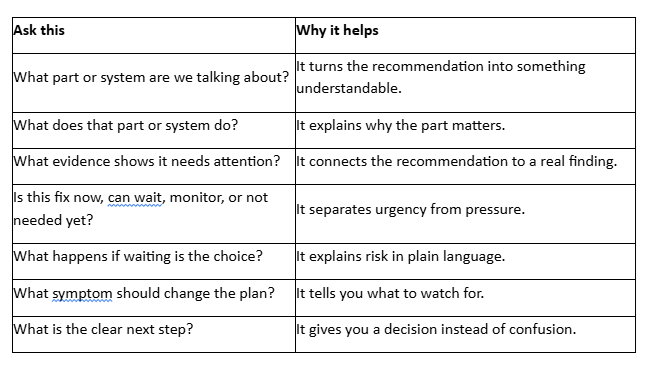
That checklist works at the counter, on the phone, or while reviewing an estimate. It keeps the conversation focused on repair priority, not fear.
Why the Best Repair Recommendation Explains Priority, Not Just Price
Price matters. No owner wants an unclear bill.
But price by itself does not tell you whether a repair is urgent, optional, premature, or worth planning for later. The better question is whether the recommendation explains priority.
For classic VW and Porsche owners, that often means translating smells, noises, leaks, drivability changes, and gauge behavior into a practical next step. For modern vehicles, it may mean connecting OBD-era diagnostic information to the symptom the owner noticed. In both cases, the goal is the same: plain-language repair clarity.
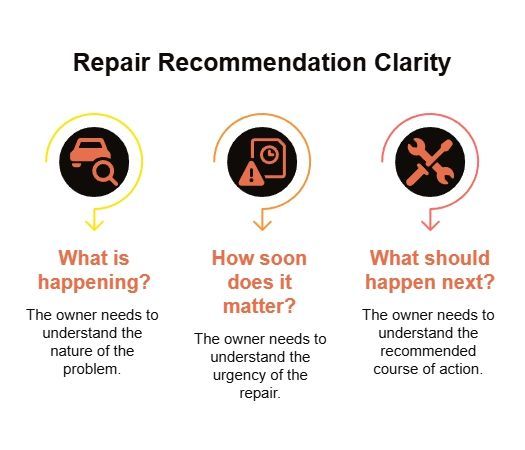
A fair shop conversation should help you answer three things:
- What is happening?
- How soon does it matter?
- What should happen next?
That is how repair decisions become manageable.
Orange Independent Auto Repair describes itself as family-owned and operated since 1971, with a focus on fair, honest service. If you are trying to understand whether a recommendation is urgent, can wait, should be monitored, or is not needed yet, you can contact Orange Independent Auto Repair or call (714) 633-7161.
Our Editorial Process
Our expert team uses AI tools to help organize and structure our initial drafts. Every piece is then extensively rewritten, fact-checked, and enriched with first-hand insights and experiences by expert humans on our Insights Team to ensure accuracy and clarity.
By Orange Independent Auto Repair Insights Team
The Orange Independent Auto Repair Insights Team develops owner-level, evidence-first guidance shaped by decades of hands-on experience serving classic VW and Porsche owners in Orange and the surrounding communities.