Why a Long Repair List Is Not the Same as an Urgent Repair List
📌 Key Takeaways
A long repair list only becomes useful when a shop explains what matters now, what can wait, and what evidence supports each item.
- Priority Beats Length: A long estimate is not automatically urgent; each item needs a clear priority and reason.
- Evidence Builds Trust: Clear shops explain the finding, proof, timing, and next step before asking for approval.
- Classics Need Context: Classic VW and Porsche vehicles often speak through smells, sounds, leaks, gauges, and driving changes.
- Maintenance Is Different: Routine service can matter, but it should not feel equal to a safety repair.
- Ask Better Questions: Simple questions about safety, timing, and evidence help turn repair anxiety into a clear plan.
A repair list should guide decisions, not create panic.
Classic VW and Porsche owners facing confusing estimates will gain a calmer way to sort repair priorities, preparing them for the detailed overview that follows.
~ ~ ~ ~ ~ ~ ~ ~ ~ ~ ~ ~ ~ ~ ~ ~ ~ ~
A long estimate can feel like bad news.
You see a printed page or phone screen full of line items. Brake wear. Oil seepage. Tire wear. Maintenance due. Additional inspection recommended. The list keeps going, and the first thought is simple: Does all of this need to happen right now?
That reaction is normal, especially if you drive a classic VW and Porsche vehicle where every smell, noise, vibration, drip, or gauge movement can feel personal. Older cars do not always explain themselves neatly. They ask you to pay attention.
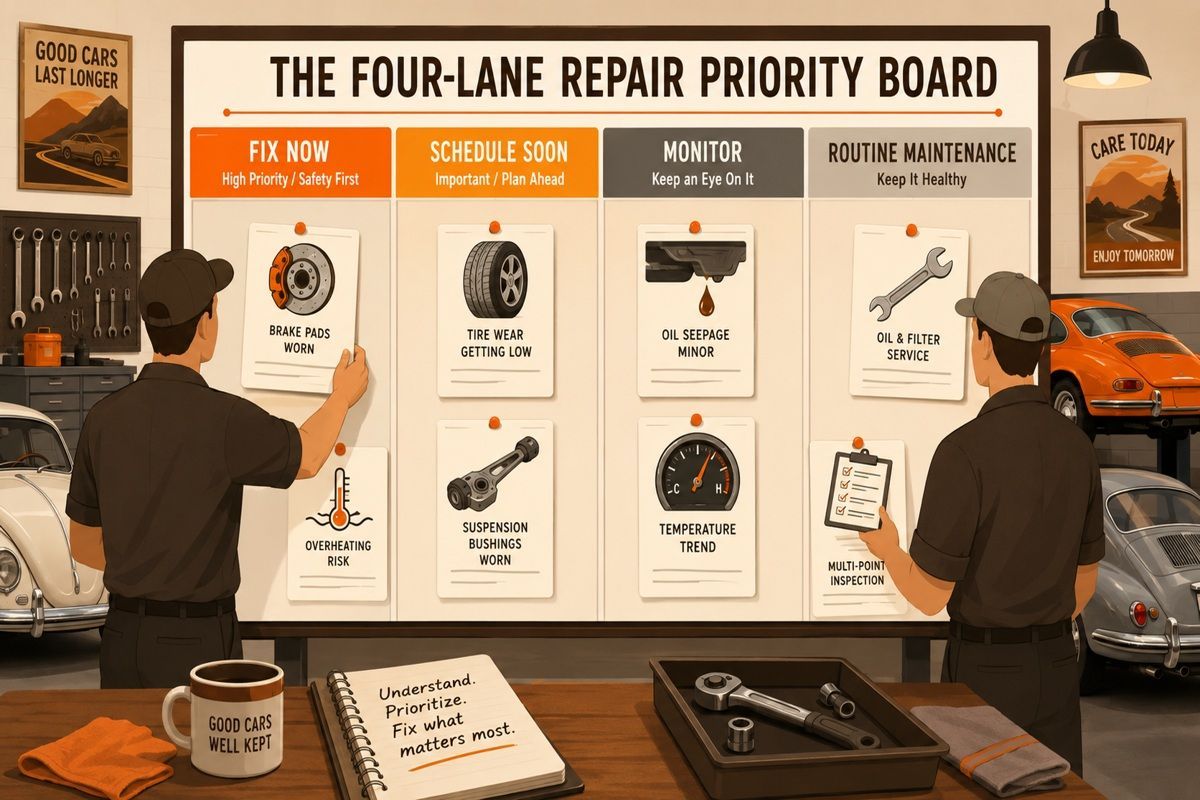
A long repair list needs translation. Some items may matter now. Some may be routine maintenance. Some may need monitoring. Some may not be necessary yet.
The list length is not the real issue. Priority is.
A Long Repair List Can Feel Urgent, Even When It Is Not
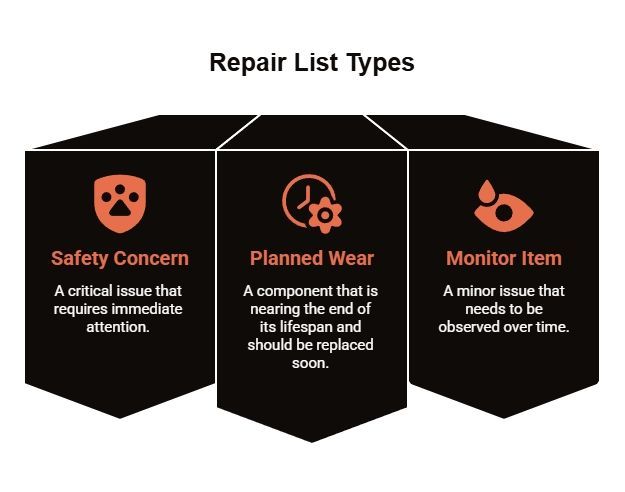
A repair estimate can include several types of findings. One line may describe a safety concern. Another may describe wear that should be planned soon. Another may be a note to monitor a slow seep, an aging hose, or a maintenance item that is due based on time or mileage.
Those findings should not all be treated the same way.
For classic VW and Porsche owners, this distinction is especially important. A classic vehicle may show concern through a fuel smell, a new knock, a belt squeal, oil spots on the driveway, overheating behavior, weak charging, or a change in how the car pulls away from a stop. Those symptoms deserve attention, but they do not automatically mean every related recommendation is urgent.
For modern OBD-era vehicles, warning lights may also be part of the conversation. A check-engine light, ABS light, temperature warning, or charging-system warning can help guide the first step. That language should be scoped to modern vehicles, not applied broadly to classics that rely more heavily on sensory clues and analog indicators.
A useful estimate explains the difference.
The Myth: More Line Items Means More Immediate Danger
The common myth is that every recommended item must either be approved today or ignored completely.
That is too simple.
Length tells you how many things were noticed. Priority tells you what needs attention first.
A careful vehicle inspection may uncover worn parts, fluid seepage, cracked rubber, tire wear, aging electrical components, maintenance items, and symptoms that need further review. That does not mean every item carries the same urgency. It also does not mean the list is automatically honest or dishonest.
The missing piece is priority language.
A transparent explanation should answer four practical questions:
- What is unsafe or urgent?
- What affects reliability soon?
- What can be monitored?
- What is routine maintenance?
- What evidence supports the recommendation?
These questions keep the conversation grounded. They help separate a needed repair from a planning note, a maintenance reminder, or a watch item.
Classic vs. Modern: Why the Same List Needs Different Context
Classic and modern vehicles often need different diagnostic framing.
A classic VW and Porsche repair conversation should not begin with dashboard warning lights as the main trigger. Many older vehicles do not have the same warning-light systems as modern cars. Even when gauges are present, the clues are often physical and sensory.
For classic vehicles, useful triage often starts with:
- Fuel, oil, coolant, or burning smells
- New knocking, grinding, squealing, ticking, or vibration
- Fresh leaks, faster drips, or sudden fluid loss
- Stalling, hesitation, overheating behavior, or power loss
- Oil pressure, temperature, charging, or other analog gauge behavior where applicable
Modern vehicles are different. On OBD-era cars, warning lights and scan data can help point the inspection in the right direction. Even then, the light is not the full answer. It is a starting point.
The principle stays the same for both eras: the recommendation should connect the finding to evidence, priority, timing, and a next step.
A Repair List Becomes Useful Only When It Has Priorities
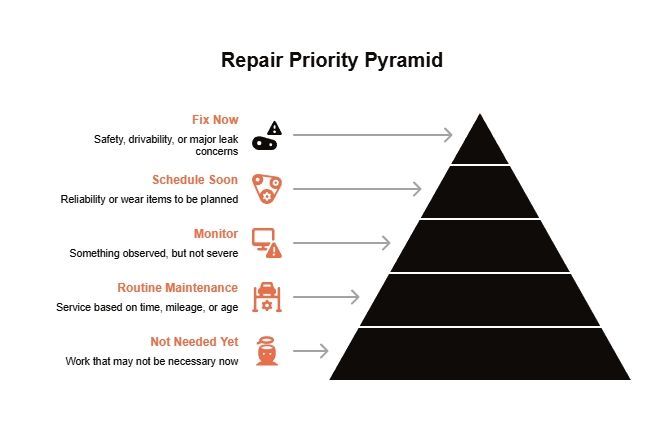
A good estimate does not just name parts. It explains what matters first.
The categories can be simple:
Fix Now: Safety, severe drivability, overheating, braking, steering, tire, strong fuel smell, smoke, or major active leak concerns.
Schedule Soon: Reliability or wear items that are not immediate emergencies but should be planned.
Monitor: Something observed, but not severe enough to justify immediate repair.
Routine Maintenance: Service based on time, mileage, age, or condition.
Not Needed Yet or Contextual: Work that may not be necessary now, especially if evidence is limited or the item can be watched.
These are general principles. The right category can vary by the car, how it is driven, how severe the finding is, and what the inspection shows.
This is why repair priority guidance matters more than a long list of part names.
Long List vs. Priority List: What the Difference Looks Like
Use this table as a conversation tool. It is not a repair-diagnosis tool.
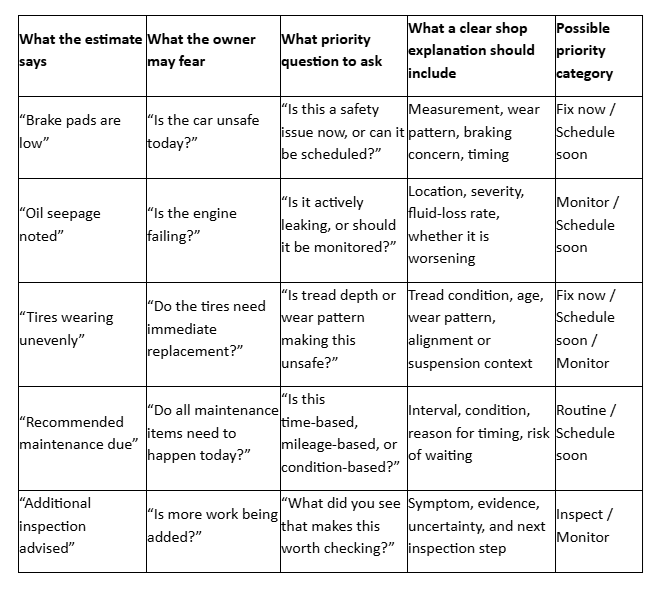
The best explanation turns a list into a plan.
Maintenance Items Need Context, Too
Maintenance recommendations can feel urgent when they appear beside repair items. They are not always the same kind of recommendation.
For example, an oil change interval can be based on mileage, time, vehicle use, or engine condition. A practical baseline is 5,000 miles or 12 months, whichever comes first. For an engine air filter, around 10,000 miles can be a general baseline, though dust, driving conditions, vehicle age, and inspection findings can change that timing.
That is why context matters.
A classic VW and Porsche vehicle that sits for long periods may need time-based maintenance even with low mileage. A modern daily driver may need service based on mileage, warning-light data, fluid condition, or manufacturer guidance. Both deserve clear explanation.
The Priority Questions to Ask Before You Say Yes
You do not need to challenge the shop to ask better questions. A fair repair conversation should welcome clarity.
Use questions like these during a phone call or shop visit:
- “Which items are safety-related?”
- “Which items affect whether the vehicle is safe to drive?”
- “Which items should be scheduled soon but are not immediate?”
- “Which items can be monitored?”
- “What evidence did you see for this recommendation?”
- “What happens if this waits?”
- “Is this related to the symptom that brought the car in?”
- “Is there anything on this list you would not recommend doing yet?”
That last question is powerful. It gives the shop room to show restraint.
Honest restraint is a trust signal. A clear recommendation should tell you what matters, what can wait, and what does not need to be sold as urgent.
What a Transparent Repair Explanation Should Sound Like
A transparent repair explanation has a simple structure.
First, the finding. Then the evidence. Then the priority. Then the timing. Then the next step.
It should sound less like this:
“You need all of this.”
And more like this:
“This item affects safety, so it should be handled first. This item is wear-related and can be scheduled. This seep is minor right now, so we recommend monitoring it. This maintenance item is due based on time or mileage, but it is not the same priority as the safety item.”
That kind of explanation respects the owner’s decision. It does not force panic. It gives you a clear way to act.
Orange Independent Auto Repair is a family-owned shop serving Orange since 1971. The shop’s focus on fair, transparent service matters because repair decisions are rarely just mechanical. They affect budgets, routines, family schedules, and confidence in the vehicle.
For classic VW and Porsche owners, that confidence is especially important. These cars often carry history, memory, and personal attachment. A clear repair plan helps protect the car without turning every finding into an emergency.
When a Long List Should Prompt Immediate Action
A long list is not automatically urgent, but some findings should be taken seriously.
General safety concerns include braking problems, steering issues, unsafe tires, overheating, strong fuel smell, smoke, major active leaks, severe vibration, loss of power, or major drivability changes. For a classic vehicle, a sudden fuel smell or new overheating behavior deserves careful attention. For a modern vehicle, a warning light may also help guide the first step.
The key question is direct: “Is this vehicle safe to drive, should driving be limited, or should it be towed?”
The answer depends on the specific condition of the vehicle. That is why a professional inspection matters. A symptom can have more than one cause, and a repair category is not automatically urgent without context.
For general consumer guidance, the Federal Trade Commission’s auto repair basics explains the value of asking questions and understanding repair recommendations. California drivers can also review the California Bureau of Automotive Repair consumer guide and the BAR’s Write It Right resource for information about estimates, invoices, authorization, and repair documentation. For tire-specific safety context, NHTSA TireWise is a useful authority source.
How Orange County Drivers Can Turn Estimate Anxiety Into a Clear Next Step
Drivers in Orange, Tustin, Anaheim, Yorba Linda, and Villa Park do not need a scary list. They need a clear explanation of what matters first.
Orange Independent Auto Repair provides auto repair services in Orange, CA, including vehicle inspections, engine repair, suspension service, transmission repair, oil changes, starters and alternators, and classic maintenance. For owners of classic VW and Porsche vehicles, the classic car maintenance page gives more detail on the shop’s vintage-vehicle focus. Porsche owners can also review the Porsche services page for relevant service information.
The right next step is not approving every line item out of fear. It is asking for priority, evidence, timing, and a plain-language recommendation.
If a repair list has left you unsure what matters first, contact Orange Independent Auto Repair or call (714) 633-7161 for straightforward guidance.
Our Editorial Process
Our expert team uses AI tools to help organize and structure our initial drafts. Every piece is then extensively rewritten, fact-checked, and enriched with first-hand insights and experiences by expert humans on our Insights Team to ensure accuracy and clarity.
By Orange Independent Auto Repair Insights Team
The Orange Independent Auto Repair Insights Team develops owner-level, evidence-first guidance shaped by decades of hands-on experience serving classic VW and Porsche owners in Orange and the surrounding communities.