Smog Readiness & Check-Engine Diagnostics: How to Clear Monitors the Right Way
📌 Key Takeaways
Clearing your check-engine codes before smog testing doesn't speed up the process—it resets every monitor to "Not Ready" and forces your car to start the self-test cycle from scratch.
- Monitors Matter More Than Lights: California's smog test checks whether your car's internal monitoring systems have completed their self-checks, not just whether the check-engine light is off.
- Random Driving Fails Most Cars: Each readiness monitor requires specific conditions—cold starts, city stop-and-go, steady highway cruising—that short trips and random errands rarely provide.
- Diagnostics Prevent Parts-Darting: Professional scan tools identify root causes through guided tests and manufacturer-specific data, eliminating the costly cycle of guessing at parts and hoping the light stays off.
- Priority Frameworks Save Money: Separating emissions-critical repairs (Now) from preventive maintenance (Soon) and wear items (Later) prevents overwhelming repair bills and keeps you focused on what's needed to pass smog.
- Intermittent Lights Signal Real Problems: When warning lights turn off on their own just before smog, the underlying issue hasn't resolved—it's simply not triggering at that moment and requires proper diagnostics.
Proper diagnosis, root-cause repair, and guided drive cycles transform smog readiness from guesswork into a predictable process. European car owners in Orange County—particularly those driving VW, Audi, BMW, Mercedes-Benz, and Porsche—will find this framework essential for understanding smog requirements, guiding them into the detailed California-specific overview that follows.
Your smog test is next week. The check-engine light finally turned off yesterday. You should be relieved, right?
Not so fast. Picture this: you drive to the smog station, confident the light is gone, and hand over your keys. Twenty minutes later, the technician returns with bad news. "Monitors not ready." You've just wasted time and money on a test your car was never going to pass.
This scenario plays out constantly for European car owners in Orange County. The confusion is understandable. Most people assume that if the check-engine light is off, the car is ready for smog. But California's smog test checks something else entirely: whether your car's internal monitoring systems have finished their self-checks. And if someone recently cleared those codes—whether you, a friend, or a shop—those monitors reset to "not ready," regardless of whether the underlying problem was actually fixed.
The good news? Understanding how smog readiness actually works puts you back in control. You'll know what questions to ask, what to expect from a diagnostic appointment, and how to avoid repeat test failures that drain your wallet. A proper diagnosis followed by root-cause repair, documented with a clear priority breakdown and written warranty, transforms smog season from a gamble into a predictable process.
Why Smog Readiness Isn't Just "Turn the Light Off"
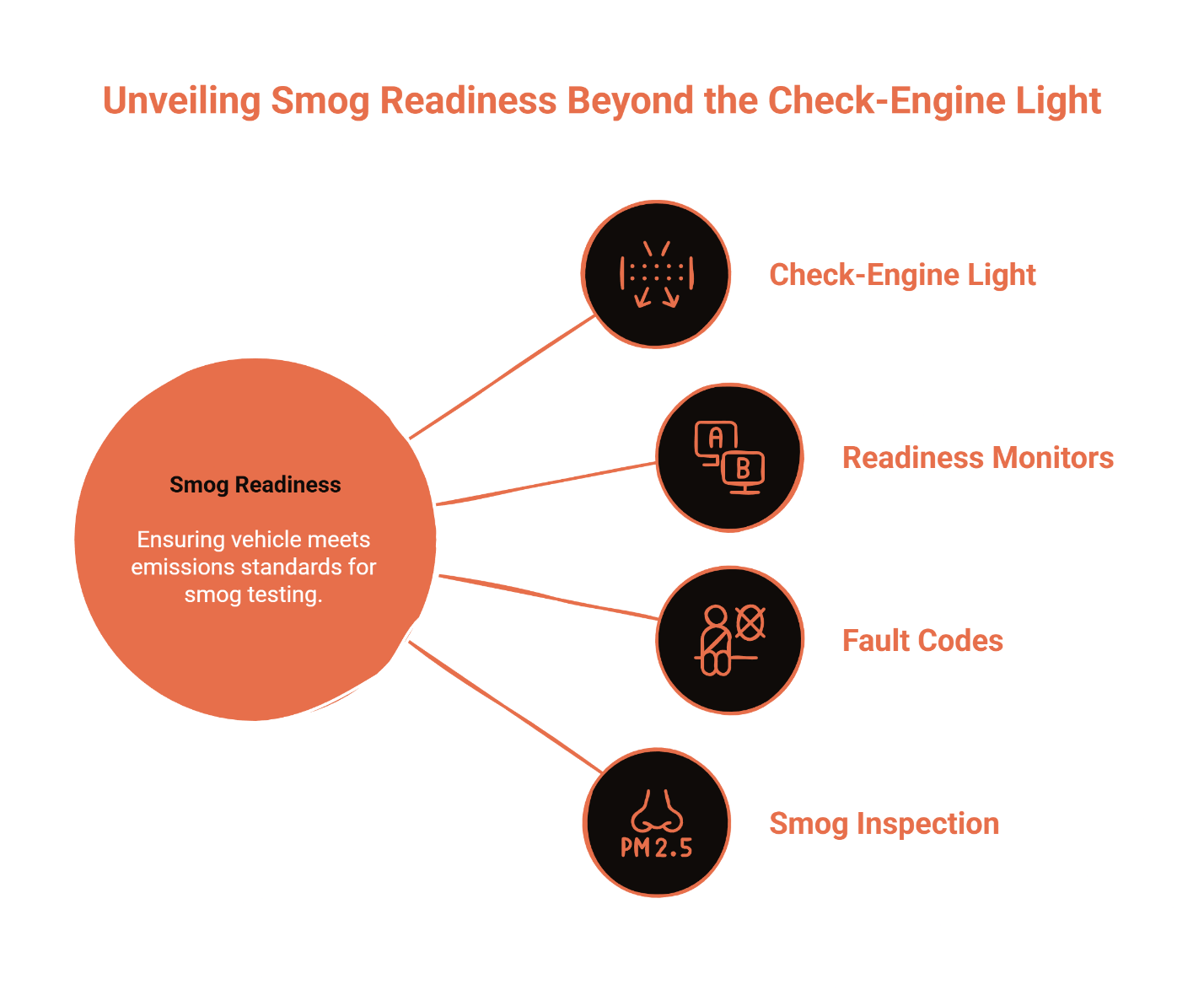
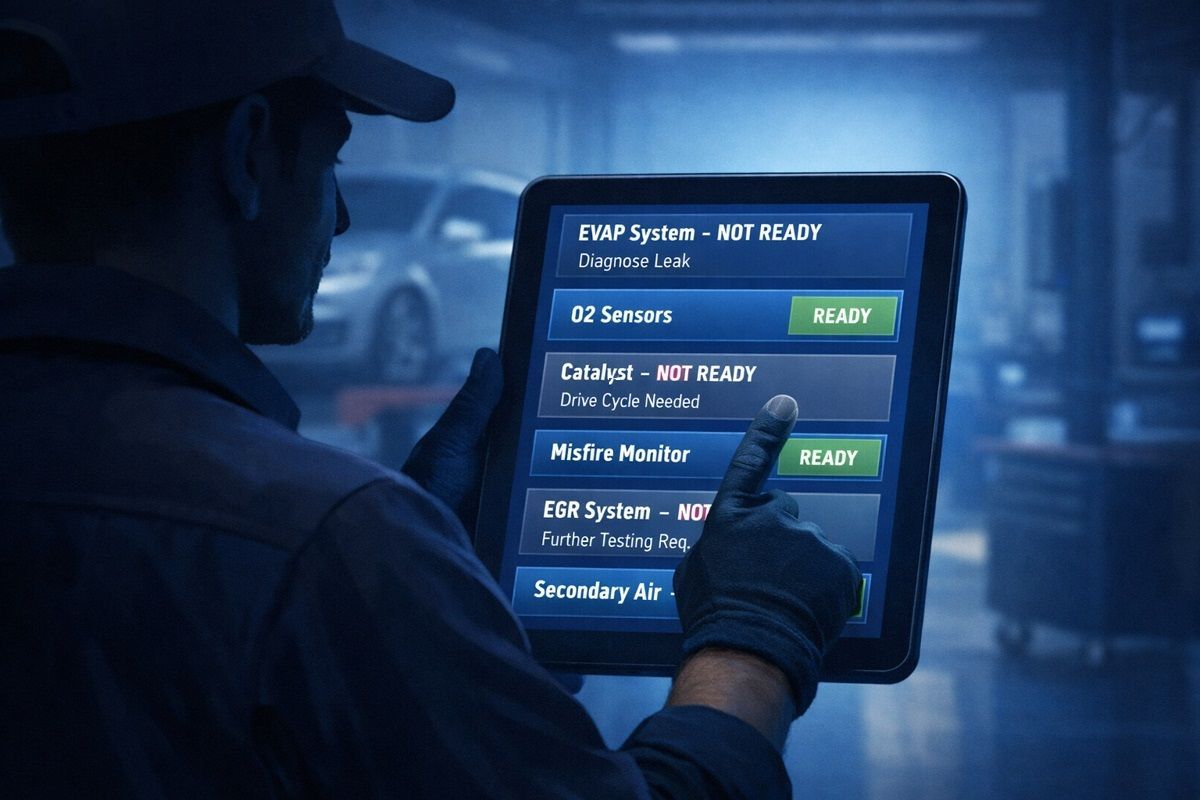
The check-engine light is the dashboard's way of saying something in the engine or emissions system isn't right. But here's what many people don't realize: behind that light are fault codes and self-tests running constantly in the background. These self-tests are called readiness monitors—they're the car's built-in lab work.
Think of it like a medical checkup. The check-engine light is like a fever—it tells you something's wrong. But the monitors are the lab results that confirm your systems are actually functioning properly. California's smog test wants to see that lab work completed, not just the fever gone.
During a smog inspection, the machine doesn't just look for a lit check-engine light. It also checks whether key monitors are "Ready" or "Not Ready." If enough important monitors are incomplete, the car can fail or the test can be rejected outright—even if the light is currently off.
You clear the light with a code reader, show up at smog, and the printout says "monitors not ready." The light is off, but the car hasn't finished its self-tests. The system can't vouch for your emissions yet. That's the heart of smog readiness: monitors, not just lights.
Myth #1 – "If I Clear the Codes, I'll Pass Smog Faster"
Many drivers think erasing codes is like turning in a clean test paper. In reality, it's more like shredding the previous lab results—the system has to start over completely.
Clearing Codes Resets the Clock on Your Monitors
When you or a shop clears fault codes from your car's computer, two things happen simultaneously. First, the stored codes disappear and the check-engine light turns off. Second—and this is the part people miss—all your readiness monitors flip back to "not ready."
Your car's computer now has no record of whether those systems actually work. The smog station sees this all the time. The car rolls in looking fine on the dash, but the system report shows key monitors "Not Ready," so the test either fails or can't be completed.
The reality is straightforward: monitors become ready only after two things occur. First, the actual root cause of the fault must be repaired—whether that's an EVAP leak, a failing oxygen sensor, or something else entirely. Second, the car must complete specific drive cycles that allow each monitoring system to run its self-test. Clearing codes without fixing the problem just restarts this entire process from zero.
Myth #2 – "I Just Need to Drive Around Until It's Ready"
This myth costs people time, fuel, and repeat smog fees. Random driving doesn't always equal completed monitors.
Drive Cycles Need the Right Mix of Conditions
Each monitor requires specific conditions to run its self-test. A drive cycle is the pattern of conditions the car needs to see before it can complete those tests. In plain language, a typical readiness-friendly day might look like this:
- Start the car cold and let it warm up fully
- Do some city driving with gentle stop-and-go
- Follow it with a stretch of steady freeway cruising at a consistent speed
That's very different from a week of two-mile school runs or quick hops to the store. Short, random trips often never give the computer the combination it needs, so monitors stay "Not Ready" and smog keeps failing. You might drive for a week and find that only two of your six monitors have completed.
A shop familiar with European car repair—especially for brands like VW, Audi, BMW, Mercedes-Benz, and Porsche—understands how different models behave. Instead of vague "just drive it" advice, they can confirm which specific monitors are incomplete and recommend a simple, legal drive-cycle plan tailored to your car and recent repairs. That guidance often saves more time and money than a tank of guesswork driving.
How Check-Engine Diagnostics Set You Up for Smog Readiness
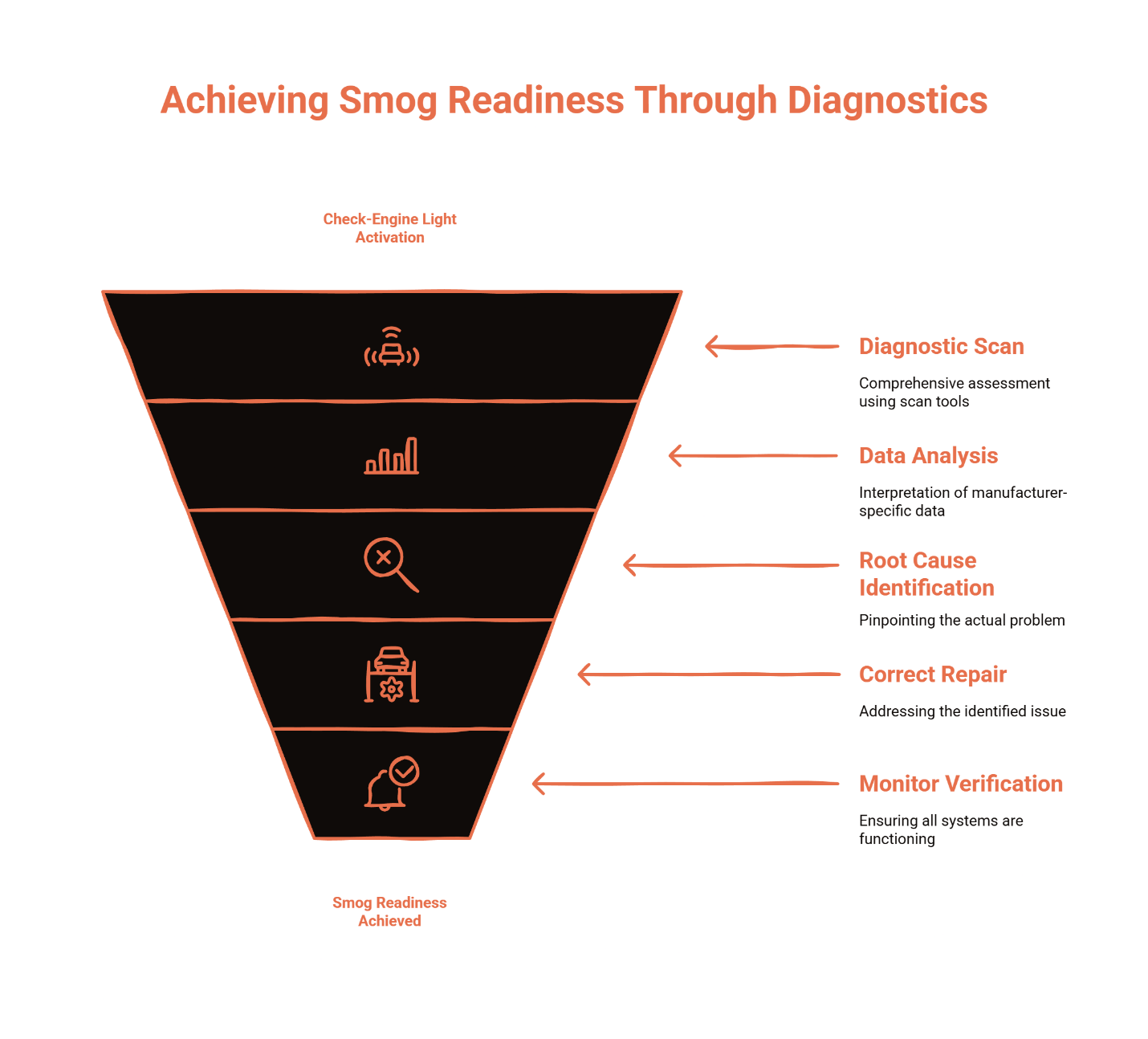
Think of check-engine diagnostics as medical triage for your car. Before any smog test or repair plan makes sense, the shop needs accurate lab work.
Warning-light diagnostics on a European car does more than pull generic codes. Using modern diagnostics and professional scan tools, a qualified technician reads manufacturer-specific data, runs guided tests—smoke testing for EVAP leaks, checking fuel-trim data for O2 sensor problems, verifying sensor readings against expected values—and separates "smog-critical now" issues from lower-priority items.
This approach avoids "parts-darting"—guessing at parts, installing them, and hoping the light stays off. Parts-darting is one of the fastest ways to waste money, have the light come back, and keep monitors incomplete so you fail smog again.
Consider a common scenario: your car throws an oxygen sensor code. A quick internet search says to replace the O2 sensor. You buy the part, install it, and clear the codes. The light stays off for a week. You pass smog, relieved. But two months later, the light returns with the same code.
The oxygen sensor wasn't the problem. The actual fault was a small exhaust leak upstream that was feeding false readings to a perfectly good sensor. Proper diagnostics—including fuel-trim analysis—would have caught this. The sensor would have stayed in place, the leak would have been repaired, and the monitor would have completed and stayed complete.
Once diagnostics identify the root cause, the shop performs the correct repair, clears codes, and confirms monitor status. From there, a short, guided drive-cycle usually gets the car truly smog-ready instead of temporarily quiet.
Prioritizing Repairs: What's Now, Soon, and Later
Good shops don't just hand you a list of everything wrong. They help you understand what matters most for your immediate goal—passing smog—versus what can wait.
Now: Emissions-related repairs required to pass smog and keep you safe on the road. These aren't optional if you need to pass your test.
Soon: Items that won't block your readiness today but could cause problems in the coming months. Addressing them prevents future surprises.
Later: Wear-and-tear items you can schedule around your budget and life. These are good to know about but don't need immediate action.
This framework prevents the "everything's urgent" panic that makes car repair feel overwhelming. You know what must happen before your smog test, what can wait until next month, and what you can plan for next year.
For European owners and classic VW and Porsche drivers in Orange, keeping service records that track this information builds a history of the vehicle over time—valuable for understanding patterns and planning ahead.
Sample Smog Readiness Tracking Table
This table shows how a shop might track your car's readiness status and repair priorities. It gives you a clear picture of where things stand at any point.
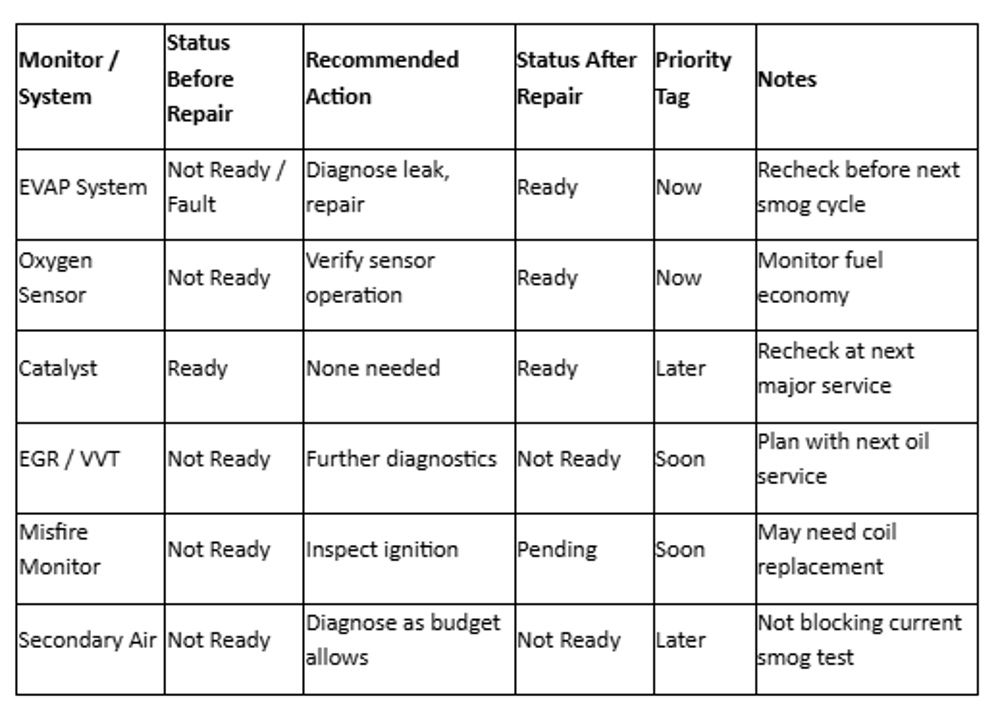
This table is educational—a way to understand how readiness tracking works. The specific monitors your car has and their requirements vary by make, model, and year. A shop experienced with classic VW and Porsche will know exactly which monitors apply to your vehicle and what each one needs to complete.
What To Do if Your Light Comes Back Before or After a Smog Test
Two common situations create anxiety for car owners. Here's how to handle each.
Scenario one: the light turns off just before your smog appointment.
This feels like good luck, but proceed with caution. Lights that turn off on their own often indicate intermittent problems—issues that come and go based on temperature, humidity, or driving conditions. The problem hasn't fixed itself. It's just not triggering at this exact moment.
The smart move is to book diagnostics anyway. A proper scan can reveal pending codes and show you which monitors are complete. You'll know whether you're actually ready for smog or just temporarily lucky.
Scenario two: the light comes back shortly after passing smog.
Even if a fresh smog certificate is in hand, the underlying issue still matters—especially on European cars that families rely on for daily driving. Don't ignore it until the next smog cycle. The same issue that triggered the light will often worsen over time. What's a minor repair today could become a major one if left alone.
If your light returns with unusual symptoms—strange noises, overheating, loss of power, or unusual smells—treat it as a safety concern first. These signs suggest problems beyond basic emissions that affect your safety and your car's reliability. For warning lights without alarming symptoms, schedule diagnostics soon, especially if smog is coming up within months.
How Orange Independent Auto Repair Helps You Pass Smog the Right Way
A local, independent European specialist can feel more like a neighborhood clinic than a quick-lube bay—especially for owners of BMW, Audi, Mercedes-Benz, VW, and Porsche in Orange County.
At Orange Independent Auto Repair in Orange, CA, smog readiness typically includes professional check-engine diagnostics using modern scan tools, not just a free code read. The team provides clear documentation of what was found, what was repaired, and what your monitor status looks like afterward. The Now/Soon/Later priority approach ties repairs to your smog timing, budget, and how you actually use the car. And a written warranty on repairs means you're not left guessing about what happens if a warning light comes back.
This family-owned shop has served drivers in Orange, Tustin, Anaheim, Yorba Linda, and Villa Park since 1971. The team's experience with classic VW and Porsche, along with other European makes, means they understand the specific readiness patterns and diagnostic quirks these vehicles present.
If your smog date is approaching and you're unsure about your check-engine light or monitor status, call (714) 633-7161 or visit the shop at 187 S Main St, Orange, CA 92868 to schedule a vehicle inspection. Bring your smog printout and any previous service records—the team can walk through everything line by line. You'll know exactly where you stand, what needs to happen, and what it will cost before your smog appointment, not after a failed test.
Disclaimer: This guide explains smog readiness and warning-light diagnostics in plain language. It doesn't replace hands-on testing by a qualified technician or the specific instructions in factory service information. Always consult a professional before deciding whether a vehicle is safe to drive or ready for smog.
About the Orange Independent Auto Repair Insights Team
The Orange Independent Auto Repair Insights Team is our dedicated engine for synthesizing complex topics into clear, helpful guides. While our content is thoroughly reviewed for clarity and accuracy, it is for informational purposes and should not replace professional advice.