How Transparent Diagnostics Turn a Classic VW or Porsche Mystery Noise Into a Clear Next Step
📌 Key Takeaways
A strange noise becomes easier to solve when you describe what changed, not what you think broke.
- Describe The Change: Note when the sound starts, where it comes from, and what makes it better or worse.
- Treat Smells Seriously: Fuel, burning, oil, or coolant smells can turn a small concern into a prompt inspection.
- Avoid Repair Guessing: Plain words like tick, clunk, squeal, or grind help more than naming parts.
- Watch The Whole Pattern: Leaks, vibration, rough idle, gauge changes, and power loss help show the real risk.
- Ask Clear Questions: Before approving work, ask what was checked, how urgent it is, and what can wait.
Clear notes lead to clearer inspections, safer choices, and more confident repairs.
Classic VW and Porsche owners facing mystery noises will gain practical inspection clarity here, preparing them for the detailed overview that follows.
~ ~ ~ ~ ~ ~ ~ ~ ~ ~ ~ ~ ~ ~ ~ ~ ~ ~
The noise starts small.
A faint tick after the engine warms up. A belt squeal when you pull out of the driveway. A clunk from the rear after a slow turn into the parking lot. You hear it once, then the whole drive feels different.
For a classic VW or Porsche owner, a mystery noise can feel especially loaded. These vehicles talk through sound, smell, vibration, leaks, and gauges more than modern cars do. That does not mean every noise is an emergency. It means the first job is to describe what changed clearly enough that a technician can inspect the right area.
Transparent diagnostics help turn that stressful moment into a plain conversation: what was noticed, what may matter, what should be inspected, and what the next safe step should be.
A Noise Is a Clue, Not a Diagnosis
A sound alone rarely proves one exact repair.
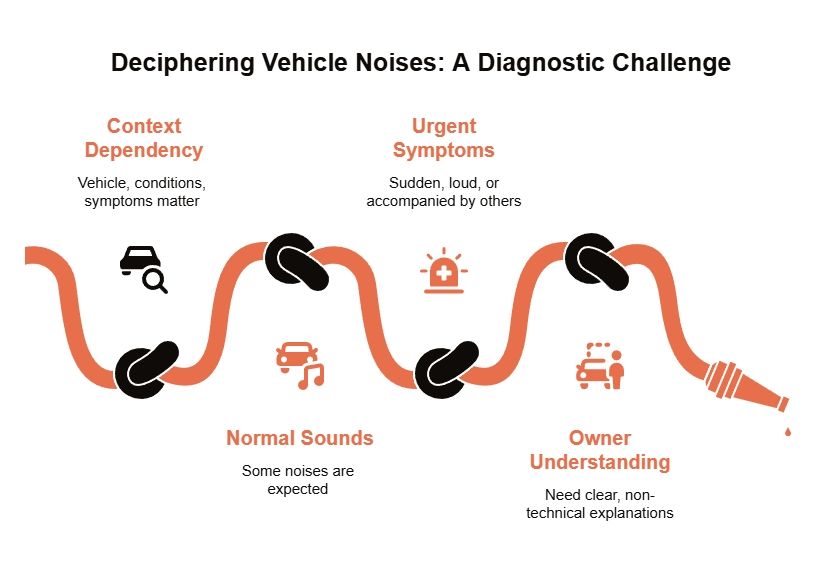
A light tick, a scrape, a hum, or a clunk can mean different things depending on the vehicle, the conditions, and the other symptoms around it. A classic VW and Porsche engine bay also has its own character. Some sounds may be normal for the vehicle. Others deserve prompt attention because they appear suddenly, grow louder, or come with smell, heat, leaks, or drivability changes.
That is why transparent diagnostics matter. The goal is not to make the owner memorize part names. The goal is to translate real-world symptoms into a clear inspection path.
A helpful conversation sounds like this: “Here is what we observed. Here is what we inspected. Here is what looks urgent. Here is what can be monitored. Here is the next step.”
That kind of explanation protects the car and the owner’s confidence.
Orange Independent Auto Repair is a family-owned shop serving Orange, CA drivers since 1971. The shop works with classic VW and Porsche vehicles and also provides broader auto repair services in Orange, CA, including vehicle inspections and repair services for modern vehicles where appropriate.
Classic vs. Modern Diagnostics: Why the Difference Matters
Classic vehicles and modern vehicles do not always communicate problems the same way.
On many classic VW and Porsche vehicles, the most useful early clues are physical and sensory. The owner may notice a fuel smell, oil smell, new vibration, sudden drip, change in idle, hesitation under load, charging behavior, or gauge movement. Those clues often matter more than warning-light language because many classics do not have dashboard systems like OBD-era vehicles.
Modern vehicles are different. On OBD-era cars, warning lights can add useful context. A check engine light, brake warning, temperature warning, or charging warning can help guide the conversation. Even then, a warning light does not replace inspection. It is one piece of information.
Keep the split simple:
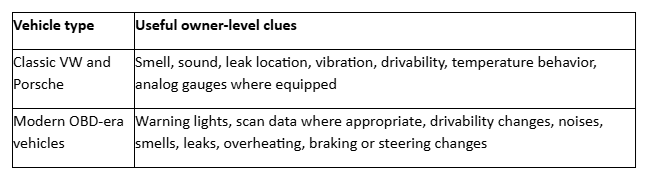
This distinction keeps the conversation honest. A classic should not be treated like a late-model dashboard-driven diagnosis. A modern vehicle should not be diagnosed by sound alone either.
Different systems. Same principle: observe clearly before deciding.
What to Notice First on a Classic VW or Porsche
Start with what changed.
Maybe the car always had a little mechanical chatter, but now the sound is sharper. Maybe it only appears after 14 minutes of driving. Maybe it comes with a warm oil smell after parking. Those details help a technician separate normal character from a pattern worth inspecting.
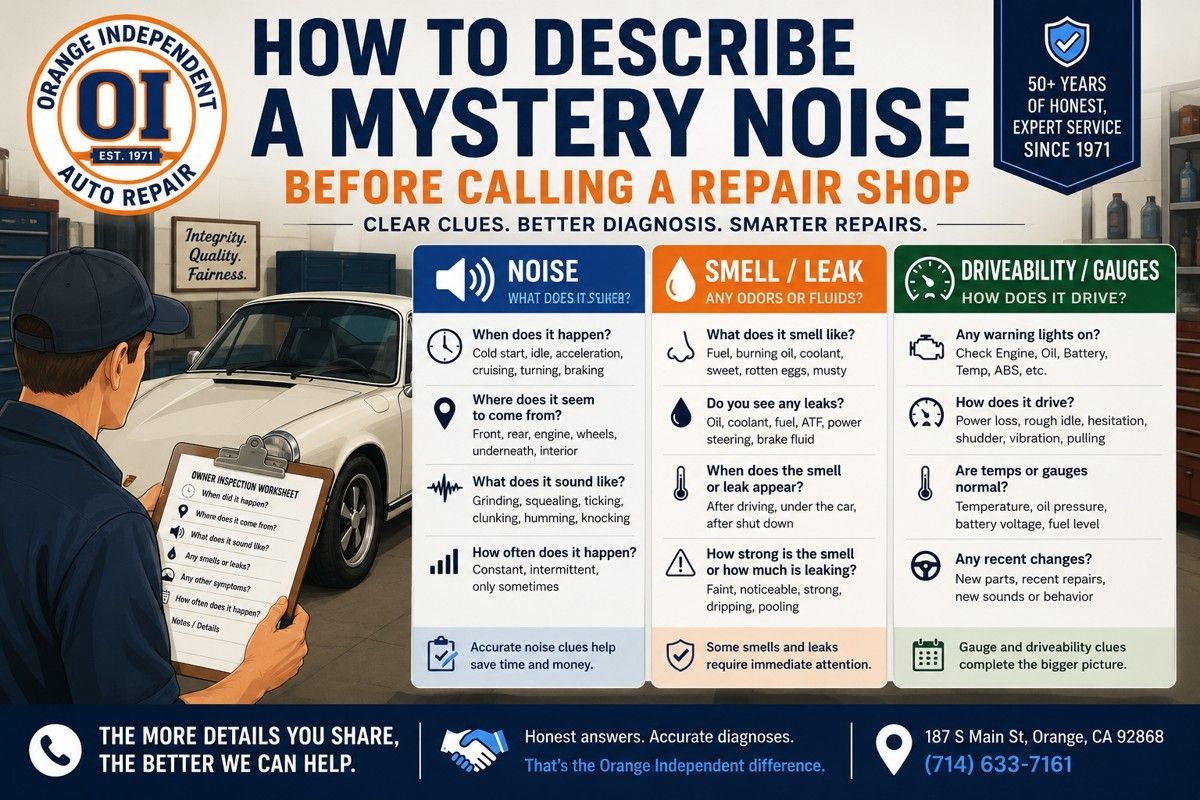
Focus on five practical categories.
Smell is one of the most important clues. Fuel smell, burning smell, oil smell, and coolant smell should never be brushed aside. A fuel smell deserves prompt attention because fuel-related issues can carry safety risk. A burning smell with smoke, heat, or electrical odor should also be treated seriously.
Noise and vibration help locate the concern. A knock is different from a tick. A grind is different from a belt squeal. A vibration through the floorboards is different from a vibration in the steering wheel.
Leaks and drips give useful context. Note whether the spot is fresh, where it appears under the car, whether it grows quickly, and whether it appears after driving or after sitting overnight.
Drivability often tells the real story. Stalling, hesitation, rough idle, loss of power, overheating behavior, or a sudden change in braking or steering should change the urgency level.
Gauges and analog indicators matter where equipped. Oil pressure, temperature, charging behavior, and unusual gauge movement can help frame the inspection conversation. They should not be ignored, but they should also not be interpreted in isolation.
A useful note is plain and specific: “After about 9 minutes of driving, the idle got rough at a stoplight. There was a faint fuel smell near the rear of the car after parking. No visible drip noticed.”
That is enough to start a better conversation.
Use Plain Sound Words Without Guessing the Repair
You do not need the perfect mechanic word.
Plain sound words are useful when they are paired with context. The word itself matters less than when it happens, where it seems to come from, and what changes it.
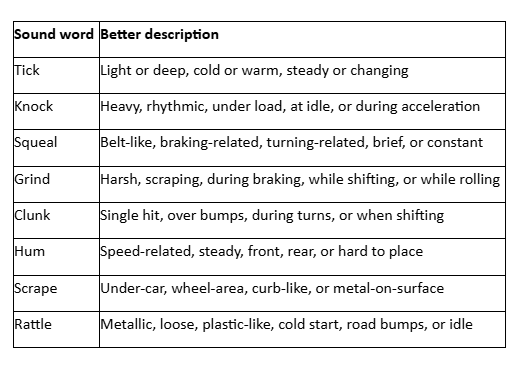
Do not force the sound into a repair conclusion. “This sound means the part failed” is not owner-level clarity. It is guesswork.
Try this instead: “There is a light metallic rattle for the first 12 seconds after startup. It fades as the engine warms. No fuel smell, no fresh leak, and no change in power.”
That gives the technician something useful without pretending to diagnose the car from the driveway.
When the Next Step Should Be Prompt
Some symptoms deserve faster attention.
A classic VW and Porsche owner should be especially cautious when a new noise appears with fuel smell, burning smell, overheating behavior, sudden fluid loss, heavy knocking, grinding, smoke, stalling, or a major drivability change.
Do not keep driving to “see what happens” when safety feels uncertain. Pull over when safe and call for professional guidance.
Prompt attention is especially important when the symptom involves:
- Fuel smell
- Burning smell
- Smoke
- Fresh or fast fluid leak
- Heavy knock
- Grinding that continues
- Loss of braking confidence
- Steering change
- Overheating behavior
- Stalling or severe hesitation
- Sudden loss of power
These are general safety principles. The exact cause can vary by vehicle, condition, and inspection findings.
For modern OBD-era vehicles, warning lights may add another signal. A red warning light, flashing light, overheating warning, or brake-related warning should be treated seriously. On classic vehicles, focus more on physical symptoms, gauge behavior, smells, leaks, and drivability changes.
When It May Be Reasonable to Observe and Schedule
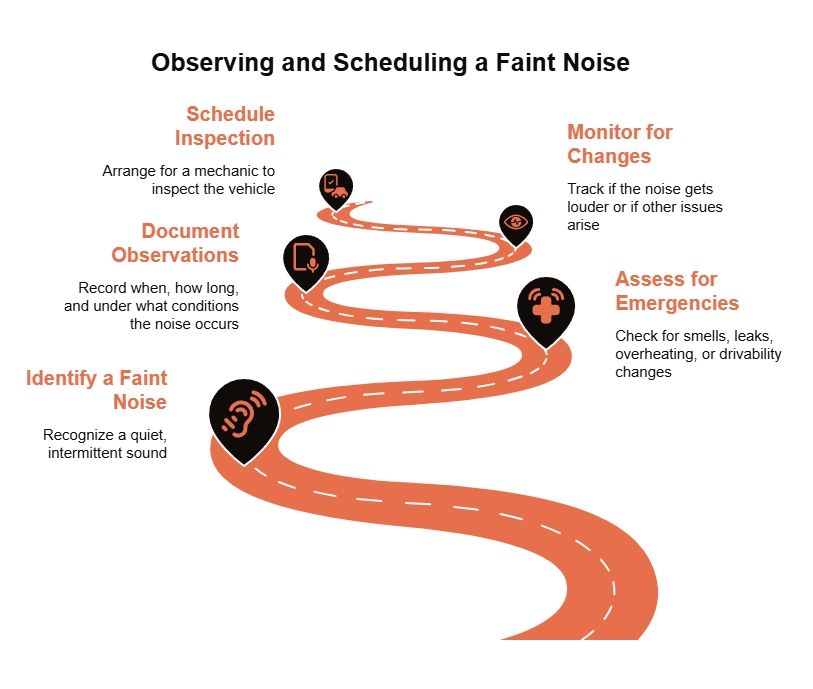
Not every faint sound is an emergency.
A quiet intermittent noise with no smell, no leak, no overheating behavior, and no change in braking, steering, or power may be reasonable to document and schedule for inspection. The key is to monitor with purpose.
Monitoring does not mean ignoring the car. It means knowing what would change the urgency.
Write down:
- When the sound happens
- How long it lasts
- Whether it is getting louder
- Whether it appears cold, warm, idle, turning, braking, or accelerating
- Whether smell, leaks, gauges, or drivability changed
A note made right after the drive is usually better than a memory from 4 days later.
For example: “Faint belt-like squeal for 7 seconds after cold start. No burning smell. No charging issue noticed. Happened twice this week.”
That kind of note can help during vehicle inspections or during a service conversation. It does not replace inspection. It makes inspection more focused.
The Mystery Noise Description Worksheet
Use this before calling a shop. It is built for owner clarity, not self-repair.
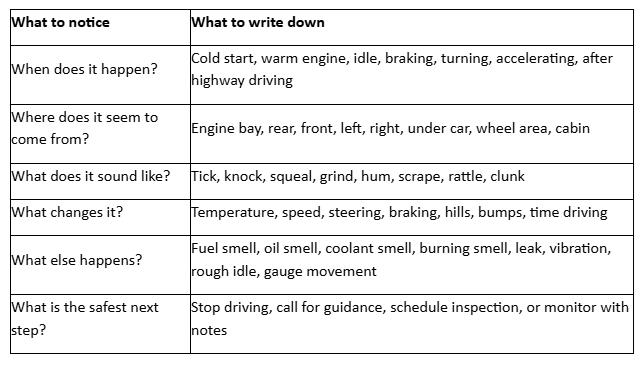
Here is a practical example:
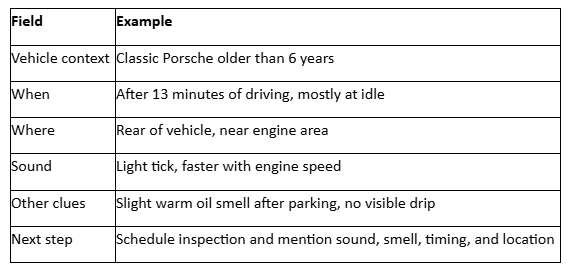
That is not a diagnosis. It is a better starting point.
What Transparent Diagnostics Should Explain
A clear repair conversation should answer more than “what part is bad?”
It should explain what was checked, what was found, how urgent it appears, and what happens if the owner waits. It should also separate immediate safety concerns from items that can be monitored.
Good diagnostic transparency may include:
- The symptom the technician confirmed
- The area inspected
- The likely risk level
- Whether the issue affects safety, reliability, or comfort
- What should be repaired now
- What can reasonably wait
- What should be watched over time
This is where fair, transparent service matters. A shop earns trust by explaining what needs attention and what does not need to be sold today.
The Federal Trade Commission’s auto repair basics encourage consumers to ask questions and understand repair recommendations. California drivers can also review the California Bureau of Automotive Repair’s auto repair guide for general information about repair rights, estimates, and authorization.
Those resources support consumer confidence. They do not replace a technician’s inspection.
What to Ask Before Authorizing Work
Clear questions lead to clearer decisions.
Before approving work, ask:
- What did you find?
- What did you inspect?
- Is this a safety concern, reliability concern, or comfort issue?
- How urgent is it?
- What happens if it waits?
- Is this a fix-now, can-wait, or monitor item?
- What should be watched after the repair or inspection?
These questions are not about arguing with the shop. They are about understanding the recommendation.
For a classic VW and Porsche owner, that understanding matters. Older vehicles often have age-related wear, previous-owner repairs, and small quirks that need context. Not every finding has the same urgency.
A good explanation should help you protect the car without feeling pushed.
A Clear Explanation Is Part of the Repair
A strange sound can make a familiar car feel uncertain.
Transparent diagnostics bring the conversation back to facts: what changed, what was observed, what was inspected, and what should happen next. That is useful whether the concern is a classic VW and Porsche noise, a fuel smell, a fresh leak, a drivability change, or a modern OBD-era warning light.
Orange Independent Auto Repair is a family-owned shop serving Orange, Tustin, Anaheim, Yorba Linda, and Villa Park. The shop provides service for classic VW and Porsche vehicles, along with broader repair and maintenance services. Learn more about the shop’s background on the About page, review available Services, or visit the Contact page to schedule a vehicle inspection.
The goal is not to guess perfectly. The goal is to describe clearly, inspect carefully, and decide with confidence.
Our Editorial Process
Our expert team uses AI tools to help organize and structure our initial drafts. Every piece is then extensively rewritten, fact-checked, and enriched with first-hand insights and experiences by expert humans on our Insights Team to ensure accuracy and clarity.
By Orange Independent Auto Repair Insights Team
The Orange Independent Auto Repair Insights Team develops owner-level, evidence-first guidance shaped by decades of hands-on experience serving classic VW and Porsche owners in Orange and the surrounding communities.