Classic VW Rust Screening Questions to Ask Before Viewing a Project Car in Orange County
📌 Key Takeaways
Ask rust questions before the viewing so excitement does not outrun the facts.
- Ask Before Driving: Clear seller answers help you decide whether a classic VW deserves an in-person viewing.
- Photos Reduce Guesswork: Underside, floor, lower-body, and repair photos reveal issues polished listing shots may hide.
- Rust Location Matters: Small surface rust is different from soft floors, bubbling paint, or hidden patchwork.
- Vague Answers Slow Things: Broad claims like “solid for its age” need better photos and clearer details.
- Inspect Before Committing: A pre-purchase inspection can help when the car looks promising but the rust story feels unclear.
Better questions now can prevent a costly project surprise later.
Classic VW buyers in Orange County will gain a clearer screening process here, preparing them for the detailed overview that follows.
~ ~ ~ ~ ~ ~ ~ ~ ~ ~ ~ ~ ~ ~ ~ ~ ~ ~
A classic VW project car can look better online than it does in person. A few flattering photos, a clean angle, and the right stance can make a Beetle, Bus, Ghia, or other air-cooled VW feel like the one before the basic condition questions have been answered.
Rust is one of the biggest unknowns before a local viewing. That does not mean every rusty classic VW is a bad project. It means the location, severity, repair history, and visibility of the rust matter. A small surface spot is different from soft floors, bubbling paint, hidden body filler, or rust in lower body areas that should be inspected carefully.
For buyers looking at listings near Orange or elsewhere in Orange County, the first goal is simple: ask enough before the viewing to decide whether the car deserves the drive, needs more photos, calls for a pre-purchase inspection, or should be passed over politely.
Seller Questions to Ask Before You Schedule a Viewing
Use these questions before setting a time to see the car. They are not meant to “prove” condition from a phone message. They are meant to replace vague listing language with specific information.
| What to ask | Why it matters | Good sign | Slow-down sign |
|---|---|---|---|
| Can you send clear photos of the underside, floor pans, heater channels or lower body areas, battery area, inner doors, and wheel wells? | These are commonly checked areas on classic VW project cars. Exact risk varies by model and condition. | The seller sends clear, recent, close photos from several angles. | The seller only sends exterior photos or says, “Just come see it.” |
| Has the car had rust repair before? | Prior rust repair is not automatically bad, but the scope and quality matter. | The seller explains what was repaired and why. | The seller says it was “done before” but cannot describe the work. |
| Are there receipts, before-and-after photos, or notes from any repair? | Documentation can help separate known repairs from guesswork. | There are dated photos, receipts, or a clear explanation. | Fresh paint or patching exists with no repair history. |
| Is there bubbling paint near seams, lower panels, windows, or door bottoms? | Bubbling can indicate something under the finish, though photos alone cannot confirm the cause. | The seller provides close-ups and describes the area clearly. | Bubbling is dismissed as “nothing” without photos. |
| Has the car been stored indoors or outdoors? | Storage history gives useful context, although it does not prove condition. | The seller gives a clear, consistent storage history. | The answer is vague or changes during the conversation. |
| Is there fresh paint, undercoating, or seam sealer in rust-prone areas? | Fresh coatings may be protective, cosmetic, or used after repair. The reason matters. | The seller explains when and why it was applied. | It looks like before coating. |
| Do the doors open and close cleanly? | Door fit can be affected by many things, but it can justify more questions about alignment, prior work, or body condition. | The seller answers clearly or sends a short video. | The seller says they “just need adjustment” without more detail. |
| Are the floors soft, patched, replaced, or covered by new carpet or mats? | Floors can look better from above than underneath. | The seller shows both interior and underside views. | New carpet or mats hide the area; photos are missing. |
| Are there any rust areas a buyer should know about before driving out? | This respectful question gives the seller a chance to disclose issues without feeling accused. | The seller is specific and direct. | The answer stays at “solid for its age” or “normal rust.” |
A slow-down sign does not automatically mean the car is not worth viewing. It means the next step should be based on better information, not excitement.
A practical message can be short:
“Before scheduling a time to see it, could you send clear photos of the underside, floor pans, lower body areas, battery area, lower doors, wheel wells, and any previous rust repairs? Trying to understand the project realistically before driving out.”
That wording is direct, reasonable, and not confrontational.
Photos to Request Before Driving Across Town
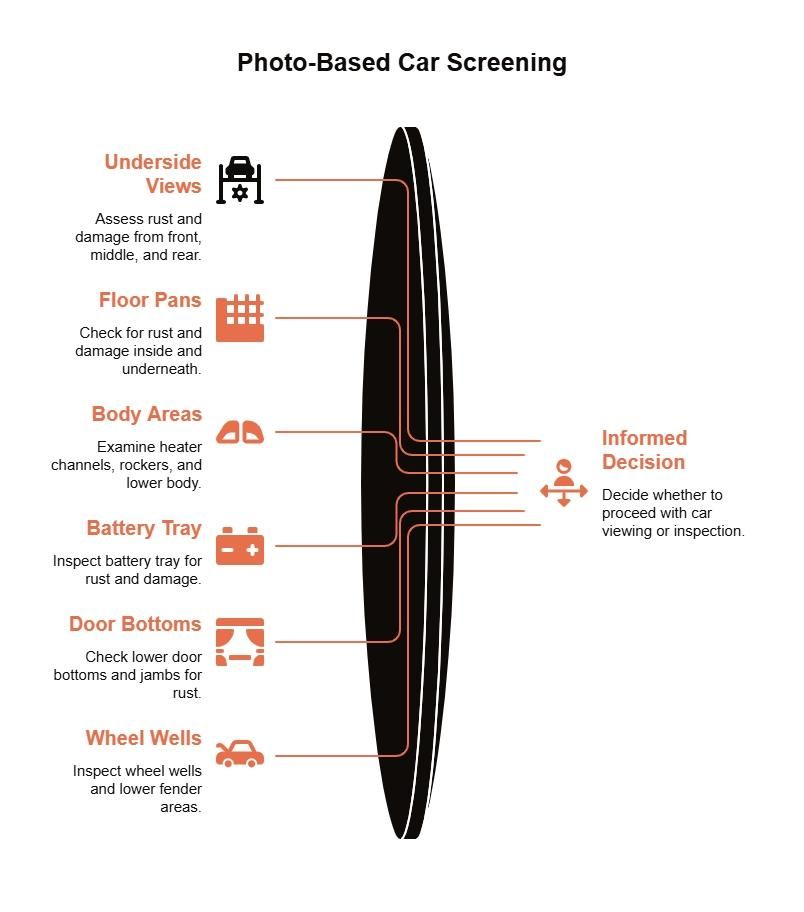
Photos are useful for screening, but they are not a final inspection. Lighting, distance, paint, undercoating, and camera angle can all hide important details. Treat photos as a way to decide whether to keep asking questions, view the car, or arrange a pre-purchase inspection.
Ask for these photo types:
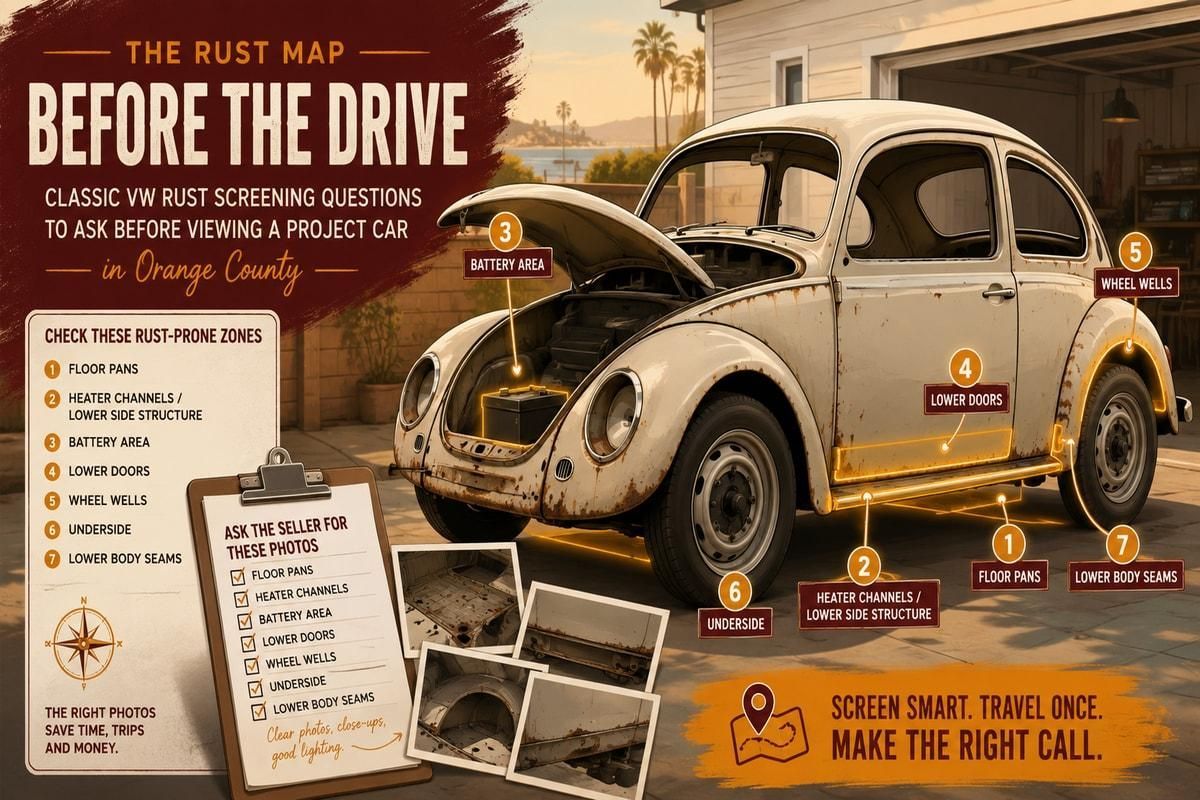
- Underside views from the front, middle, and rear
- Floor pans from inside and underneath
- Heater channel, rocker, or lower body areas on both sides
- Battery tray or battery area
- Lower door bottoms and door jambs
- Wheel wells and lower fender areas
- Window corners, seams, and bubbling paint
- Any patched, painted, undercoated, or repaired areas
Ask for bright, close, unfiltered images. Photos taken outdoors in good light usually help more than shadowed garage photos. If the seller only provides polished exterior shots, ask for lower-body and underside photos before deciding whether the trip is worth it.
The goal is not to make the seller perform a full inspection. The goal is to see whether the visible condition and the seller’s description line up.
Cosmetic Rust vs. Possible Structural Concern
Rust severity depends on location, depth, model, and repair history. That context matters.
Surface rust generally refers to visible discoloration or light corrosion on the surface. It still deserves attention, but it is not the same as holes, soft metal, flaking layers, bubbling under paint, or prior patchwork. Those signs can indicate a larger issue, especially when they appear near floors, lower body sections, door openings, or areas that may contribute to body support.
Some terms are worth knowing before messaging the seller:
| Term | Plain-English meaning |
|---|---|
| Floor pans | The metal floor sections under the cabin. Ask whether they are original, patched, replaced, soft, or covered. |
| Heater channels | Lower body passages on many classic Beetles that also relate to cabin heat. Rust there should be inspected carefully. |
| Battery tray | The area around the battery. It is commonly checked because corrosion can develop around battery locations over time. |
| Rocker or lower body area | The lower side section of the body. Rust here deserves closer photos and careful in-person review. |
| Bubbling paint | Paint that has lifted or blistered. It can suggest moisture, rust, filler, or prior repair beneath the surface. |
| Undercoating | A protective or cosmetic coating on the underside. It may be harmless, but it can also make old repairs harder to see. |
| Body filler | Material used to smooth or shape repaired areas. It is not automatically bad, but heavy or hidden filler should prompt questions. |
A seller saying “normal rust” is not enough detail. A better answer explains where the rust is, how deep it appears, whether any repairs were done, and whether current photos are available.
Fresh paint also deserves careful questions. Fresh paint can be part of a quality restoration, a simple refresh, or a way to make a project look cleaner in photos. Ask what bodywork was done before paint and whether there are pre-paint photos. That question is reasonable for any serious project-car buyer.
For broader classic Beetle background, Hagerty’s classic Beetle buyer guide can be useful context, but model-specific decisions should still be based on the actual car in front of the buyer.
Seller Answers That Should Slow You Down
Most sellers are not trying to mislead anyone. Some simply do not know old VW bodies well enough to describe rust precisely. Treat vague answers as a reason to ask more, not as proof of dishonesty.
| Seller answer | What it may mean | Better next step |
|---|---|---|
| “No rust that I know of.” | The seller may not have looked underneath or removed mats. | Ask for underside, floor, lower-body, and battery-area photos. |
| “It was patched years ago.” | There was enough rust or damage to justify repair, but quality and scope are unclear. | Ask what was patched, who did it, and whether photos or receipts exist. |
| “Fresh undercoating.” | It may protect the underside, or it may hide older repairs. | Ask when it was applied and what the metal looked like first. |
| “Floors were replaced.” | Replacement may be acceptable, but the reason and workmanship matter. | Ask for underside photos and documentation. |
| “It just needs a little rust repair.” | “Little” means different things to different people. | Ask for close photos of every rust area. |
| “Solid for its age.” | This is a broad opinion, not a condition report. | Ask what areas were checked and whether photos are current. |
| “Come see it first.” | The seller may not want to take more photos or may not understand why they matter. | Decide whether the uncertainty is worth the drive. |
| “Someone else is coming today.” | There may be real buyer interest, or it may create pressure. | Do not skip basic rust questions because of urgency. |
A cheap price can make uncertainty feel acceptable. That is where many first-time buyers get pulled in. A project car can still be a good fit, but only if the buyer understands the project. Rust that looks manageable in one area can change the scope if it connects to hidden repairs, covered floors, or poorly documented prior work.
When to Arrange a Pre-Purchase Inspection
A pre-purchase inspection is worth considering when the car still looks promising, but the rust answers are incomplete. This is especially true when the seller cannot provide underside photos, the repair history is unclear, or fresh paint and undercoating make condition harder to judge.
The purpose is not to make every old VW perfect before purchase. It is to clarify what kind of project is being considered.
A vehicle inspection can help a buyer understand whether visible concerns match the seller’s description, whether additional questions should be asked, and whether the car still fits the buyer’s tolerance for bodywork risk.
For buyers evaluating a classic VW near Orange, Tustin, Anaheim, Yorba Linda, or Villa Park, Orange Independent Auto Repair is a family-owned option that specializes in classic VW and Porsche pre-purchase inspections.
A useful rule of thumb: if the car is interesting enough to consider buying, but the rust story is unclear enough to create hesitation, an inspection can help turn uncertainty into a more informed decision.
Quick Local Viewing Prep
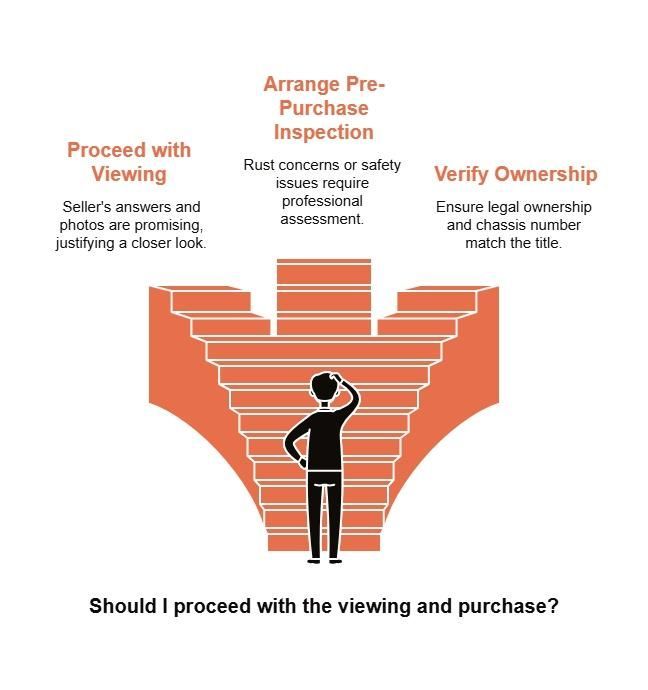
If the seller’s answers and photos are good enough to justify a viewing, bring the original question list. Compare the seller’s answers with what is visible in person.
Bring a flashlight, take notes, and avoid rushing. Look for consistency. If the seller said the floors were clean, ask to see the floor area. If the seller said the battery area was solid, look at that area. If the seller said rust repair was done years ago, ask where.
Do not crawl under a car that is not safely supported. If the view underneath is unsafe or blocked, ask for safer access, better photos, or professional help. A project car is not worth a risky inspection position.
If the car looks promising beyond rust questions, broader due diligence also matters. California buyers should use the California DMV’s title-transfer guidance to understand ownership paperwork and verify the classic chassis number matches the title exactly. These steps do not replace rust screening, but they support a more complete buying process.
FAQs
Should a buyer still view a classic VW if the seller mentions rust?
Maybe. Rust can be part of an old project car, but location and severity matter. Ask for photos first. If the car otherwise fits the buyer’s goals and budget, a viewing or pre-purchase inspection may still make sense.
Can photos show whether rust is structural?
Photos can raise concerns, but they usually cannot confirm structural condition. Paint, undercoating, shadows, repair history, and camera angles can all affect what is visible. Use photos as a screening step, not a final verdict.
What if the seller does not have underside photos?
Ask politely for current photos. If the seller cannot provide them and the car is far away, expensive, or vaguely described, decide whether the uncertainty is worth the trip. A serious buyer can also consider arranging an inspection if the car still looks promising.
Is fresh paint a good sign?
It can be, but it depends on what happened before paint. Ask whether rust repair or bodywork was done, whether photos exist from before the paintwork, and whether any bubbling or filler is visible now.
When is a pre-purchase inspection worth it?
It is worth considering when the listing is promising but the rust history, underside condition, prior repair quality, or seller answers remain unclear. The inspection helps the buyer understand the project before committing.
Final Thought
The right rust questions can save time, reduce guesswork, and keep excitement from making the decision too emotional. The goal is absolute clarity, ensuring the reality of the chassis aligns with your specific budget and metalworking capabilities.
Before driving across Orange County to view a listing, ask for clear rust photos, repair history, and specific seller answers. If the answers are detailed and the car still fits the goal, proceed carefully. If the car still looks promising but important details remain unclear, consider a pre-purchase inspection before making a commitment.
To ask about classic VW inspection availability, contact Orange Independent Auto Repair.
Disclaimer: This article is for general informational purposes only and does not constitute safety, technical, inspection, or professional advice. Classic vehicle condition can vary widely by model, age, prior repairs, storage, and use. Photos and seller answers can help screen a listing, but they are not a substitute for an in-person evaluation or a qualified pre-purchase inspection.
Our Editorial Process
Our expert team uses AI tools to help organize and structure our initial drafts. Every piece is then extensively rewritten, fact-checked, and enriched with first-hand insights and experiences by expert humans on our Insights Team to ensure accuracy and clarity.
By Orange Independent Auto Repair Insights Team
The Orange Independent Auto Repair Insights Team develops owner-level, evidence-first guidance shaped by decades of hands-on experience serving classic VW and Porsche owners in Orange and the surrounding communities.