Fix Now, Can Wait, or Monitor: A Plain-Language Repair Priority Guide
📌 Key Takeaways
Repair decisions feel calmer when each recommendation has a clear priority, evidence, risk, and next step.
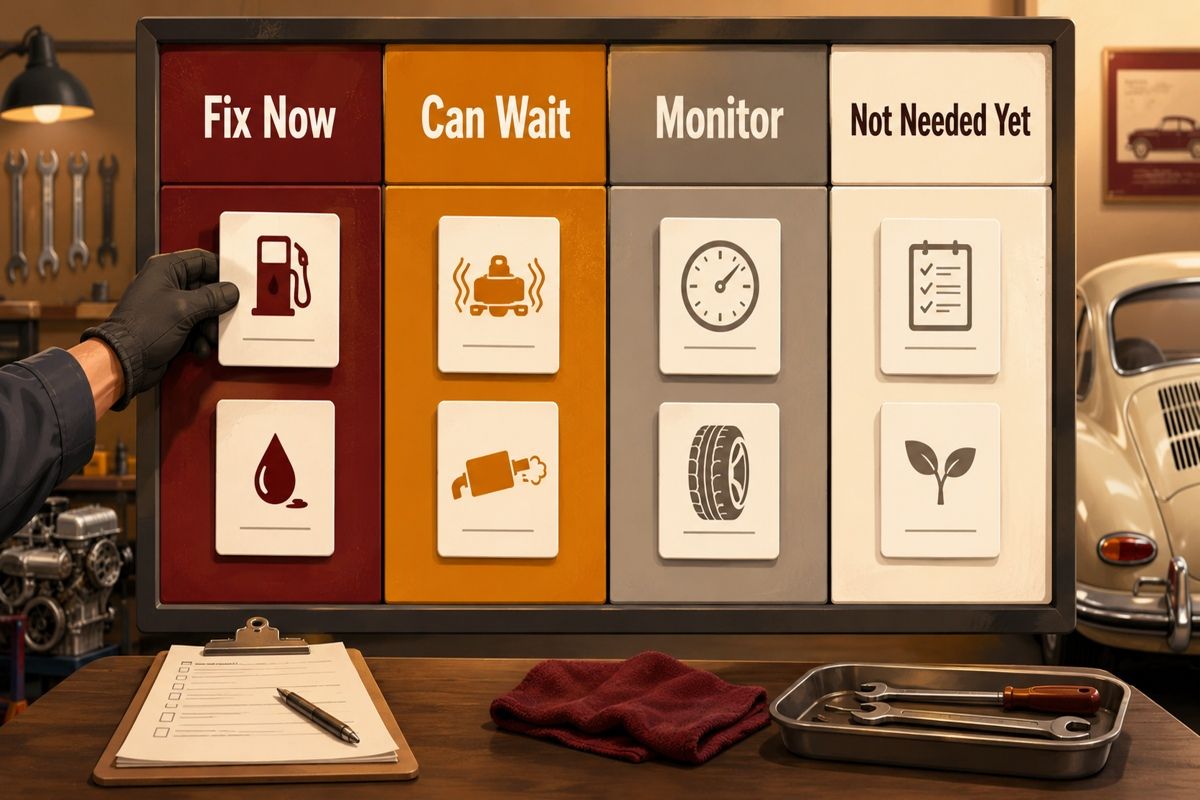
- Start With Priority: Sort every repair into Fix Now, Can Wait, Monitor, or Not Needed Yet.
- Ask For Evidence: A clear shop explains what it found, why it matters, and what could happen later.
- Watch Real Changes: New smells, sounds, leaks, driving issues, or gauge changes deserve clear attention.
- Plan Without Pressure: Some real repairs can wait when the shop gives timing and warning signs.
- Value Honest Restraint: “Not needed yet” can show trust when the evidence does not support work today.
Clear priority turns a stressful repair estimate into a safer, calmer decision.
Classic VW and Porsche owners will gain a simple way to review repair estimates, preparing them for the detailed overview that follows.
~ ~ ~ ~ ~ ~ ~ ~ ~ ~ ~ ~ ~ ~ ~ ~ ~ ~
The estimate feels too big.
You notice a fuel smell after a drive. You notice the new drip under the engine. The steering feels different on the way back from Tustin, and now the shop has given you a list of recommendations.
You do not need to become a mechanic to make a better decision. You need clear priority language.
For classic VW and Porsche owners, that language matters even more. Many classic vehicles do not explain themselves through modern warning-light systems. They speak through smells, sounds, leaks, drivability changes, and analog gauges. A repair conversation should help you translate those signals into a calm next step.
Use four categories:
Fix Now. Can Wait. Monitor. Not Needed Yet.
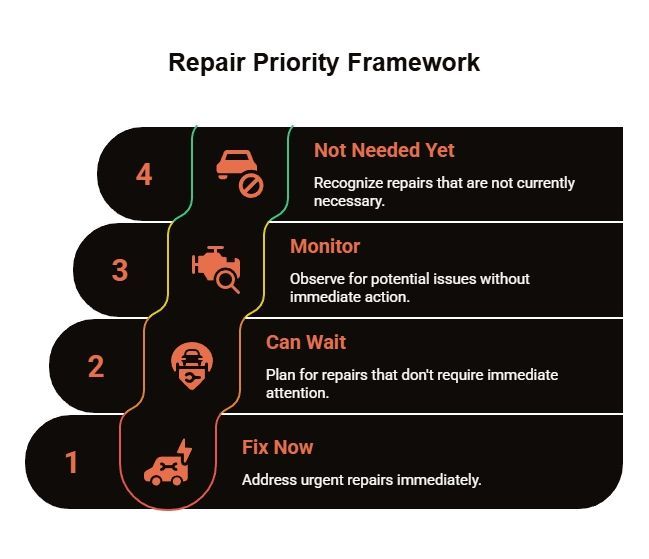
That is the Repair Priority framework. It helps you understand what needs prompt attention, what can be planned, what should be watched, and what does not need approval today.
This guide focuses on classic VW and Porsche repair conversations, specifically targeting vintage models built prior to the widespread industry adoption of On-Board Diagnostics (OBD-II) in 1996. When modern OBD-era vehicles are discussed—including contemporary Porsche and VW models equipped with complex digital diagnostic networks—they are clearly labeled as modern vehicles.
Start Here: The Four Repair Priority Categories
A repair estimate should not feel like an all-or-nothing decision. A good shop should be able to explain where each recommendation belongs and why it belongs there.
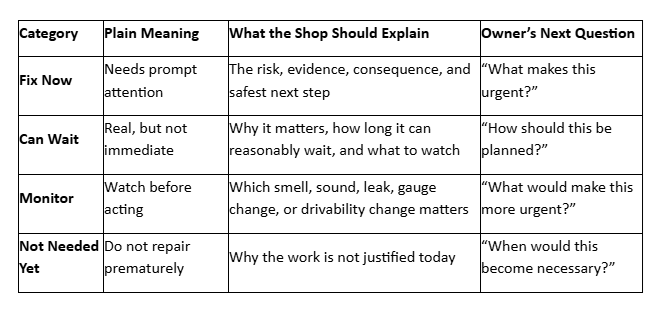
This framework is not about delaying important repairs. It is about separating urgency from pressure.
A classic vehicle may need attention for reasons that are subtle at first. A faint fuel smell, a fresh oil drip, a new vibration, or a temperature gauge that behaves differently can all deserve a closer look. The key is priority. Not every symptom means the same thing, and not every recommendation needs the same timeline.
Classic vs. Modern: Why the Starting Point Matters
Classic VW and Porsche vehicles often need a different diagnostic conversation than modern OBD-era cars.
A modern vehicle may store fault codes, trigger dashboard warnings, or guide the technician toward a system with electronic data. Warning-light language can be useful there, as long as the vehicle is clearly modern and OBD-era.
Classic vehicles are different. They may have fewer electronics, older wiring, analog gauges, carbureted or older fuel systems, air-cooled behavior, or age-related wear that shows up through physical symptoms.
For classic VW and Porsche triage, the first clues are often:
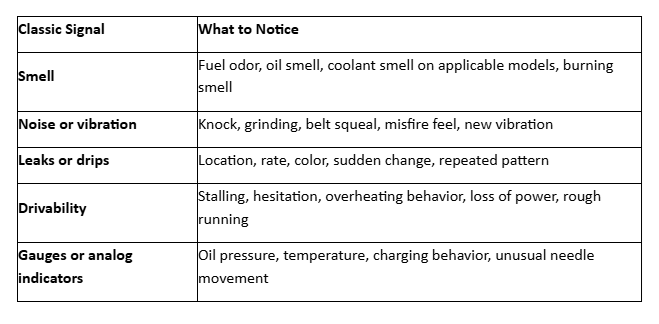
That does not mean owners should self-diagnose. It means owners can describe what they notice in plain language.
A sentence like “It smells like fuel after a 15-minute drive, but not when it first starts” is useful. So is “The drip is new, and it appears in the same spot after every drive.”
Good information helps the shop sort the repair into the right priority.
Fix Now: When a Classic Repair Needs Prompt Attention
“Fix now” should never be vague scare language. It should be tied to a real concern.
For classic VW and Porsche vehicles, fix-now items often involve safety, fire risk, major drivability changes, overheating behavior, braking or steering concerns, charging problems, or symptoms that could worsen quickly if the car keeps being driven.
The exact urgency can vary by vehicle and inspection finding. A professional inspection matters because the same symptom can have different causes.
A helpful fix-now explanation should answer five questions:
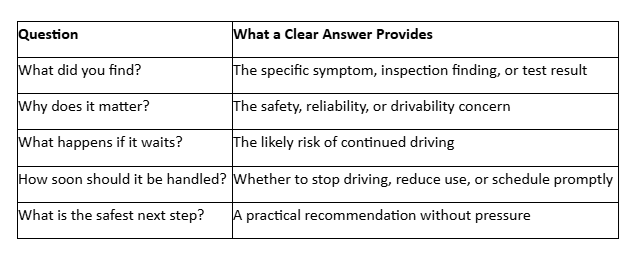
Pressure sounds like this: “You need this right now.”
Clarity sounds different: “Here is what we found, here is why waiting raises risk, and here is the safest next step.”
That second answer gives you a reason, not just a demand.
For example, a strong fuel smell in a classic vehicle should not be treated like a casual annoyance. It deserves prompt professional attention because fuel-related concerns can create safety risk. A new grinding noise, sudden steering change, repeated stalling, or overheating behavior also deserves clear priority language.
The point is not to frighten the owner. The point is to explain the risk plainly.
Can Wait: When a Real Repair Does Not Need to Happen Today
“Can wait” means the recommendation may be valid, but the timing can be planned.
That is an important distinction. Classic vehicles often have age-related items that deserve attention without becoming immediate emergencies. Rubber ages. Seals seep. Wiring gets tired. Bushings wear. Small changes can matter, but they do not always require same-day authorization.
A good can-wait recommendation should include:
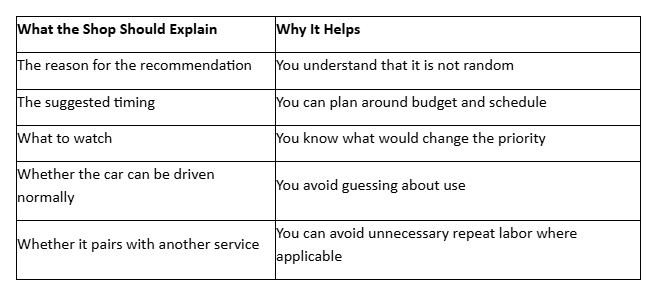
This kind of language helps owners make household decisions. You may need the car for work, errands, or family plans around Orange, Anaheim, or Yorba Linda. You may also be trying to budget carefully for a classic vehicle that is both transportation and a long-term project.
A fair can-wait explanation might sound like this:
“This is real, but it does not need to be handled today. Plan for it at the next service, and call sooner if the leak grows, the smell changes, or the car starts driving differently.”
That is useful. It gives you a plan.
Orange Independent Auto Repair offers auto repair services in Orange, CA, including vehicle inspections and repair support, but a good repair conversation should not feel like a service menu. It should help you understand what matters first.
Monitor: When Observation Is Better Than Guessing
Monitoring is not ignoring.
Monitoring means there is not enough evidence to justify immediate work, but there is enough reason to keep watching. For classic VW and Porsche owners, this can be especially helpful because early symptoms are often sensory.
A monitor recommendation should always come with a watch-for list.
That list should be simple enough to remember. It should tell you what to notice, what to write down, and what change would make the concern more urgent.
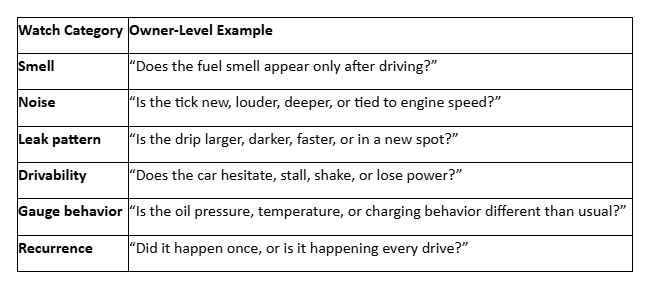
The owner’s job is not to repair the issue. The owner’s job is to report the pattern.
That matters because patterns help separate normal character from changing behavior. A classic vehicle may have familiar sounds and smells. A sudden change is different. A small recurring drip may be less urgent than a sudden leak that appears after every drive. A faint noise that has been stable for months may not mean the same thing as a new knock that arrives with power loss.
Monitoring works only when the next step is clear.
Ask: “What change should make me call you sooner?”
Not Needed Yet: Why Restraint Can Be a Trust Signal
An honest repair recommendation is not always a repair.
Sometimes the best answer is: “Not needed yet.”
That answer can be just as important as a fix-now recommendation. It tells the owner that the vehicle was checked, the concern was considered, and the evidence does not justify approving the work today.
For a classic VW and Porsche owner, this kind of restraint matters. Classic vehicles can invite long wish lists. Some items are safety priorities. Some are reliability planning. Some are preservation choices. Some can wait. Some should simply be watched.
A helpful not-needed-yet explanation may sound like:
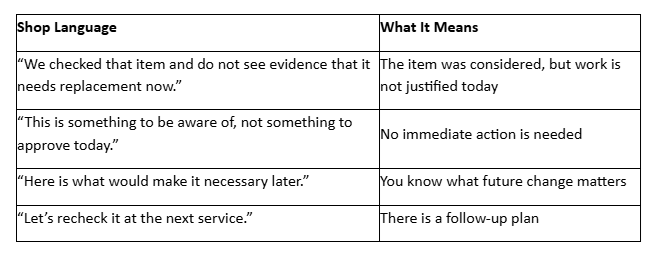
That kind of explanation builds trust through restraint.
Orange Independent Auto Repair is family-owned and operated, and its positioning emphasizes fair, transparent service. The shop’s About page explains that the business has served Orange, CA and surrounding areas since 1971 and believes in treating customers with fairness and honesty. That matters because repair priority is not only a technical conversation. It is also a trust conversation.
Customers often value a shop that explains what can wait, what does not need repair yet, and what truly needs attention. That is the difference between pressure and guidance.
The Four Questions to Ask Before Authorizing Work
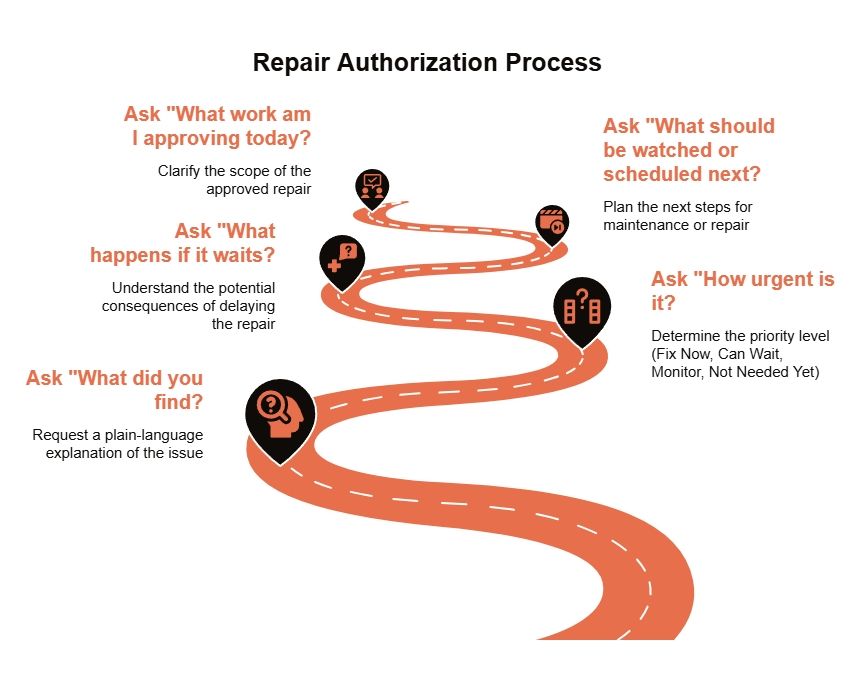
When a repair estimate feels overwhelming, use the same four questions every time.
- What did you find?
Ask for the symptom, inspection finding, or test result in plain language. - How urgent is it?
Ask whether the item is Fix Now, Can Wait, Monitor, or Not Needed Yet. - What happens if it waits?
Ask about safety, reliability, cost, or whether there is no immediate risk. - What should be watched or scheduled next?
Ask for the next step, not just the price.
One extra question can prevent confusion:
“What work am I approving today, and what are we intentionally not doing yet?”
That question is not legal advice. It is a practical way to separate today’s approved work from future planning, monitoring, and items that are not needed yet.
For classic VW and Porsche owners, this is especially useful. Classic repair decisions often involve preservation, reliability, safety, and budget all at once. A clear authorization conversation keeps those decisions organized.
Repair Priority Card: A Plain-Language Checklist
Use this card when reviewing an estimate, calling a shop, or talking through the decision at home.
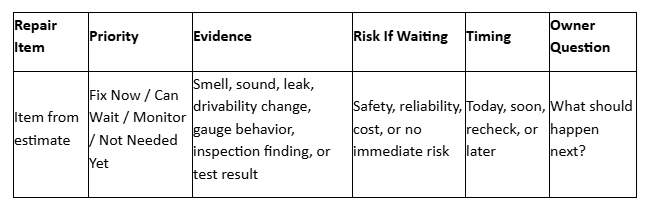
Before approving work, ask the shop to help fill in the priority, evidence, risk, timing, and next step.
If useful, add one more field: Authorization Status.
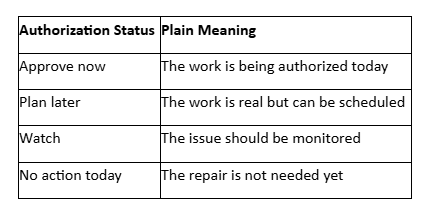
This keeps the conversation focused. It also helps prevent a common repair-estimate problem: approving work before understanding why it matters.
When Modern Warning-Light Language Applies
Warning-light language belongs mainly in modern OBD-era vehicle conversations.
On modern vehicles, a dashboard warning light may be part of the evidence. It can point the shop toward a system that needs diagnosis. Even then, a warning light alone does not explain the full priority. The repair conversation should still include what was found, how urgent it is, what happens if the issue waits, and what the next step should be.
For classic VW and Porsche vehicles, do not make warning lights the center of the decision. Use physical symptoms first: smell, sound, leaks, drivability, and gauges.
That split keeps the advice realistic.
Orange Independent Auto Repair’s classic car maintenance page focuses on specialized care for classic vehicles, including classic VW and Porsche. The shop also has a Porsche services page for Porsche-related service context. Those pages are useful starting points when the vehicle is a classic or older Porsche and the repair conversation needs experience with vintage systems.
Consumer Information, Recalls, and Estimates
Repair recommendations, safety recalls, and consumer repair rights are related, but they are not the same thing.
A shop recommendation comes from an inspection, symptom, or service finding. A safety recall comes from the manufacturer and federal safety system. Owners can check recall information through the NHTSA recall lookup.
For repair-preparedness, the FTC Auto Repair Basics resource gives general consumer guidance on asking questions and understanding repair issues. California owners can also review the California Bureau of Automotive Repair Consumer Guide for state-specific information about repair shops, estimates, and consumer protections.
These resources do not diagnose the vehicle. They help owners enter the repair conversation better prepared.
When to Call a Local Shop in Orange County
Call a shop when the symptom feels new, serious, recurring, or hard to explain.
For classic VW and Porsche owners, useful call details include:
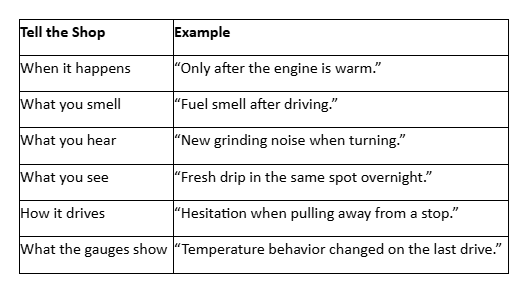
Drivers in Orange, Tustin, Anaheim, Yorba Linda, and Villa Park can use the same starting question:
“Is this Fix Now, Can Wait, Monitor, or Not Needed Yet?”
That question keeps the conversation calm. It also helps the shop give an owner-level explanation instead of a vague yes-or-no answer.
Orange Independent Auto Repair is located at 187 S Main St, Orange, CA 92868. The shop can be reached at (714) 633-7161 or by email at orange.independent@gmail.com. Hours are Monday through Friday, 7:00 AM–6:00 PM, with Saturday by appointment only.
To ask about a vehicle inspection, schedule service, or request an estimate, visit the Contact page.
Frequently Asked Questions
How do you know if a classic VW and Porsche repair needs to be fixed now?
A fix-now repair should have clear evidence and a clear risk. For classic vehicles, the evidence may be a strong fuel smell, sudden leak, overheating behavior, braking or steering concern, new grinding noise, severe drivability change, or concerning gauge behavior. The shop should explain why the item is urgent and what the safest next step is.
Is monitoring a classic car problem the same as ignoring it?
No. Monitoring means watching specific symptoms and knowing what change would make the issue more urgent. Ignoring means doing nothing without a plan. A proper monitor recommendation should include a watch-for list, such as smell, sound, leak pattern, drivability change, gauge behavior, or recurrence.
When is warning-light language appropriate?
Warning-light language is appropriate for modern OBD-era vehicles. It should not be the main framework for classic VW and Porsche triage. Classic vehicles often require symptom-based observation, including smells, noises, leaks, drivability, and analog gauges.
Why would a shop say a repair is not needed yet?
A shop may say a repair is not needed yet when there is not enough evidence to justify the work today. That can be a sign of restraint and transparent service. The shop should also explain what would make the repair necessary later.
What should you ask before approving a repair estimate?
Ask what was found, how urgent it is, what happens if it waits, what should be watched or scheduled next, and what work is actually being approved today. Those questions help separate urgent repairs from planned repairs, monitoring items, and work that is not needed yet.
The Calmer Way to Read a Repair Estimate
The next estimate does not need to feel like a trap.
Start with the priority.
Fix Now. Can Wait. Monitor. Not Needed Yet.
Those four categories give classic VW and Porsche owners a better way to talk about repairs. They help you approve what matters, plan what can wait, watch what is uncertain, and decline what is not needed today.
A good repair conversation should leave you informed, not cornered.
Our Editorial Process
Our expert team uses AI tools to help organize and structure our initial drafts. Every piece is then extensively rewritten, fact-checked, and enriched with first-hand insights and experiences by expert humans on our Insights Team to ensure accuracy and clarity.
By Orange Independent Auto Repair Insights Team
The Orange Independent Auto Repair Insights Team develops owner-level, evidence-first guidance shaped by decades of hands-on experience serving classic VW and Porsche owners in Orange and the surrounding communities.