European Car Repair Maintenance Schedule: Now, Soon, Later—What It Means and Why It Saves Money
📌 Key Takeaways
A confusing repair estimate becomes a clear action plan when you understand what Now, Soon, and Later actually mean for your vehicle's safety and your wallet.
- Priority labels are evidence-based, not sales tactics: Now, Soon, and Later classifications come from diagnostics, test results, and thorough vehicle inspections—not guesswork or upselling pressure.
- "Now" means safety is at stake: Items marked Now involve brakes, cooling, oil pressure, or steering systems where continued driving risks immediate danger or catastrophic engine damage.
- "Soon" prevents expensive surprises: Borderline conditions like low tire tread or slow fluid seepage aren't emergencies yet, but addressing them on time avoids tow bills, repeat diagnostics, and larger component failures.
- "Later" doesn't mean never: These items can be scheduled around paychecks, holidays, or school breaks, but ignoring them indefinitely turns minor concerns into major repairs.
- A written warranty backs your decisions: Knowing completed repairs are guaranteed makes it easier to approve Now items confidently and plan Soon and Later work without second-guessing.
Understanding the plan transforms car repair from panic mode into predictable budgeting.
Budget-conscious European car owners in Orange County will gain a clear framework for interpreting maintenance estimates here, preparing them for the detailed breakdown of each priority category that follows.
A warning light blinks on.
The dashboard glows amber, maybe red. Your stomach drops a little. You're halfway through the morning school run in Orange when the check-engine light decides to make an appearance. You pull into a shop, and soon you're looking at an estimate with a dozen line items, each tagged with words like "Now," "Soon," or "Later." Some items have dollar signs that make you wince. Others seem less urgent, but you're not entirely sure why.
If you've ever stared at a maintenance list and wondered which repairs actually matter right now and which ones can wait until next month's paycheck, you're not alone. European vehicles often have longer service intervals and more complex systems than their domestic counterparts, which can make maintenance estimates feel even more overwhelming.
This guide breaks down what those priority labels actually mean, where they come from, and how understanding them can help you drive safely while keeping your budget intact. Think of your European car repair shop as your vehicle's specialist clinic. When something feels off, you bring it in for diagnostics. The technician examines the vehicle, checks all the relevant systems, and then hands you a prioritized plan. Instead of guessing, you see exactly what needs attention now, what can be scheduled soon, and what can wait for later. That's the goal: calm confidence backed by a thorough inspection and a written warranty.
Quick Definition: What Now, Soon, Later Really Mean
European car repair shops use priority labels to help owners make informed decisions. Here's what each one means:
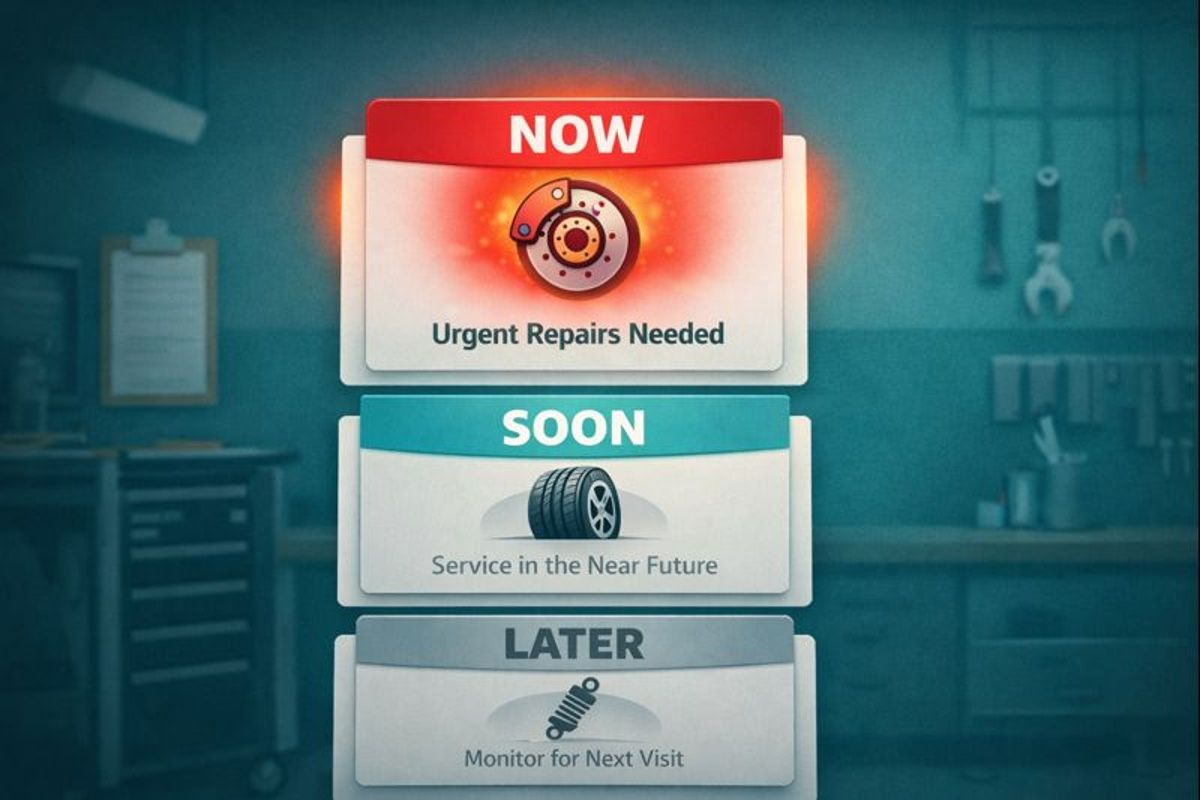
Now refers to issues that affect safety or could lead to imminent failure. These problems require immediate attention before driving further. Soon describes early wear or borderline conditions where timely service prevents bigger, more expensive problems down the road. Later covers items that can be planned around your schedule, seasons, or budget without sacrificing safety, as long as they're not ignored indefinitely.
These labels transform a confusing estimate into a clear action plan.
Where These Labels Come From: Inspection, Diagnostics, and Test Results
Priority labels aren't guesswork. They come from a structured process that starts with diagnostics and ends with clear findings.
When you bring your European vehicle in with a warning light or concern, a good shop follows a clear sequence:
- Listen to your concern – whether it's a warning light, unusual noise, vibration, or simply a mileage checkup.
- Run diagnostics – scan the car's computer for fault codes, test-drive if needed, and check related systems.
- Perform a thorough vehicle inspection – examine key systems including brakes, tires, fluids, belts, cooling system, suspension, and battery.
- Match findings to urgency – assess each item based on safety, likelihood of failure, and how quickly a small issue could damage other parts.
From this process, the technician assigns priority labels. The result is a list where every recommendation is backed by diagnostic data and inspection findings rather than opinion.
Deep Dive: Understanding Your Now/Soon/Later Priority Plan
Why this matters for safe, predictable driving
A clear priority plan does two things simultaneously. It protects your family's safety by making sure critical issues get fixed before they become dangerous. And it protects your budget by showing you exactly what can be scheduled for next week, next month, or next season.
Without this structure, decisions feel arbitrary. With it, you're in control.
Common misconceptions
One frequent misunderstanding is that "Later" means unimportant. It doesn't. Later items still need attention; they simply don't pose an immediate safety risk. Ignoring them indefinitely leads to the same problems you're trying to avoid.
Another misconception is that "Now" recommendations are always a sales tactic. At a trustworthy shop, a Now label means the technician found evidence of a genuine safety concern or imminent failure. A clear explanation of what they found during the inspection lets you understand the urgency yourself.
Real-world implications
Consider two drivers with the same estimate showing borderline brake wear:
Driver A understands the priority plan, approves the Now items, schedules Soon and Later items around paychecks, and rarely sees a tow truck.
Driver B delays everything, including Now items, until "something really breaks." The result? Tow bills, missed work, and larger repairs that cost far more than the original estimate.
Understanding the plan doesn't just save money. It saves the stress of unexpected breakdowns and transforms the entire car repair experience from reaction mode to a controlled, predictable approach.
"Now" Items: Safety and Imminent Failure
Now items demand immediate attention. Driving with these issues puts you, your passengers, and others at risk.
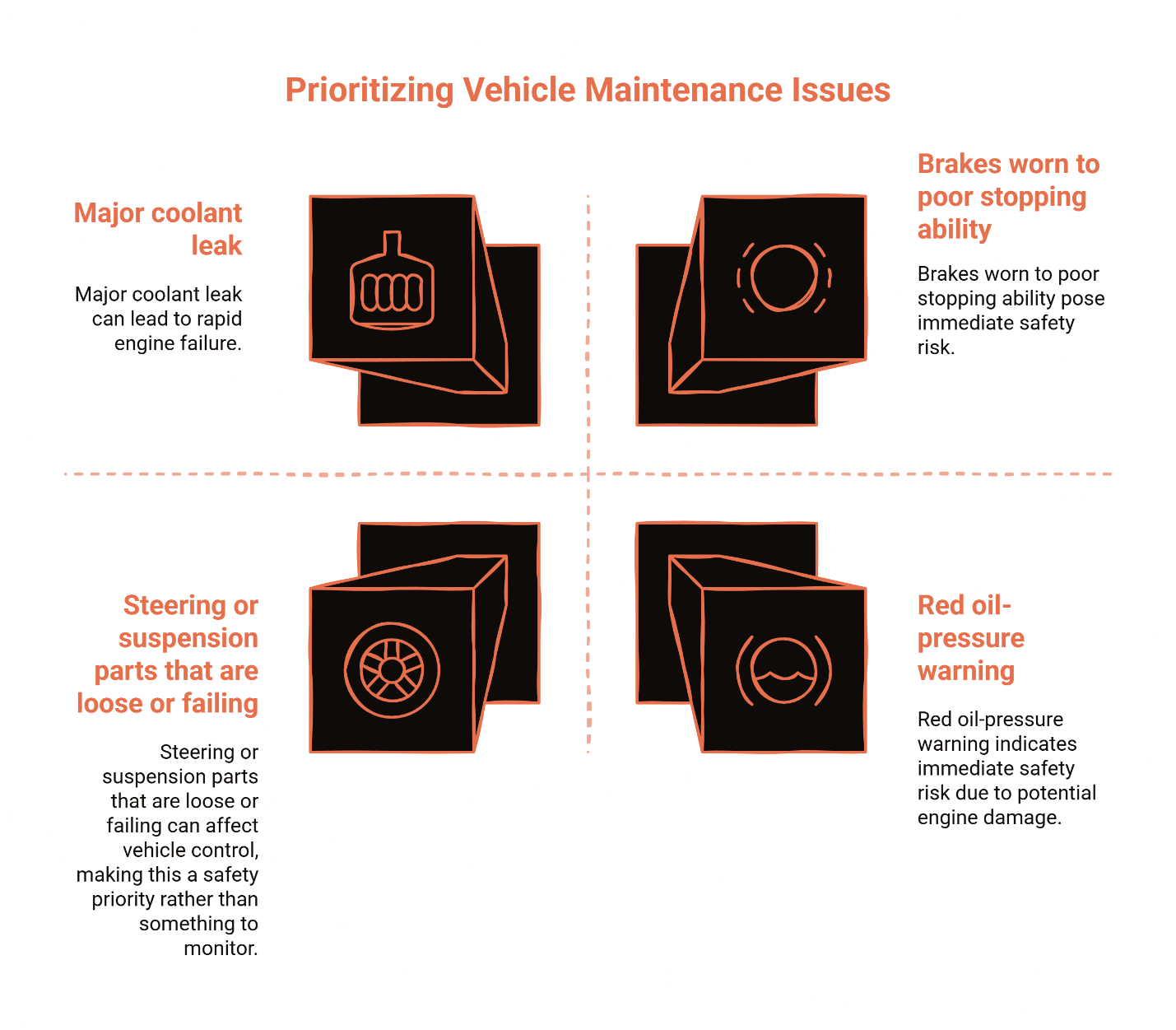
Common examples include:
- Brakes worn to poor stopping ability or near metal-on-metal contact. If you hear grinding or feel the pedal pulsing, stopping distance increases dramatically.
- Major coolant leak, overheating concern, or temperature warning. European engines are particularly sensitive to overheating, and even a short drive with a temperature warning can cause serious internal damage—especially in Southern California heat.
- Red oil-pressure warning or severe fluid leak. Low oil pressure starves the engine of lubrication, potentially causing thousands of dollars in damage within minutes.
- Steering or suspension parts that are loose or failing. Play in key components can affect vehicle control, making this a safety priority rather than something to monitor.
When something falls into the Now category, the reasoning is straightforward: the risk of continuing to drive outweighs the inconvenience of stopping. A good shop will explain the concern in plain language and help you understand why waiting isn't safe.
"Soon" Items: Preventing Bigger Problems and Surprise Bills
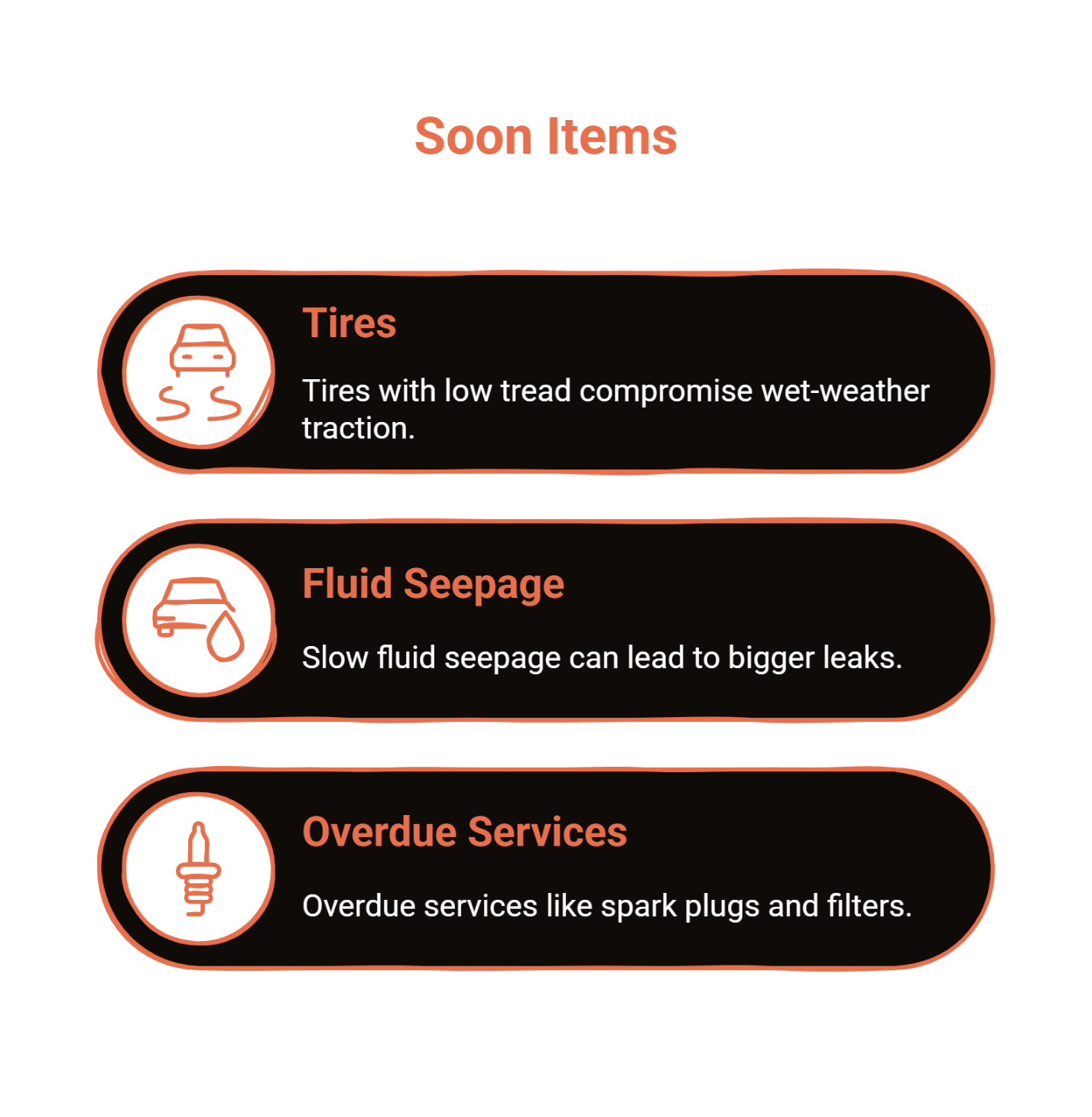
Soon items aren't emergencies, but they're heading that direction. Addressing them within a few weeks (or a month or two at most) prevents cascading damage and keeps repair costs manageable.
Examples include:
- Tires with tread low but not yet at the legal minimum. They'll pass inspection today, but wet-weather traction is already compromised.
- Slow but active fluid seepage. A valve-cover gasket with a light residue but no puddle is stable for now. Ignoring it can eventually lead to bigger leaks and burned-on deposits that complicate future repairs.
- Scheduled services that are overdue but not yet dangerous. Spark plugs past their recommended interval, transmission fluid that's darkened, or a cabin filter that's clogged all fall here.
Scheduling Soon items before they become Now items saves repeat diagnostic fees, tow bills, and the frustration of being stranded. It also means you can plan the expense around paydays or other financial commitments.
"Later" Items: Planning Around Seasons and Life Events
Later items give you breathing room. They represent maintenance that can be timed with your life rather than dictated by urgency.
Examples include:
- Aging but still functional suspension components. A control-arm bushing that causes a slight noise over bumps but doesn't affect handling can wait until the next major service interval.
- Minor comfort or cosmetic concerns. A slow power-window motor or a small interior rattle won't leave you stranded.
- Upcoming major services tied to mileage milestones. A 60,000- or 90,000-mile service can often be planned around a holiday, tax refund, or end-of-year bonus.
The key is that "Later" doesn't mean "never." It means you have time to budget and schedule on your terms. Many drivers around Orange, Tustin, Anaheim, Yorba Linda, and Villa Park choose to align Later items with school breaks, holidays, or planned road trips so there are no last-minute surprises.
Sample European Car Maintenance Schedule (Now/Soon/Later)
The following table offers a general educational example of how common services might be categorized. Actual intervals and priorities depend on your vehicle's owner's manual and your technician's inspection findings.
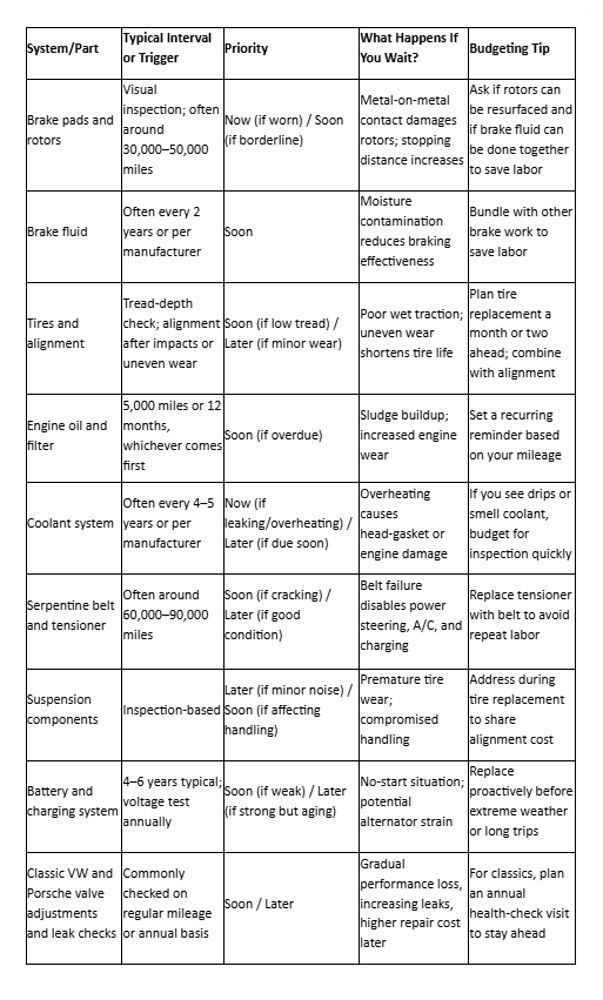
For classic car maintenance on vintage VW and Porsche vehicles, inspection intervals may differ due to older technology and unique wear patterns. A technician familiar with these models can advise on the right schedule.
Use this table as a conversation starter with your technician. Bring it to your next visit, compare it against your actual estimate, and ask questions about any differences.
How a Priority Plan Actually Saves You Money
A clear Now/Soon/Later plan isn't just about safety. It's a budgeting tool.
When you address Now items immediately, you prevent small problems from becoming expensive failures. A coolant leak caught early might need a $200 hose replacement. Ignored, it can lead to an overheated engine and a repair bill measured in thousands.
Scheduling Soon items prevents repeat diagnostic fees. If you put off a borderline repair and it fails two weeks later, you'll pay for another inspection on top of the repair itself.
Planning Later items around your calendar means you're never blindsided. You can set aside money each month, time major services with tax refunds or bonuses, and avoid the stress of emergency repairs.
A written warranty on completed work adds another layer of protection. If something fails within the warranty period, you're covered. That confidence makes it easier to approve needed repairs without second-guessing.
How Orange Independent Auto Repair Builds Your Now/Soon/Later Plan
At Orange Independent Auto Repair, the process starts with diagnostics to understand what's happening under the hood. From there, a thorough vehicle inspection identifies related concerns, and the technician provides clear notes so you can understand exactly what was found.
Every finding gets a priority label based on safety and timing. The result is a clear plan that respects your budget while keeping your European vehicle reliable.
Completed repairs come with a written warranty, which means you can approve Now items with confidence and schedule Soon and Later items knowing the work will be backed by a guarantee.
Whether you drive a family Volkswagen, a classic VW or Porsche, or another European, Asian, or American vehicle, the approach remains the same: diagnostics first, then a prioritized plan. For more details on available European car repair in Orange or to see the full range of our services, the team is happy to answer questions.
When to Call for Help About Your Maintenance Schedule
If a new warning light appears, don't wait to see if it goes away. Call or visit for a diagnostic check.
If you have an old estimate still sitting on the fridge, it's worth a quick call to ask whether the Soon items have become Now items. Conditions change over time, and a brief conversation can clarify whether something needs attention before your next road trip or school semester.
And if you simply want a second opinion on a confusing estimate from another shop, bring it in. A trustworthy technician will review the findings, explain the priorities in plain language, and help you decide what fits your safety needs and budget.
Ready to get a clear priority plan for your European vehicle? Contact our shop in Orange or call (714) 633-7161 to schedule your appointment today.
Disclaimer: The examples in this article are general in nature and for educational purposes only. Final decisions about vehicle maintenance should always be made in consultation with a qualified technician and by following the vehicle manufacturer's recommendations.
Our Editorial Process: Our expert team uses AI tools to help organize and structure our initial drafts. Every article is then thoroughly reviewed and refined by experienced professionals who focus on clarity, accuracy, and usefulness. We regularly revisit our content to keep it aligned with current best practices and real-world experience.
About the Orange Independent Auto Repair Insights Team: The Orange Independent Auto Repair Insights Team is our dedicated engine for synthesizing complex topics into clear, helpful guides. While our content is thoroughly reviewed for clarity and accuracy, it is for informational purposes and should not replace professional advice.